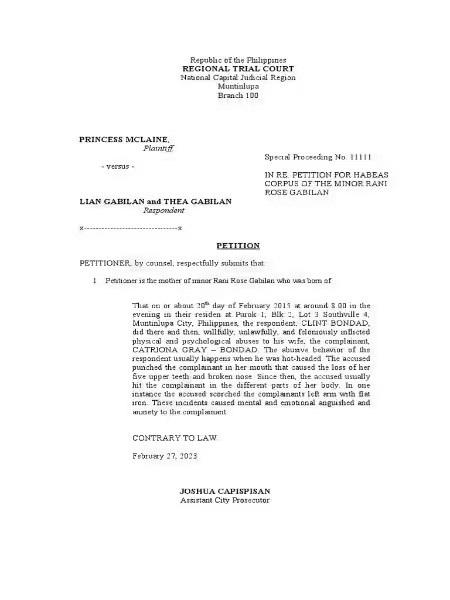
The question many face when confronted with unlawful detention or imprisonment is: how do I challenge this? The answer often lies in understanding and utilizing the habeas corpus format. This crucial legal mechanism, a cornerstone of many justice systems, allows individuals to challenge the legality of their confinement. This article will guide you through the essential elements of a habeas corpus petition, helping you navigate this often complex process.
Habeas corpus, Latin for “you have the body,” is a fundamental legal right that protects individuals from unlawful imprisonment. It’s a writ – a formal written order – issued by a court, compelling someone (usually a law enforcement official or prison warden) to produce a detained person and justify their detention. This ensures that no one is held without due process of law. It’s a powerful tool to ensure the rule of law and safeguard individual liberties against arbitrary detention.
The writ of habeas corpus is not just about challenging the length of imprisonment; it challenges the very legality of the detention itself. This means it can be used to challenge the validity of the arrest, the evidence used to secure the arrest, or any procedural irregularities during the arrest and subsequent detention.
Key Elements of a Habeas Corpus Petition
A successful habeas corpus petition requires careful preparation and attention to detail. While specific requirements vary slightly depending on jurisdiction, several common elements are almost always included. It’s vital to remember that legal representation is strongly recommended; navigating this process without professional help can be incredibly challenging.
Identifying the Petitioner and Respondent
The petition must clearly identify the person filing the petition (the petitioner) and the person or entity responsible for the detention (the respondent). This typically involves providing full names, addresses, and contact information for both parties. Mistakes in this area can lead to delays or even dismissal of the petition.
The accuracy of this identification is crucial. Incorrect information could lead to delays, requiring corrections and potentially weakening the overall case. It’s essential to verify all details meticulously before submitting the petition.
Stating the Grounds for the Petition
This crucial section outlines why the petitioner believes their detention is unlawful. This might include:
Illegal arrest: The arrest violated constitutional rights or procedural law.
Insufficient evidence: The evidence presented to justify the arrest and detention is insufficient to meet the legal thresholds.
Violation of due process: The petitioner was denied their right to a fair and speedy trial or other due process protections.
Excessive bail: (if applicable) The bail set is excessive and unreasonable.
Unlawful extension of detention: The detention has exceeded the legally permissible time limit.
The grounds must be clearly articulated and supported by evidence, such as police reports, witness statements, or court documents. Vague or unsupported claims are unlikely to succeed.
Presenting Supporting Evidence
The petition must include credible evidence supporting the claims made. This is essential for convincing the court that the detention is indeed unlawful. Examples of supporting evidence include:
Affidavits: Sworn statements from witnesses attesting to relevant facts.
Police reports: Official records detailing the circumstances of the arrest.
Court documents: Orders, transcripts, or other relevant legal documents.
Medical records: In cases involving allegations of mistreatment or ill health.
Photographs or videos: Visual documentation that supports the petitioner’s claims.
The stronger and more compelling the evidence, the greater the chances of success. It’s important to present the evidence in a logical and organized manner, making it easy for the court to understand.
Request for Relief
The petition must clearly state the desired outcome. This is often a request for the court to order the immediate release of the petitioner. Alternatively, it might request a reduction in bail or a transfer to a different facility. The request should be specific and realistic, reflecting the specific legal issues at stake.
This section needs to be concise and unambiguous, stating exactly what the petitioner wants the court to do. Ambiguity here can weaken the overall impact of the petition and lead to confusion.
The Habeas Corpus Format: A Step-by-Step Approach
While the specific habeas corpus format varies by jurisdiction, the key steps remain consistent. Generally, the petition should include:
Caption: Identifies the court, the petitioner, and the respondent.
Introduction: Briefly states the reason for filing the petition.
Statement of Facts: Provides a detailed account of the events leading to the detention.
Legal Arguments: Explains why the detention is unlawful, citing relevant laws and precedents.
Prayer for Relief: Specifically states what remedy is sought from the court.
Verification: A sworn statement affirming the truthfulness of the petition.
Remember, this is a simplified overview. Obtaining legal counsel is crucial for navigating the complexities involved and ensuring the petition complies with all applicable rules and procedures. Attempting to navigate this process alone is highly discouraged.
Understanding the habeas corpus format is crucial for protecting fundamental rights against unlawful detention. While this article gives a general overview, seeking legal advice is essential to ensure a properly formatted and effective petition. The complexities of legal procedure demand professional assistance to safeguard your rights and achieve the best possible outcome. The power of habeas corpus lies in its ability to challenge the legality of detention, ensuring that no one is held without due process. Remember, your freedom and rights are worth fighting for.
Since I don’t have access to the content of the article “Título,” I cannot provide a specific FAQ about its format. However, I can offer a general FAQ about the format of a habeas corpus petition, based on common legal practice. Remember that specific requirements vary by jurisdiction, so always consult relevant legal resources and/or an attorney for your specific situation.
What is a Habeas Corpus Petition?
A habeas corpus petition is a legal document filed with a court to challenge the legality of a person’s detention. It essentially asks the court to review whether someone is being held lawfully.
What is the general structure of a Habeas Corpus Petition?
A typical habeas corpus petition includes several key sections:
Caption: This identifies the court, the case name (Petitioner vs. Respondent), and the case number (if applicable).
Introduction: Briefly states the purpose of the petition – to challenge unlawful detention.
Statement of Facts: This section details the circumstances surrounding the arrest, detention, and the alleged illegality of the confinement. It should be factual and chronological.
Legal Arguments: This is the core of the petition. It explains the legal basis for challenging the detention, citing relevant statutes, case law, and constitutional provisions. This section meticulously outlines why the detention is unlawful (e.g., lack of probable cause, violation of due process, illegal search and seizure).
Relief Requested: Clearly states the specific remedy sought by the petitioner (e.g., release from custody, a new trial, etc.).
Verification: A sworn statement affirming the truthfulness of the information presented in the petition.
Exhibits (Appendices): Supporting documents such as arrest warrants, court orders, police reports, etc. are attached as exhibits.
What information must be included in a Habeas Corpus Petition?
Crucially, the petition must clearly identify the petitioner (the person being held), the respondent (the person or entity holding the petitioner), the date and location of the arrest or detention, and the specific legal grounds for challenging the confinement. All factual assertions need to be supported by evidence.
How formal does the Habeas Corpus Petition have to be?
While the exact formatting requirements vary by jurisdiction, habeas corpus petitions generally require adherence to formal legal writing standards. This includes clear, concise language, proper citation of legal authorities, and logical organization. Consult local court rules for specific requirements.
What happens after I file a Habeas Corpus Petition?
After filing, the court will review the petition. The respondent will typically be required to respond, often within a specific timeframe. A hearing may be held to allow both sides to present evidence and arguments. The court will then issue a ruling, which may grant or deny the petition.
Can I represent myself in a Habeas Corpus case?
While you have the right to represent yourself (pro se), habeas corpus cases can be complex. Legal assistance from an attorney is strongly recommended due to the intricacies of legal procedure and the serious consequences involved.
Where do I find the specific rules for filing a Habeas Corpus Petition in my jurisdiction?
The specific rules and forms for filing a habeas corpus petition are typically found on the website of the relevant court or jurisdiction’s legal authority. You should consult these resources to ensure compliance with all applicable rules. Local bar associations can also be helpful resources.
Obtaining a work permit is a significant hurdle for many undocumented immigrants in the United States. This article explores the complexities surrounding work permits for illegal aliens, examining the data, the political landscape, and the potential impacts on the US economy. The Data: A Look at Work Permit Applications Analyzing work permit applications offers valuable…
Are you looking for ways to support refugees and immigrants in San Diego, or perhaps seeking assistance for yourself or your family? The International Rescue Committee (IRC) San Diego plays a crucial role in providing vital services to vulnerable populations. This article will explore the comprehensive range of programs offered by the International Rescue Committee…
Are you passionate about nurturing and supporting the development of infants? A career working with babies offers a unique blend of challenges and rewards, providing opportunities to make a real difference in the lives of young ones and their families. This field encompasses a diverse range of professions, catering to various interests and skill sets….
A motion to suppress is a critical legal tool in the US criminal justice system. It’s a request made by a defendant to a court to prevent certain evidence from being presented at trial. This isn’t just about excluding inconvenient pieces of evidence; it’s about safeguarding fundamental constitutional rights. Understanding how a motion to suppress…
The Citizen brand is synonymous with innovation and quality in the watchmaking world. But beyond the sleek designs and precise movements lies a deeper commitment: sustainability. This commitment is embodied in their Eco-Drive technology, a core element of many Citizen watches, including those featuring a distinctive “citizen green face.” This article explores the intersection of…
Are you considering moving to Utah and wondering about the best places to shop for groceries? Utah’s grocery market offers a diverse range of options, from large chain stores to smaller, independently owned businesses. This article focuses specifically on the high-end grocery experience offered by Harmons – Emigration Market in Salt Lake City, a popular…