The question many face when confronted with legal issues involving imprisonment or detention is: “What exactly is habeas corpus, and how does it work in practice?” This article aims to demystify the concept of habeas corpus, providing examples and exploring its crucial role in protecting individual liberties. While a specific “habeas corpus sample” document isn’t readily available as a single, universally applicable form, we can examine the core principles and illustrate them through hypothetical scenarios. Understanding these principles is far more valuable than possessing a single, static example.
Habeas corpus, Latin for “you have the body,” is a fundamental legal principle ensuring that a person detained or imprisoned has the right to challenge the legality of their detention before a court. It’s a powerful tool used to prevent unlawful imprisonment and ensure due process. It’s not about the guilt or innocence of the accused; it’s solely concerned with whether the detention itself is lawful.
The writ of habeas corpus, a formal legal order, commands the person or entity holding the individual (usually a law enforcement agency or prison warden) to bring the detained person before the court to determine the legality of their confinement. The court then reviews the evidence to determine if there are sufficient legal grounds for continued detention.
When is Habeas Corpus Used?
Habeas corpus petitions are filed in a variety of situations where someone believes their detention is unlawful. This includes:
Unlawful Arrest: If an individual believes they were arrested without probable cause or in violation of their constitutional rights.
Insufficient Evidence: If someone believes there’s insufficient evidence to justify their continued detention after an arrest.
Violation of Due Process: If an individual believes their rights to a fair trial or legal representation have been violated during the legal process.
Excessive Detention: If someone feels they’ve been held for an unreasonably long period without being charged or brought before a judge.
Errors in Legal Proceedings: If there were procedural errors or legal mistakes during their arrest or trial that resulted in unlawful detention.
These are just some examples; the specific grounds for a habeas corpus petition can be complex and vary depending on jurisdiction and specific circumstances.
Let’s consider a couple of hypothetical scenarios to illustrate how habeas corpus might be applied:
Scenario 1: Imagine John is arrested for a minor misdemeanor, but instead of being released on bail or appearing before a judge promptly, he’s held in jail for three weeks without charge. His lawyer can file a habeas corpus petition arguing that his prolonged detention without due process is unlawful. The court would then review the legality of the detention, not John’s guilt or innocence regarding the misdemeanor.
Scenario 2: Suppose Maria is detained based on flawed evidence—evidence later proven to be fabricated or misinterpreted. Her lawyer could utilize a habeas corpus petition to challenge the legality of her detention, arguing that it’s based on insufficient or faulty evidence. The court would focus on the validity of the evidence, not Maria’s potential guilt or innocence.
The Habeas Corpus Process: A Step-by-Step Overview
The process of filing and pursuing a habeas corpus petition generally involves several steps:
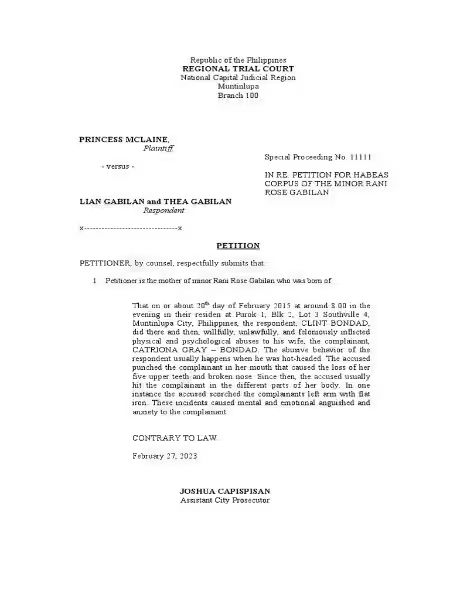
Filing the Petition: A formal petition is filed with the appropriate court, outlining the reasons why the detention is unlawful. This petition often details the circumstances of the arrest, the charges (if any), and the reasons why the detention is considered illegal.
Court Review: The court reviews the petition and the evidence provided by both sides. This might involve examining police reports, court documents, and testimony from witnesses.
Hearing (if necessary): Depending on the complexity of the case, a hearing might be held where the petitioner and the respondent (the entity holding the individual) present their arguments and evidence.
Court Decision: The court renders a decision, either granting or denying the petition. If the petition is granted, the court orders the release of the detained individual. If denied, the detention remains legally valid.
Appeal (if necessary): Either party can appeal the court’s decision to a higher court if they disagree with the ruling.
Importance of Habeas Corpus: A Safeguard Against Abuse
Habeas corpus is a cornerstone of a just legal system. It serves as a crucial check on the power of the state, preventing arbitrary detention and ensuring that individuals are not held without proper legal justification. This safeguard is particularly vital in protecting against abuses of power, ensuring fairness, and upholding fundamental human rights. Without it, the potential for unlawful imprisonment and denial of due process would be significantly increased.
While a powerful tool, habeas corpus is not without limitations. There might be instances where a court finds sufficient legal basis for continued detention, even if the individual believes their detention is unjust. Moreover, the complexity of legal procedures and the potential for delays can sometimes hinder the effectiveness of habeas corpus in securing prompt release.
Conclusion: The Enduring Value of Habeas Corpus
While a specific “habeas corpus sample” document doesn’t exist in a standardized format, the principles underlying the writ remain essential. Understanding the application of habeas corpus, as illustrated by the examples and steps outlined above, empowers individuals to protect their rights against unjust detention and highlights its vital role in safeguarding individual liberties. It remains a critical check on governmental power, ensuring that the legal process is fair and that no one is held without just cause. Its continued relevance underscores its importance as a cornerstone of a free and just society.
Since I don’t have access to the content of the document titled “Título,” I cannot create an FAQ section about a specific habeas corpus sample from that document. However, I can create a general FAQ section about habeas corpus petitions and the process involved. Remember that this is for informational purposes only and should not be considered legal advice. Consult with a legal professional for advice on your specific situation.
Frequently Asked Questions: Habeas Corpus
What is Habeas Corpus?
Habeas corpus, Latin for “show me the body,” is a fundamental legal right that allows a person to challenge their unlawful detention. It’s a writ (a court order) that requires the government to bring a detained person before a court to determine if the detention is lawful. This prevents arbitrary imprisonment and ensures due process.
Who can file a Habeas Corpus petition?
A habeas corpus petition can be filed by the detained person themselves, or by someone acting on their behalf (such as a family member or attorney) if the detained person is unable to do so.
What are the grounds for filing a Habeas Corpus petition?
A habeas corpus petition can be filed on various grounds, including: unlawful arrest, lack of probable cause, insufficient evidence, violations of due process, illegal search and seizure, and denial of a fair trial. The specific grounds will vary depending on the jurisdiction and the circumstances of the detention.
What information is typically included in a Habeas Corpus petition?
A habeas corpus petition generally includes information about the detained person (name, date of birth, location of detention), the date and reason for arrest, the charges (if any), a statement of the alleged illegality of the detention, and any supporting evidence (such as police reports, witness statements, or medical records). The specific requirements vary by jurisdiction.
What is the process of filing a Habeas Corpus petition?
The process involves filing the petition with the appropriate court (often a state or federal court, depending on the circumstances). The court will then review the petition and decide whether to issue the writ. If the writ is issued, the government must bring the detained person before the court for a hearing.
What happens at a Habeas Corpus hearing?
At the hearing, the court will examine the evidence presented by both sides to determine whether the detention is lawful. The detained person has the right to legal representation and to present evidence and witnesses.
What are the possible outcomes of a Habeas Corpus case?
The court may order the release of the detained person if it finds the detention unlawful. Alternatively, the court may uphold the detention if it finds the detention to be lawful. The court’s decision can be appealed.
Can a Habeas Corpus petition be filed after a conviction?
Yes, habeas corpus can be used to challenge the legality of a conviction, typically alleging errors in the trial process or violations of constitutional rights. However, there are usually strict time limits and procedural requirements for post-conviction habeas petitions.
Is legal representation necessary for a Habeas Corpus petition?
While it’s possible to file a habeas corpus petition without an attorney, it’s highly recommended to seek legal assistance. The legal process surrounding habeas corpus can be complex, and an attorney can help ensure your rights are protected and your petition is properly prepared and filed.
Where can I find more information about Habeas Corpus?
You can find more information about habeas corpus by consulting legal websites, law libraries, and legal textbooks. You can also seek guidance from a legal professional.
Choosing your first solo trip as a woman can feel daunting. The world is vast, and safety concerns are naturally paramount. But solo female travel is incredibly rewarding, offering independence, self-discovery, and the chance to connect with yourself and the world in unique ways. This article, based on ten years of personal experience, highlights 13…
Are you a highly skilled individual with exceptional achievements looking to immigrate to the United States? The EB-1 visa category, specifically designed for priority workers, might be your pathway to permanent residency. This article will break down the three subcategories within EB-1, outlining the requirements and processes involved. Understanding these nuances is crucial for a…
Are you interested in learning about innovative approaches to humanitarian aid and how a global empowerment grant can make a real difference in conflict zones? This article explores the impactful work of Global Empowerment Mission (GEM) in Ukraine, highlighting their unique strategy and the far-reaching consequences of their initiatives. GEM’s Agricultural Empowerment Program in Ukraine…
The Leatherman Raptor Response is more than just a multi-tool; it’s a compact, high-performance solution designed for everyday carry and emergency preparedness. Its unique blend of functionality, durability, and thoughtful design makes it a compelling option for professionals and everyday users alike. This article delves into the specifics of the Raptor Response, exploring its features,…
Many H-1B visa holders dream of launching their own businesses in the United States. The allure of entrepreneurship is strong, but navigating the complexities of immigration law while building a company can feel daunting. The good news is: yes, you can start a business on an H-1B visa, but it requires careful planning and a…
Are you tired of jeans that pinch, gap, or just don’t feel right? Many women struggle to find denim that flatters their figure and offers both comfort and style. This article explores the Refuge clothing brand, a company dedicated to revolutionizing women’s denim with a focus on fit, quality, and inclusivity. We’ll delve into what…