Landing your dream job as an attorney requires careful preparation, and a significant part of that preparation involves mastering the art of the interview. This article will equip you with the knowledge and strategies to confidently navigate even the most challenging interview questions for attorney positions, especially within the public interest sector. We’ll break down common question types and provide tips to craft compelling and authentic responses.
The interview process for legal positions, particularly those in public interest, can vary considerably. Some interviews might be informal and conversational, focusing on getting to know you as a person. Others may be highly structured, employing standardized questions to ensure fairness and minimize unconscious bias. Regardless of the format, thorough preparation is key.
Preparing doesn’t just mean memorizing answers; it means understanding the underlying principles behind each question type and developing a framework for responding thoughtfully and naturally. Avoid rote memorization, as it can sound rehearsed and inauthentic. Instead, focus on developing genuine responses that showcase your skills and personality.
Key Categories of Interview Questions
The questions you’ll encounter can be broadly categorized into several key areas:
1. Basic Background and Personal Questions
These initial questions are designed to get to know you beyond your resume. Expect inquiries about your personal background, hobbies, career goals, and motivations for pursuing a legal career. Interviewers often ask about your strengths and weaknesses, preferred work style (teamwork vs. independent work), experience with remote work, and your commitment to diversity, equity, inclusion, and belonging (DEIB).
Prepare brief, engaging anecdotes that highlight your personality and values. When discussing weaknesses, focus on areas you’re actively working to improve, demonstrating self-awareness and a growth mindset.
2. Resume and Transcript Deep Dive
Be ready for detailed questions about your resume and academic transcript. Expect inquiries about prior work experience, career changes, your reasons for choosing law, and participation in extracurricular activities such as Moot Court, law journals, or clinics. Address any potential concerns, such as gaps in employment or lower grades, honestly and transparently.
Frame any perceived weaknesses as learning opportunities. For example, a gap in employment could be explained by a period of volunteer work or personal development that enhanced your skills and commitment to public service.
Thorough research is crucial. Interviewers want to see that you understand the organization’s mission, practice areas, and the specific role’s responsibilities. Prepare questions demonstrating your understanding of their work and your suitability for the position. Explain why you are particularly interested in this organization and this specific role within the public interest sector.
Show your understanding of the organization’s challenges and opportunities. Highlight how your skills and experience align with their needs and how you can contribute to their mission.
4. Demonstrating Commitment to Public Service
This is a critical area, especially for public interest roles. Be prepared to discuss your prior public service involvement, your short-term and long-term career goals, and your reasons for choosing public interest work over other sectors like private practice.
Illustrate your commitment with concrete examples. Discuss volunteer work, pro bono experiences, or other activities demonstrating your dedication to serving the community.
5. Legal Reasoning and Critical Thinking
These questions assess your ability to analyze legal issues and articulate your thoughts clearly. Prepare to discuss your favorite classes, professors, legal writing samples, relevant Supreme Court cases, and complex legal issues you’ve encountered. The emphasis is on your thought process rather than having the “right” answer.
Practice articulating your reasoning logically and concisely. Use the opportunity to showcase your analytical skills and your ability to think critically about complex legal problems.
6. Behavioral Questions and the STAR Method
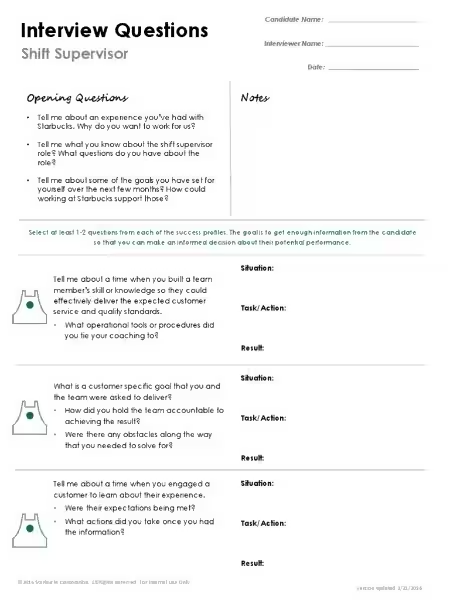
Behavioral questions assess your past performance as a predictor of future behavior. The STAR method (Situation, Task, Action, Result) is a powerful framework for structuring your responses. Prepare examples illustrating your problem-solving skills, teamwork abilities, handling of difficult situations, ethical decision-making, and initiative.
Use the STAR method to provide concrete examples that showcase your skills and experience. Focus on the results of your actions and how you learned from the experience.
For public defender and prosecutor roles, expect challenging hypothetical scenarios presenting complex ethical dilemmas and criminal fact patterns. These questions assess judgment, reasoning, and commitment to your client or the community. Practice formulating responses that demonstrate sound judgment and ethical considerations.
Focus on applying legal principles and ethical frameworks to solve hypothetical problems. Illustrate your ability to think critically and make sound judgments under pressure.
Asking insightful questions demonstrates your genuine interest in the position and the organization. Prepare thoughtful questions related to the organization’s work, the role’s challenges, and the team’s dynamics. This shows initiative and engagement.
Prepare a list of questions that go beyond the basics. Show that you’ve done your research and are genuinely interested in learning more about the organization and the specific role.
Final Thoughts: Practice Makes Perfect
Remember, practice is key. Utilize resources like mock interviews to refine your responses and build your confidence. By thoroughly preparing for these diverse question types, you’ll significantly increase your chances of success in your interview and securing your desired attorney position. Good luck!
Frequently Asked Questions: Interviewing for Attorney Positions
What types of questions should I expect in a public interest law job interview?
Public interest law interviews vary, but generally cover several key areas: basic background, resume/transcript review, knowledge of the organization and position, commitment to public service, legal reasoning/thinking, behavioral questions, and (especially for public defender/prosecutor roles) hypothetical scenarios. Expect a mix of open-ended questions probing your personality and motivations, along with more specific questions testing your legal knowledge and analytical skills.
How should I prepare for basic background questions?
Be ready to discuss your personal background, hobbies, career goals, strengths and weaknesses, preferred work style (teamwork vs. independent work), remote work experience, and your commitment to diversity, equity, inclusion, and belonging (DEIB). Prepare examples showcasing both your accomplishments and mistakes, emphasizing lessons learned from each. Practice articulating your answers concisely and engagingly.
How do I address potential concerns on my resume or transcript, such as gaps in employment or lower grades?
Honesty is key. Address any concerns directly and proactively. Frame any gaps in your employment or lower grades within a larger narrative, explaining the circumstances and how you’ve learned and grown from the experience. Highlight positive aspects of your academic and professional journey to balance out any perceived shortcomings.
How can I demonstrate my knowledge of the organization and the specific position?
Thoroughly research the organization’s mission, practice areas, recent cases, and the specific responsibilities of the position. Demonstrate your understanding by incorporating specific details into your answers. Explain why this particular role and setting (e.g., federal government, legal aid) aligns with your career goals and values.
How can I effectively showcase my commitment to public service?
Highlight your prior public interest involvement, whether through volunteering, internships, or extracurricular activities. Clearly articulate your short-term and long-term career goals within the public interest sector and explain your reasons for choosing this path over other legal career options. Show genuine enthusiasm for public service.
What is the best way to answer legal reasoning/thinking questions?
These questions assess your critical thinking and analytical skills. Focus on articulating your thought process clearly and logically, rather than simply providing the “right” answer. Discuss relevant cases, legal principles, and your reasoning behind your analysis. Prepare to discuss favorite classes, professors, legal writing samples, and Supreme Court cases.
How should I prepare for behavioral questions using the STAR method?
The STAR method (Situation, Task, Action, Result) is crucial for behavioral questions. For each question, describe the Situation, the Task you faced, the Action you took, and the Result you achieved. Focus on examples that demonstrate skills and behaviors relevant to the position, such as problem-solving, teamwork, ethical decision-making, and handling difficult situations.
How do I handle hypothetical questions, particularly in public defender/prosecutor roles?
These questions test your judgment, reasoning, and ethical considerations. There’s often no single “right” answer. Practice formulating responses that demonstrate sound judgment, ethical considerations, and a commitment to your client or the community. Outline your thought process clearly, showing how you would approach a complex legal or ethical dilemma.
What questions should I ask the interviewer?
Preparing thoughtful questions demonstrates genuine interest. Ask questions about the day-to-day work, the team dynamics, the organization’s culture, current challenges faced by the organization, and opportunities for professional development. Avoid questions easily answered through basic research.
How can I practice for the interview?
Utilize resources like mock interviews offered by your law school’s career services office. Practice answering common interview questions out loud to refine your responses and reduce nervousness. Seek feedback on your answers to identify areas for improvement. Remember to maintain a professional demeanor, be enthusiastic, and be yourself.
Hold Tight 102 is a game-changer in surface preparation, offering a solution to the persistent challenges of ensuring a perfectly clean substrate before applying coatings. This article delves into the specifics of Hold Tight 102, explaining its benefits and how it addresses common problems associated with traditional cleaning methods. The Problem with Traditional Cleaning Methods…
What does it truly mean to foster a strong sense of social commitment within a group, whether it’s a workplace, an online community, or even a family? This article explores the multifaceted nature of social commitment, examining its practical application across various contexts and highlighting strategies for cultivating it. We’ll examine what constitutes social responsibility,…
Many aspiring immigrants find the process daunting, and one of the first hurdles is completing the immigration intake form. This seemingly simple document is crucial, acting as the initial gateway to your application. Understanding its intricacies and preparing thoroughly can significantly improve your chances of a successful application. This guide will walk you through the…
The Israeli House is more than just a building; it’s a vital initiative of the Israeli Ministry of Aliyah and Integration, acting as a crucial lifeline for Israelis living abroad. It fosters a strong connection between Israelis residing internationally and their homeland, offering multifaceted support that extends beyond mere logistical assistance. This article delves into…
This article delves into the complexities of the Four Freedoms Senior Living renovation project in Seattle, WA, focusing specifically on the challenges encountered during the Tower 1 refurbishment. We’ll explore the hurdles faced by the construction team and how they were overcome, highlighting the unique considerations involved in renovating a senior living facility while respecting…
Restraint chairs, like the SureGuard® Safety Restraint Chair, are specialized tools used in controlled environments to manage individuals exhibiting combative, self-harm prone, or potentially violent behaviors. While offering a vital safety mechanism, their use requires careful consideration of ethical implications and strict adherence to established protocols. This article aims to provide a comprehensive overview of…