Obtaining your freedom when unjustly imprisoned is a fundamental right. A critical tool in achieving this is the writ of habeas corpus, a legal order demanding that a person be brought before a court. But navigating the legal complexities involved can feel daunting. This article aims to demystify the process by exploring what a sample writ of habeas corpus looks like, its purpose, and the crucial steps in using it effectively. We’ll explore different scenarios and highlight key considerations to help you understand this powerful legal instrument.
A writ of habeas corpus, often shortened to “habeas corpus,” is a court order directing law enforcement officials (like police or prison wardens) to produce a detained individual before a court. The purpose is to determine the legality of the individual’s detention. It’s a crucial safeguard against unlawful imprisonment, ensuring that no one is held without due process.
This legal remedy doesn’t challenge the guilt or innocence of the accused; rather, it focuses solely on the legality of their confinement. Was the arrest lawful? Were proper procedures followed? Was the individual’s right to counsel respected? These are the types of questions a habeas corpus proceeding addresses. A judge will review the evidence and determine if the detention is justified.
When is a Writ of Habeas Corpus Necessary?
Several situations might necessitate the use of a writ of habeas corpus. These include:
Unlawful Arrest: If someone believes their arrest was illegal due to a lack of probable cause or a violation of their constitutional rights.
Improper Detention: Individuals held beyond the legally permitted timeframe or without proper charges filed against them.
Violation of Due Process: If fundamental rights were violated during the arrest, questioning, or detention process.
Lack of Access to Counsel: When an individual has been denied access to legal representation.
Illegal Transfer: If an individual is transferred to a different facility without proper legal authorization.
Excessive Bail: When the bail set is unreasonably high, effectively denying the individual their right to freedom before trial.
These are just some examples, and the specific grounds for filing a writ will vary depending on the jurisdiction and the specific circumstances. It’s crucial to consult with an attorney to determine if a writ of habeas corpus is the appropriate course of action.
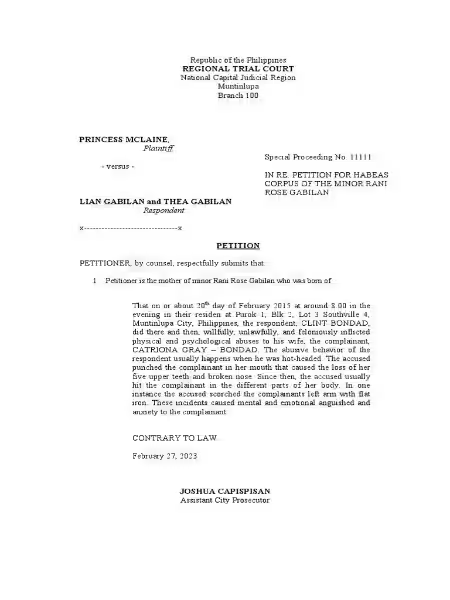
While the exact wording and format may differ slightly depending on the jurisdiction, a typical sample writ of habeas corpus will include the following elements:
Caption: This section identifies the court where the writ is filed, the case name (often In re [Detainee’s Name]), and the case number (if applicable).
Petitioner’s Information: Full name, address, and contact information of the person seeking the writ (the petitioner).
Respondent’s Information: The name and official title of the person or entity holding the detainee (e.g., the warden of a prison).
Statement of Facts: A detailed account of the circumstances surrounding the detention, including the date of arrest, the charges (if any), and the reasons why the detention is believed to be illegal.
Legal Arguments: This section explains why the detention is unlawful, citing relevant laws and precedents.
Relief Requested: The specific action the petitioner is seeking from the court (e.g., immediate release from custody, a hearing to determine the legality of detention).
Verification: A sworn statement affirming the truthfulness of the facts presented in the petition.
Signatures: Signatures of the petitioner and their attorney (if applicable).
A sample writ of habeas corpus will serve as a template, but it’s imperative to tailor it to the specific facts of each case. Generic forms can be found online, but legal representation is strongly advised to ensure accuracy and effectiveness.
Finding and Using a Sample Writ of Habeas Corpus
Numerous websites offer sample writs of habeas corpus. However, it’s crucial to understand that these are just templates. They should be used as educational tools to understand the structure and content of such a writ, not as a substitute for professional legal advice.
Consider these points when searching for or using a sample:
Jurisdiction Matters: Legal procedures vary significantly between states and even within different courts within a state. A sample writ from one jurisdiction might not be suitable for another.
Specificity is Key: A sample writ is only a starting point. Your actual writ must accurately reflect the specific facts of your case and the applicable laws in your jurisdiction.
Legal Assistance is Essential: A sample writ will not replace the expertise of a qualified attorney. They can help ensure your writ is properly drafted, filed, and presented in court. Attempting to navigate this complex legal process without legal aid can severely hinder your chances of success.
Obtaining a properly prepared and filed writ is critical. A poorly drafted writ could be dismissed, delaying or even preventing the release of an unjustly detained individual.
Beyond the Sample: The Importance of Legal Counsel
While a sample writ of habeas corpus can be a helpful educational resource, it’s crucial to understand its limitations. The process of filing and arguing a writ of habeas corpus is complex and legally demanding. The nuances of legal procedure, case law, and court rules are best handled by a qualified attorney specializing in habeas corpus litigation.
Therefore, relying solely on a sample writ is unwise and potentially detrimental. Seek competent legal counsel immediately if you believe you or someone you know is being held unlawfully. An experienced attorney can guide you through the process, ensuring your rights are protected and your case is presented effectively before the court. Your freedom may depend on it. A skilled lawyer will not only help you draft a compelling writ but also represent you during the court proceedings, significantly increasing your chances of a favorable outcome. Don’t underestimate the value of professional legal assistance in these critical situations.
Since I don’t have access to a specific “sample writ of habeas corpus” document, I will create a FAQ section based on the general principles and common elements of such a writ. Remember, this information is for educational purposes only and should not be considered legal advice. Consult with an attorney for legal guidance.
Frequently Asked Questions: Sample Writ of Habeas Corpus
What is a Writ of Habeas Corpus?
A writ of habeas corpus is a court order demanding that a person who has been arrested or imprisoned be brought before the court to determine whether the arrest or imprisonment is lawful. It’s a fundamental legal right designed to protect individuals from unlawful detention.
What does a sample writ of habeas corpus typically include?
A sample writ, while varying by jurisdiction, generally includes:
The caption: Identifying the court, the petitioner (the person seeking release), and the respondent (usually the person or entity holding the petitioner).
A statement of the petitioner’s detention: Clearly stating where and why the petitioner is being held.
A claim of unlawful detention: This is the core of the writ, alleging that the detention is illegal because it violates the petitioner’s rights (e.g., lack of probable cause, violation of due process).
A request for relief: The writ explicitly asks the court to order the release of the petitioner or to show cause why the detention should continue.
Verification and signature: The writ must be verified (sworn to be true) and signed by the petitioner or their attorney.
Sample forms can sometimes be found online through legal aid websites or court websites. However, these are often generic templates and may not be suitable for your specific circumstances. The specific requirements for a writ vary by jurisdiction. It is strongly recommended to seek legal counsel to ensure the writ is properly drafted.
Can I fill out a sample writ myself?
While you can find sample forms, it’s strongly discouraged to attempt to fill one out without legal assistance. The legal requirements for a writ of habeas corpus are complex, and errors can significantly weaken your case or lead to its dismissal. A lawyer can ensure the writ is properly drafted and filed according to the specific rules of your jurisdiction.
What happens after a writ of habeas corpus is filed?
After filing, the respondent (usually a law enforcement agency or correctional facility) is required to respond to the court within a specified timeframe. The court will then review the writ, the respondent’s response, and any supporting evidence to determine whether the detention is lawful. A hearing may be held.
Is a sample writ of habeas corpus guaranteed to result in release?
No. A writ of habeas corpus only examines the legality of the detention. Even if a flaw in the arrest or detention is found, release is not automatically guaranteed. The court may consider other factors before granting relief.
What if I can’t afford a lawyer to help with my writ?
Many jurisdictions offer legal aid services to individuals who cannot afford legal representation. Contact your local bar association or legal aid society to inquire about available resources.
This FAQ provides general information only and does not constitute legal advice. It is crucial to seek assistance from a qualified attorney for any legal matter.
Finding a family doctor is a crucial decision, impacting your overall health and well-being. Choosing the right physician involves considering many factors, including their experience, specializations, and the services offered. This article aims to provide a comprehensive overview of what you should look for when researching potential doctors, using a hypothetical example to illustrate key…
Finding your dream home can be an exciting, yet daunting, journey. Navigating the Oakland, CA real estate market, with its diverse neighborhoods and competitive landscape, requires careful planning and informed decision-making. This guide will help you understand the current market conditions, popular neighborhoods, and resources available to aid your search for open homes Oakland CA….
The US boasts a large immigrant population, creating a significant and often unmet demand for legal services. For immigration lawyers, this translates into substantial potential, but turning that potential into paying clients requires a robust and effective lead generation strategy. This article explores various avenues for generating immigration leads, helping you navigate the complexities and…
Are you a prospective student at Georgia Southern University considering on-campus housing? Weighing your options between traditional dorm rooms and independent apartment living? Then let’s explore the Southern Courtyard, a popular choice offering a unique blend of both worlds. What is Southern Courtyard? Southern Courtyard at Georgia Southern University is a residence hall providing apartment-style…
Facing a prolonged delay in your immigration case? Considering a mandamus lawsuit to compel action might seem like the only option, but the mandamus lawsuit cost can be substantial. Understanding these costs and exploring alternatives is crucial before proceeding. This guide breaks down the expenses involved and offers advice on navigating this complex legal process….
Finding the right resources when creating a parenting plan in Illinois can feel overwhelming. This article aims to demystify the process, providing information on where to find templates and guidance to help you navigate this crucial step in family law. While this article focuses on the legal forms and resources available, remember that seeking legal…