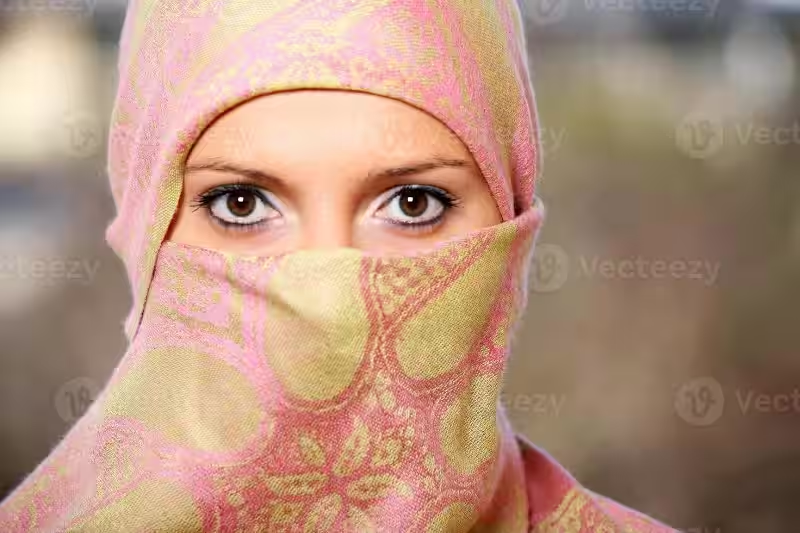
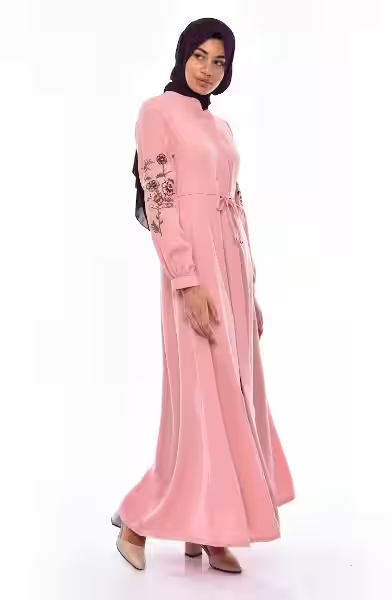
The Muslim hijab is a topic frequently misunderstood and debated. It’s far more than just a piece of clothing; it’s a deeply personal and multifaceted symbol with diverse interpretations and significant social implications. This article aims to provide a clear, approachable understanding of the hijab, exploring its history, religious context, and modern interpretations.
The Quran, the central religious text of Islam, doesn’t explicitly prescribe the hijab as it’s commonly understood today. The Arabic word “hijab” itself primarily translates to “partition” or “barrier,” signifying a broader concept of separation or modesty. Verses in Surah An-Nur and Al-Ahzab, frequently cited in discussions about women’s dress, are open to various interpretations. Some scholars argue these verses apply specifically to the Prophet Muhammad’s wives, emphasizing their unique position and the need for their protection from unwanted attention. Others interpret them as recommendations for modest dress, rather than strict commandments.
This lack of explicit, universally agreed-upon commandment contributes to the diverse interpretations and practices surrounding the Muslim hijab. The understanding of what constitutes “modest dress” varies significantly across different Muslim communities and individuals, influenced by cultural norms, personal beliefs, and interpretations of Hadith (the sayings and traditions of the Prophet Muhammad) and Fiqh (Islamic jurisprudence).
The Historical Evolution of Veiling
The practice of veiling predates Islam by centuries. Evidence suggests veiling existed in various forms across numerous cultures and religions, including ancient Mesopotamia, Greece, and amongst certain Jewish and Christian communities. In pre-Islamic Arabia, veiling was often linked to social status – elite women frequently veiled, while those of lower social standing, such as slaves and prostitutes, did not. This historical context is crucial to understanding how the current significance of the hijab has evolved over time, shaped by societal norms and evolving interpretations of religious texts.
Some scholars propose that the obligation for veiling, as understood in certain interpretations, was originally intended primarily for the Prophet Muhammad’s wives, to protect their privacy and sanctity—a unique context not directly applicable to all Muslim women. The evolution of the hijab demonstrates a complex interplay between religious belief and sociocultural factors.
Modern Interpretations and Global Variations
Modern interpretations of the Muslim hijab are remarkably diverse. Some emphasize a woman’s autonomous right to choose whether or not to wear it, aligning with the core Islamic principle of “no compulsion in religion.” Other interpretations maintain the traditional view that wearing the hijab is obligatory for adult Muslim women. This diversity reflects the broad spectrum of beliefs and practices within the global Muslim community.
The global prevalence of hijab-wearing is far from uniform. Some countries mandate the hijab by law, while others restrict or outright ban it. Many more experience informal social pressures, either for or against its use. The legal and social landscapes surrounding the hijab vary dramatically across nations. For example, Iran legally mandates it but enforcement and interpretations fluctuate. Saudi Arabia formally requires it, yet enforcement varies significantly. Turkey, after a period of prohibition, now allows it freely. Europe exhibits a wide range of legal approaches, with some countries even banning full-face veils in public spaces.
The Hijab and Contemporary Debates
The Muslim hijab has become a focal point of controversy, particularly in Western nations. Discussions surrounding it are often entwined with debates about religious freedom, women’s rights, and, unfortunately, Islamophobia. Hijab-wearing women frequently face discrimination in various sectors, including employment, with studies revealing both overt and covert biases that negatively impact their well-being.
However, it’s equally important to acknowledge that many women find strength and a sense of community in wearing the hijab, viewing it as a source of empowerment and religious identity. The ongoing debate underscores the complex interplay of religious belief, cultural practice, and political discourse surrounding the Muslim hijab. It’s crucial to approach this discussion with sensitivity, recognizing the diverse experiences and perspectives of Muslim women. This complexity demands nuanced understanding and respectful dialogue, moving beyond simplistic generalizations.
The Muslim hijab’s significance is deeply personal and multifaceted. It’s not a monolithic symbol, nor is its meaning uniformly interpreted. Understanding its historical and cultural context, alongside the diverse range of modern interpretations, is crucial for fostering respectful dialogue and combating harmful stereotypes. The hijab is a complex issue with no single, simple answer. Respectful dialogue, acknowledging the diverse experiences and perspectives of Muslim women, is crucial to fostering understanding.
Frequently Asked Questions about the Muslim Hijab
What is a hijab?
The hijab is a head covering worn by many Muslim women. It’s a broad term encompassing various styles and interpretations, ranging from a simple headscarf to a more encompassing veil that covers the entire head and sometimes the face. The term “hijab” itself, in Arabic, primarily means “partition” or “barrier,” extending metaphorically to the concept of modesty and a spiritual separation between humanity and God.
Does the Quran explicitly mandate the wearing of a hijab?
No, the Quran doesn’t explicitly mandate the hijab in the way it’s commonly understood today. While verses in Surah An-Nur and Al-Ahzab are often cited in discussions about women’s dress, their interpretations vary significantly among scholars. Some scholars argue these verses apply specifically to the Prophet Muhammad’s wives, while others see them as recommendations rather than strict commands.
What are the different interpretations of the hijab?
Interpretations of the hijab are diverse and influenced by cultural context, personal beliefs, and varying understandings of religious texts (Quran and Hadith). Some Muslims view wearing a hijab as an obligatory act of faith for adult women; others emphasize a woman’s autonomous right to choose, aligning with the Quranic principle of no compulsion in religion. The extent of covering (hair only, hair and neck, or full body including the face) also varies widely based on these interpretations.
What is the historical context of the hijab?
The practice of veiling predates Islam. Different forms of head coverings existed in various cultures and religions, including ancient Mesopotamia, Greece, and among Jewish and Christian communities. In pre-Islamic Arabia, veiling was often associated with social status. The current understanding of the hijab’s significance evolved over time, shaped by social norms and interpretations of religious texts. Some scholars believe the obligation, if any, was originally intended primarily for the Prophet Muhammad’s wives.
This is a complex and highly debated question. While some view the hijab as a symbol of female oppression, enforced by patriarchal structures, many Muslim women wear it as a personal choice, a form of empowerment, and an expression of their religious identity and connection to their faith. The hijab’s meaning varies widely depending on the individual and their context. It’s crucial to avoid generalizations and recognize the diverse experiences of Muslim women.
What are the challenges faced by hijab-wearing women?
Hijab-wearing women often face discrimination and prejudice, particularly in Western societies. This includes potential bias in employment, education, and public spaces. Islamophobia and misunderstandings surrounding the hijab contribute to these challenges. However, it’s also important to acknowledge the strength and community many women find in wearing the hijab.
How does the legal status of the hijab vary across the world?
The legal status of the hijab varies significantly across the globe. Some countries mandate its wearing; others restrict or ban it entirely; and many experience informal social pressures for or against its use. This variability highlights the complex interplay between religious freedom, cultural norms, and political discourse. Examples include Iran (mandated but with varying enforcement), Saudi Arabia (formally required, varying enforcement), Turkey (former ban lifted), and various European countries with varying legal approaches, including some bans on full-face veils in public spaces.
Finding the perfect canine companion can be a life-changing experience. If you’re searching for a loyal and loving Labrador Retriever in New Jersey, understanding the landscape of rescue organizations is crucial. This article explores the world of Labrador rescues in NJ, focusing on the vital role they play in finding loving homes for dogs in…
Access to healthcare shouldn’t be determined by financial limitations. This is the core principle behind charity care programs, and New Jersey offers a robust system to assist residents facing financial hardships. Understanding how to navigate this system is crucial for those who need it. This article will guide you through the essentials of charity care…
Many immigration attorneys rely on the American Immigration Lawyers Association (AILA) for their Continuing Legal Education (CLE) requirements. Recently, AILA underwent a significant system change, transitioning from its webCLE platform to a new, centralized system called My CLE. This change impacts how you access, track, and report your immigration law CLE credits. Understanding this transition…
Are you ready to ditch the 9-to-5 grind and embrace the freedom of remote work overseas? The allure of working from a beach in Bali, a café in Lisbon, or a mountain cabin in the Swiss Alps is undeniable. But finding legitimate, fully remote work opportunities that allow you this lifestyle can be challenging. That’s…
Landing your dream Security Supervisor job in 2025 requires more than just experience; it necessitates a compelling and strategically crafted resume. This guide will walk you through creating a security supervisor resume that stands out from the competition and gets you noticed by recruiters. Understanding the Security Supervisor Resume Landscape The job market for security…
Finding the right hospitality resources can be crucial for the success of any business in the industry. Whether you’re running a bustling restaurant, a quiet bed and breakfast, or a large hotel chain, access to reliable suppliers and support networks is paramount. This article will explore the diverse landscape of hospitality resources, focusing on both…