So you need to write an amicus brief? The prospect can seem daunting, but with a structured approach and a well-crafted amicus brief template, the process becomes significantly more manageable. This article will equip you with the knowledge and resources to create a compelling and effective amicus brief.
Understanding the Purpose and Structure of an Amicus Brief
An amicus curiae brief, often shortened to “amicus brief,” is a legal document filed in a court by an entity not directly involved in the case. “Amicus” is Latin for “friend of the court.” These briefs offer the court additional information or perspectives relevant to the case. They are not intended to replace the arguments of the parties directly involved, but rather to supplement them. Judges often find amicus briefs helpful, particularly when complex issues of law or fact are at play.
The goal of an amicus brief is to persuade the court to adopt a particular viewpoint. Unlike a party’s brief, which is focused on the specific interests of that party, an amicus brief can take a broader perspective and address wider implications of the case’s outcome. This allows amici to contribute expertise and bring unique insights to the court’s consideration.
Key Components of an Effective Amicus Brief
A well-structured amicus brief typically includes the following sections:
Introduction: States the purpose of the brief and identifies the amicus curiae.
Summary of the Argument: Briefly outlines the main points of the brief.
Statement of Interest: Explains why the amicus is qualified to submit the brief and its interest in the case.
Summary of the Case: Provides a concise overview of the facts and procedural history.
Argument: Presents the amicus’s legal arguments, supported by relevant case law, statutes, and other authorities.
Conclusion: Summarizes the amicus’s arguments and requests a specific outcome.
Each section is crucial, and neglecting one may weaken the overall impact of the brief. A clear and concise writing style is paramount throughout.
Finding and Utilizing an Amicus Brief Template
While there’s no single universally accepted amicus brief template, many courts provide guidelines or examples on their websites. These guidelines often include formatting requirements, such as font size, margins, and page limits. Searching for “[Court Name] amicus brief guidelines” will often yield helpful results.
Beyond court-specific guidelines, numerous legal resources and writing guides offer amicus brief templates. These templates usually provide a structured framework, making it easier to organize your thoughts and ensure all necessary elements are included. Using an amicus brief template gives you a head start by providing the basic structure and formatting.
Adapting the Template to Your Specific Needs
Remember, an amicus brief template is just a starting point. You must adapt it to the specifics of your case. The arguments, facts, and legal authorities you use will be directly related to the case before the court. Simply filling in a template won’t suffice; you need to conduct thorough legal research and tailor the content to be persuasive and relevant to the judge.
Don’t be afraid to modify the template. If a section doesn’t seem necessary for your particular case, you can remove it or condense it. Conversely, if you need to add sections, feel free to do so, maintaining a logical flow and clear organization.
Crafting a Compelling Argument: Key Considerations
The heart of any successful amicus brief lies in the persuasiveness of its argument. This involves more than simply stating your position; it requires building a strong, logical case with supporting evidence.
Strong Evidence and Legal Authority
Your argument must be grounded in solid legal authority. Cite relevant cases, statutes, regulations, and scholarly articles to support your claims. The strength of your evidence directly impacts the credibility of your brief. Weak or irrelevant evidence will undermine your argument.
Ensure that your citations are accurate and complete, following the citation style specified by the court. Inaccurate or incomplete citations can seriously damage your credibility.
Clear and Concise Writing
Clarity and conciseness are essential. Judges have limited time to review briefs; a rambling, disorganized brief is unlikely to be persuasive. Use precise language, avoid jargon, and structure your sentences for clarity. Every sentence should contribute to your overall argument.
Employ a clear and logical structure. Organize your argument into distinct points, each with its own supporting evidence. Use headings and subheadings to guide the reader and enhance readability.
Even with a well-crafted amicus brief template, the process rarely involves a solitary effort. Collaboration with experienced legal professionals is often invaluable. Their expertise in legal writing and procedure can significantly enhance the quality of your brief.
The Importance of Thorough Review
Before filing, have your amicus brief reviewed by multiple individuals. Multiple sets of eyes can catch errors in logic, grammar, and legal citations that you might have missed. A fresh perspective can often identify weaknesses or areas needing improvement.
This review process is crucial for ensuring the brief is clear, persuasive, and free from errors, maximizing its impact on the court. Remember, a poorly written or poorly researched brief can harm your credibility and the cause you are supporting. Using an amicus brief template is a great start, but careful planning, writing, and review are vital for success.
Amicus Brief Template FAQ
Here are some frequently asked questions about amicus brief templates:
What is an amicus brief?
An amicus brief (“friend of the court” brief) is a document filed in a court case by an individual or group who is not a party to the case but has a strong interest in the outcome. Amicus briefs aim to provide the court with information or perspectives relevant to the case that may not be presented by the parties involved. They often offer legal arguments, supporting evidence, and analysis to help the court reach a just decision.
Where can I find an amicus brief template?
There isn’t one universally accepted “official” amicus brief template. However, many legal organizations and law schools provide sample templates or guides. Searching online for “amicus brief template” will yield various resources, including those from court websites, legal aid organizations, and law school websites. Remember that the specific formatting requirements will depend on the court to which you are submitting the brief.
What are the key components of an amicus brief template?
While the specific components may vary slightly, most successful amicus brief templates include:
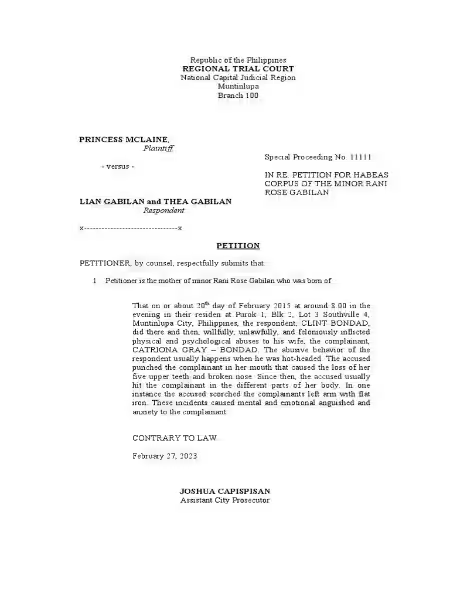
Cover Page: Identifying information about the case, the amicus curiae (the filer), and contact information.
Table of Contents: Clearly organizing the brief’s sections.
Introduction: Briefly stating the amicus’s interest in the case and the purpose of the brief.
Summary of the Argument: Concisely presenting the main points the amicus is making.
Argument: Developing the amicus’s legal arguments with supporting evidence and case law. This is the core of the brief.
Conclusion: Summarizing the amicus’s position and urging the court to adopt it.
Certificate of Service: Proof that the brief has been properly served on opposing parties.
Appendices (if applicable): Supporting documents such as relevant statutes, case law, or expert reports.
What are the formatting requirements for an amicus brief?
Formatting requirements for amicus briefs vary depending on the court. Always check the specific court’s rules regarding font size, margins, line spacing, citation format (usually Bluebook), and page limits. These rules are crucial; failure to comply can lead to rejection of your brief. The court’s website is the best resource for this information.
How long should an amicus brief be?
Length restrictions vary by court. Some courts have strict page limits (e.g., 20-30 pages), while others may be more lenient. Regardless of the page limit, brevity and clarity are always essential. Focus on the most compelling arguments and evidence.
What information should I include in an amicus brief?
An effective amicus brief provides information and perspectives relevant to the issues before the court that are not adequately covered by the parties. Include only information directly supporting your arguments. This might include:
Relevant legal precedents and case law.
Statistical data or other empirical evidence.
Expert opinions and analysis.
Policy considerations.
Remember to cite all sources properly to avoid plagiarism.
Can I use a generic template and adapt it to my specific case?
While using a generic template as a starting point is acceptable, thoroughly adapt it to the specifics of your case. Simply changing the case name and some details isn’t sufficient. You must tailor the arguments, evidence, and analysis to directly address the issues presented in the specific case before the court. A poorly adapted brief is less effective than no brief at all.
Are you looking for a credit union that prioritizes community, convenience, and rewarding its members? Look no further than Community Choice Credit Union Redford. Located at 25447 Five Mile Road, Redford, MI 48239, this credit union offers a comprehensive range of financial services and a commitment to exceptional member experiences. Let’s explore what makes Community…
The world of table tennis equipment can be daunting, especially when choosing a rubber. One name consistently pops up in discussions among players of all levels: DHS Hurricane 3. This legendary rubber has a rich history and a devoted following, but is it the right choice for you? This article delves into the details of…
Many people wonder about the best way to travel from Charlottesville, Virginia, to New York City. While a direct train doesn’t exist, several convenient options combine train travel with other modes of transportation to create a comfortable and efficient journey. This article will explore your choices, offering insights to plan your Charlottesville to New York…
Many Ohio residents find themselves facing the challenge of a suspended driver’s license. Reinstating driving privileges often involves navigating a complex process and incurring significant fees. Thankfully, Ohio has occasionally offered amnesty programs to alleviate this burden. This article will explore the details of a past Ohio amnesty program, providing insights that can inform future…
Facing the reality that your mentally ill daughter is destroying your family is incredibly painful and overwhelming. It’s a situation that demands understanding, compassion, and a strategic approach. This article isn’t about blame; it’s about equipping you with the knowledge and tools to navigate this challenging terrain and protect both your family and your daughter….
Temporary works are an often-overlooked yet crucial component of any construction project. They are temporary structures and systems designed to support the construction process, ensuring safety and enabling efficient work. But how much do you really understand about these essential elements? This article will delve into the world of temporary works, exploring their purpose, management,…