Have you ever wondered about the power of a single piece of paper to affect someone’s liberty or property? This article explores the fascinating world of writs, formal legal documents that, for centuries, have been the cornerstone of legal systems worldwide. We’ll delve into what writs are, their historical significance, different types, and their modern-day relevance, focusing on a particularly important example: the writ of habeas corpus.
A writ is a formal written order issued by a court or other competent authority, commanding a person or entity to perform or refrain from performing a specific act. Think of it as a legally binding instruction from a body with power. These aren’t mere requests; they carry the full weight of the law behind them. Non-compliance can lead to serious legal consequences.
The origins of writs trace back to medieval England, initially used to resolve land ownership disputes. Over time, they evolved into a diverse set of legal instruments, now integral to the functioning of many legal systems. The power to issue a writ signifies the authority of the issuing body over the recipient, making it a powerful tool within the legal framework.
Types of Writs: A Diverse Toolkit
The legal system utilizes various types of writs to accomplish different objectives. Some common examples include:
Warrants: These authorize law enforcement to take specific actions. Examples include search warrants (allowing searches of property), arrest warrants (authorizing the apprehension of individuals), and execution warrants (authorizing the carrying out of a death sentence in jurisdictions where capital punishment exists).
Subpoenas: These compel witnesses to appear in court and testify or to produce evidence relevant to a legal proceeding. They are vital for ensuring fairness and access to information within the legal process.
Writs of Certiorari: This writ plays a critical role in the appellate process, particularly in the U.S. Supreme Court. It allows the higher court to review a decision made by a lower court, ensuring consistency and correctness in judicial rulings.
Writs of Execution: Issued after a judgment, these writs serve as the mechanism for enforcing court decisions. They empower authorities to seize and sell property to satisfy a debt or another court-ordered obligation. This ensures that judgments aren’t merely theoretical pronouncements but have practical consequences.
Writs of Seizure and Sale: Similar to writs of execution, these writs specifically target the seizure and sale of property to satisfy a debt or other financial obligation. They provide a concrete method for enforcing financial judgments.
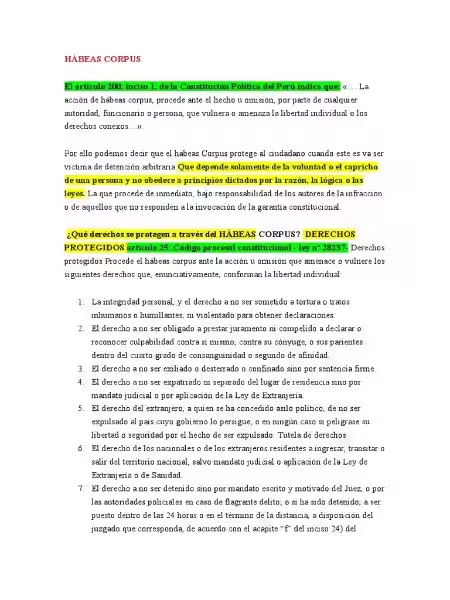
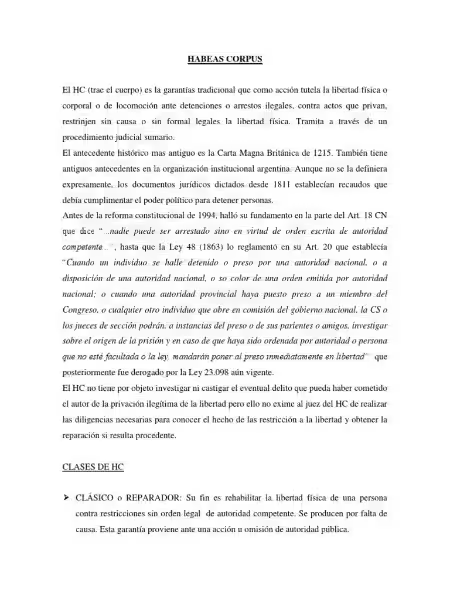
Among these diverse writs, the writ of habeas corpus holds a unique and vital position. Often called the “Great Writ,” it directly addresses the fundamental right to liberty and due process. It literally translates to “to have the body” and is used to challenge the legality of someone’s imprisonment or detention.
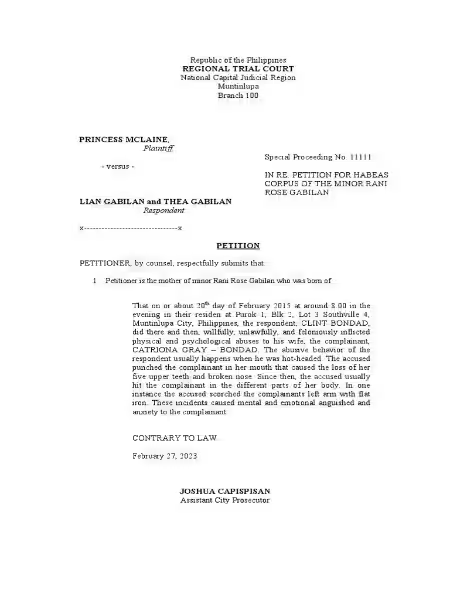
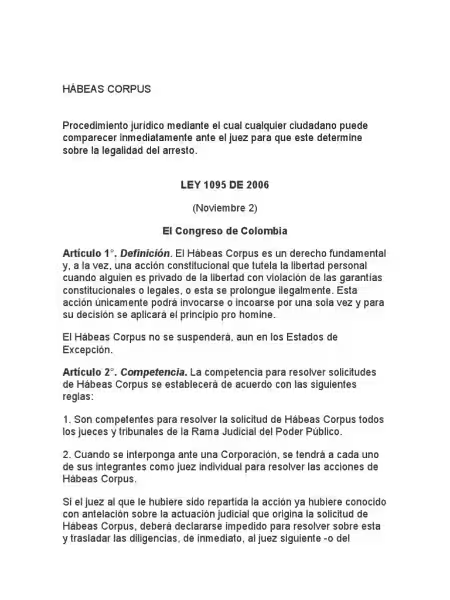
Specifically, a writ of habeas corpus compels the custodian of a detained person (e.g., a prison warden or police officer) to bring that person before a court and justify the legal basis for their detention. The court then reviews the justification to ensure that the detention is lawful, that the legal process was followed, and that the individual is not being held unlawfully. This writ acts as a crucial check on governmental power, preventing arbitrary or unlawful imprisonment. Its impact is far-reaching, safeguarding individual liberty against potential abuse of power.
The writ of habeas corpus is not just a historical relic; it continues to be invoked in modern times to challenge unlawful detention, potentially arising from errors in legal proceedings, arbitrary arrests, or other violations of individual rights. Its continued relevance underscores its importance in protecting the fundamental principles of justice and freedom.
Writs in the Modern Legal Landscape
While writs were once the primary mechanism for obtaining legal recourse in many areas, modern legal systems offer alternative avenues. Lawsuits and motions filed in civil court often provide more efficient or appropriate methods for addressing certain legal issues. However, writs retain their significance and remain indispensable tools for addressing specific legal problems, particularly concerning fundamental rights and the enforcement of court judgments.
The use of a writ, therefore, is a matter of strategy and appropriateness within the legal context. While a lawsuit might be better suited for resolving a contract dispute, a writ of habeas corpus is the ideal route to challenge unlawful imprisonment. The choice depends on the specific legal issue at hand and the most effective means of achieving the desired legal outcome. Understanding the various types of writs and their applications is fundamental to navigating the legal system effectively.
Frequently Asked Questions: Habeas Corpus
What is a writ of habeas corpus?
A writ of habeas corpus is a specific type of writ, a formal legal document issued by a court. It’s a fundamental legal right that protects individuals from unlawful imprisonment. Essentially, it demands that a person who is being detained be brought before a judge and that the legality of their detention be reviewed. The writ compels the authority holding the individual (like a jailer or warden) to justify the detention, showing cause for why the person is being held.
What is the purpose of a writ of habeas corpus?
The primary purpose is to ensure that a person’s imprisonment is lawful. It acts as a check on the power of the state to detain individuals, preventing arbitrary or illegal arrests and detentions. It allows the court to examine whether the detention is justified by sufficient legal grounds, such as a valid arrest warrant or conviction. If the detention is deemed unlawful, the court can order the immediate release of the individual.
Who can file for a writ of habeas corpus?
Generally, the detained individual or someone acting on their behalf (like a family member or lawyer) can file for a writ. The writ can be filed in a court with jurisdiction over the place of detention. The specific procedures and requirements for filing may vary depending on the jurisdiction.
What happens after a writ of habeas corpus is filed?
Once filed, the court will review the application and may schedule a hearing. The authority holding the individual must present evidence to justify the detention. The court will then determine whether the detention is lawful based on the evidence presented. This might involve reviewing the arrest warrant, evidence supporting charges, or other relevant legal documents.
What are the potential outcomes of a habeas corpus case?
The court can rule in several ways: it might uphold the legality of the detention, in which case the individual remains imprisoned. Alternatively, it may find the detention unlawful, ordering the immediate release of the individual. In some cases, the court might order further proceedings, such as a trial or a bail hearing, before making a final decision on the legality of the detention. The outcome depends entirely on the specific facts and circumstances of each case.
Is a writ of habeas corpus always successful?
No, a writ of habeas corpus is not guaranteed to result in release. The court will only release an individual if it finds the detention to be unlawful. Many factors contribute to the success of a writ of habeas corpus, including the strength of the evidence presented by both sides, and the legal arguments made. The specific laws and precedents of the relevant jurisdiction also play a significant role.
How does a writ of habeas corpus relate to other legal writs?
The writ of habeas corpus is one type of writ among many. While other writs like warrants and subpoenas address different legal matters, they share a common characteristic: they are formal court orders directing specific actions to be taken or not taken. They all signify the court’s authority and the legal consequences of non-compliance. However, habeas corpus specifically focuses on the legality of detention.
Are you passionate about securing funding for worthwhile causes? Do you thrive in a fast-paced environment, juggling multiple deadlines and responsibilities with meticulous attention to detail? Then a career as a grant coordinator might be the perfect fit for you. This article delves into the multifaceted role of a grant coordinator, exploring the essential skills,…
Developing a successful marketing campaign requires more than just a catchy slogan. It demands a strategic and creative approach that seamlessly blends brand vision with audience needs. This article explores the key elements of creative campaign development, offering a practical framework for creating impactful campaigns that drive measurable results. Understanding the Creative Campaign Development Process…
Are you tired of lugging heavy water jugs, paying exorbitant prices for bottled water, or worrying about the quality of your tap water? Then you’re in the right place. This article explores the benefits of investing in a whole-house water filtration system, focusing on how Freedom Water Systems can provide you with the freedom water…
This essay explores the multifaceted reasons why abortion should remain legal, focusing on the ethical, practical, and social implications of restricting access to this crucial healthcare procedure. We will examine the core arguments in favor of legal abortion and address common counterarguments. Bodily Autonomy: The Cornerstone of the Argument The most fundamental argument for legal…
Choosing a facial plastic surgeon is a significant decision. You’re entrusting your appearance and well-being to a skilled professional, and finding the right fit is crucial. This article will delve into the expertise and background of Dr. Christopher Cote in Denver, helping you understand why he’s a leading choice for many seeking facial rejuvenation or…
Finding affordable housing in Sacramento can be challenging, and unexpected financial hardship can make paying rent even tougher. This guide outlines available resources to help you navigate the process of seeking assistance with rent in Sacramento, CA. While some programs have specific limitations, understanding your options is the first step towards securing stable housing. Sacramento…