Understanding the difference between arrest and conviction for a delito menor en Estados Unidos is crucial. Many people mistakenly believe that an arrest automatically leads to a criminal record. This is inaccurate, and the implications of this misunderstanding can be significant. This article will clarify the distinction between these two stages of the legal process, particularly focusing on minor offenses.
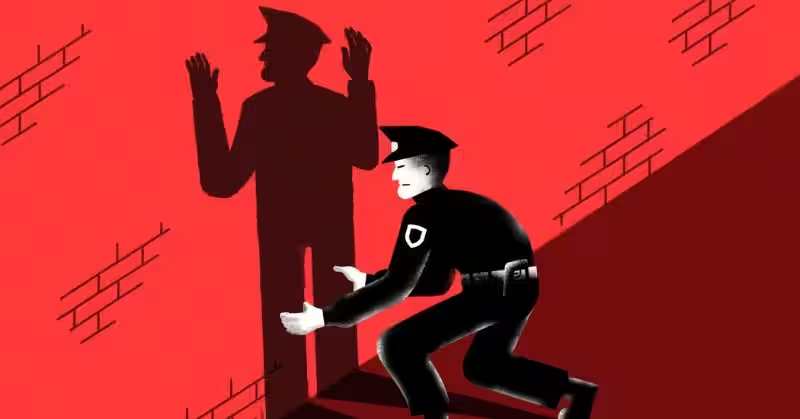
An arrest is simply the act of being taken into custody by law enforcement. It’s an initial step in the legal process, a detention based on suspicion of criminal activity. Think of it as a temporary hold, a point where the police believe they have sufficient evidence to detain you for investigation.
Crucially, an arrest does not automatically translate into a conviction. The prosecutor, the individual responsible for bringing charges, has the discretion to file charges or not. Even if charges are filed for a delito menor, the case could still be dismissed before going to trial, or you could be found not guilty after a trial. Therefore, an arrest itself carries no lasting negative impact on your record.
The Significance of a Conviction
A conviction, on the other hand, is a completely different matter. A conviction is a formal finding of guilt by a court of law. This determination of guilt is permanently recorded, regardless of the severity of the offense, whether it’s a serious felony or a relatively minor delito menor en Estados Unidos.
Even if the penalty for your delito menor involves only fines, community service, or alternative sentencing programs, the conviction remains on your record. This permanent record can have significant long-term consequences as we’ll discuss below.
The impact of a conviction, even for a seemingly minor offense, can be far-reaching. Here are some key areas affected:
Employment: Many employers conduct background checks, and a criminal record, even for a delito menor, can significantly hinder your job prospects.
Housing: Landlords may refuse to rent to individuals with criminal records, limiting housing options.
Travel: Certain countries may deny entry to individuals with criminal convictions.
Education: Some educational institutions may consider criminal records during admissions.
Professional Licensing: Certain professions require background checks, and a conviction could prevent you from obtaining or maintaining a license.
Delito Menor en Estados Unidos: Navigating the System
The legal system can be complex, particularly when facing even minor charges. Understanding the differences between arrest and conviction and the implications of each is paramount. While an arrest is a temporary interruption, a conviction can have long-term repercussions impacting various aspects of your life.
Therefore, seeking legal counsel is strongly recommended, especially when dealing with any legal proceedings, including those involving a delito menor en Estados Unidos. A lawyer can help you navigate the complexities of the legal process, protect your rights, and work towards the best possible outcome, potentially avoiding a conviction altogether.
Protecting Your Rights
Navigating the legal system alone can be daunting and lead to unintended consequences. Remember that you have rights. These rights include:
The right to remain silent: You are not obligated to answer questions from law enforcement without legal representation.
The right to an attorney: If you cannot afford an attorney, one will be appointed to you.
The right to a fair trial: You are entitled to a fair and impartial trial according to the law.
Conclusion: The Importance of Legal Counsel
The distinction between arrest and conviction for a delito menor en Estados unidos is significant. An arrest is a temporary detention, not a determination of guilt. However, a conviction is a permanent record with lasting consequences. Understanding this difference is crucial for protecting your future. Seeking legal counsel as soon as possible is highly recommended, preventing potentially negative ramifications on your life and career. Don’t face the legal system alone; professional guidance can significantly improve your chances of a positive outcome. Remember, proactive legal representation can make all the difference in mitigating the long-term impact of any legal situation, even those involving minor offenses. By understanding your rights and seeking legal advice, you can navigate the complexities of the legal system and protect your future.
Frequently Asked Questions: Minor Offenses in the United States
Here are some frequently asked questions about minor offenses (misdemeanors) in the United States. Please remember this information is for general knowledge and does not constitute legal advice. Consult with an attorney for advice specific to your situation.
What is the difference between an arrest and a conviction for a misdemeanor in the US?
An arrest is when the police detain you. It is not a determination of guilt. The prosecutor may choose not to file charges, charges may be dismissed, or you may be acquitted at trial. A conviction, on the other hand, is a formal finding of guilt by a court. A conviction is a permanent part of your record, regardless of the punishment (fines, community service, etc.).
Does an arrest for a misdemeanor affect my record?
No, an arrest for a misdemeanor does not automatically affect your record. Only a conviction appears on your criminal record.
What are the long-term consequences of a misdemeanor conviction?
A misdemeanor conviction can have lasting consequences, impacting your employment opportunities, housing applications, travel, and other aspects of your life. The severity of the consequences varies depending on the specific offense and your state’s laws.
If I’m arrested for a misdemeanor, do I need a lawyer?
While not always mandatory, it is strongly recommended that you seek legal counsel if you are arrested for a misdemeanor. An attorney can help you navigate the legal process, protect your rights, and minimize potential negative consequences.
What happens if the prosecutor doesn’t file charges after an arrest?
If the prosecutor decides not to file charges after an arrest, the arrest will not appear on your criminal record. The case is essentially closed.
Can a misdemeanor conviction be expunged or sealed?
Some states allow for the expungement or sealing of misdemeanor convictions after a certain amount of time has passed and under specific circumstances. The eligibility criteria vary by state and the specific offense. An attorney can advise you on the possibility of expungement or sealing in your case.
Are the consequences of a misdemeanor conviction the same across all states?
No, the consequences of a misdemeanor conviction vary significantly from state to state. Laws and sentencing guidelines differ considerably.
What types of offenses are considered misdemeanors?
Misdemeanors encompass a wide range of offenses, typically less serious than felonies. Examples include petty theft, simple assault, drunk driving (depending on circumstances), and many traffic violations. The specifics vary by jurisdiction.
How is a misdemeanor case different from a felony case?
Misdemeanors are generally less serious offenses than felonies, resulting in less severe penalties. Felony convictions typically carry more significant consequences, including longer prison sentences. The distinction between a misdemeanor and a felony is determined by state law.
Where can I find more information about misdemeanors in my state?
You can find more information by contacting your state’s bar association, searching your state’s legal websites, or consulting with a local attorney specializing in criminal law.
The modern workplace is evolving rapidly, demanding a more strategic and holistic approach to managing people. This shift necessitates a move beyond traditional Human Resources (HR) towards a People & Culture (P&C) model. This article explores the vital role of a People and Culture Director and how this position differs from a traditional HR Director….
Many couples embarking on the journey to parenthood find themselves navigating the complex world of fertility medications. Knowing where to turn for reliable refills, accurate information, and compassionate support can feel overwhelming. This article explores how Freedom Fertility Pharmacy, originally Freedom Drug, simplifies this process, providing peace of mind and empowering you to focus on…
Are you struggling to manage your finances effectively? Do you feel overwhelmed by debt, budgeting, or planning for the future? You’re not alone. Many individuals and families benefit from the support and resources offered through financial capability programs. These programs offer a lifeline to those looking to build a more secure financial future. This article…
This article explores the allure of the Supreme x Nike Air Force 1 Low “Box Logo White,” focusing on what makes these supreme white ones so desirable and influential within the streetwear community. We’ll examine the design choices, the impact of minimalism, and the enduring appeal of this seemingly simple sneaker. The Allure of Minimalism:…
Many administrators encounter challenges when configuring Group Policy trusted sites. A common issue arises when attempting to add specific websites to the Internet Explorer Trusted Sites zone using Group Policy Object (GPO) Preferences. This often manifests as a disabled or “grayed out” “Sites” button within the relevant GPO setting, preventing the addition of URLs. Let’s…
The Trump administration’s labeling of certain jurisdictions as “sanctuary cities” sparked significant debate, and Washington state was not immune. The designation, while carrying significant weight, has been plagued by questions regarding its accuracy and the methodology behind it. This article explores the complexities surrounding the claim that Washington state harbors numerous “sanctuary cities,” examining the…