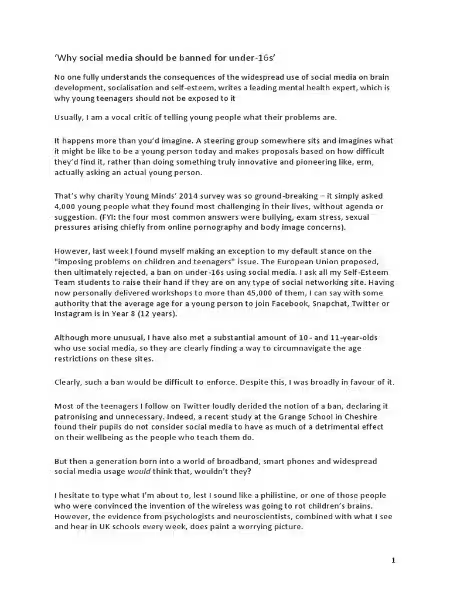
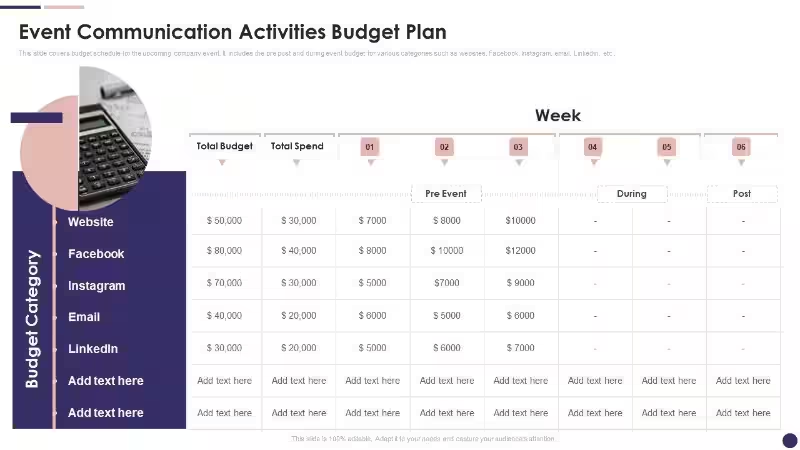
The rise of digital media has democratized information dissemination, empowering individuals to share their perspectives globally. However, this accessibility has also fostered a breeding ground for misinformation, propaganda, and outright manipulation. Understanding the potential harms of a dangerous press is crucial for navigating the complex information landscape of the modern world. This article explores the various facets of a dangerous press, its impact on society, and strategies for effective media literacy.
A dangerous press isn’t simply one that publishes controversial or unpopular opinions. It’s one that actively undermines truth, spreads disinformation, incites hatred, or manipulates public opinion for personal or political gain. This can manifest in various forms, from outright fabrication of news to subtle biases and manipulative framing. The line between legitimate journalism and a dangerous press can be blurry, requiring critical thinking skills to discern.
The key characteristics often include a disregard for journalistic ethics, including fact-checking and sourcing. A bias towards sensationalism, often at the expense of accuracy, is also a major indicator. Ultimately, a dangerous press prioritizes its own agenda over informing the public truthfully.
The Tactics of a Dangerous Press: How Misinformation Spreads
Many tactics are used to create a dangerous press environment. These tactics often exploit psychological vulnerabilities and leverage the ease of spreading information online.
Propaganda and Disinformation
Propaganda deliberately uses biased or misleading information to promote a particular political cause or point of view. Disinformation, on the other hand, is the deliberate creation and spreading of false information. Both are potent tools employed by a dangerous press to sway public opinion and undermine trust in legitimate sources. The sheer scale of social media makes it easy for this information to spread rapidly, often before fact-checks can be disseminated.
The speed and ease of sharing false information online often outpaces the ability of fact-checkers and media outlets to debunk it. This creates an environment where misinformation can take root and influence public perception even after it’s been proven false.
Sensationalism and Clickbait
Sensationalism prioritizes exciting or shocking content over accuracy or context. This drives engagement but can distort reality and contribute to a climate of fear and distrust. Clickbait headlines and misleading thumbnails are frequently used to lure readers into articles that may contain false or misleading information.
The pressure to attract clicks and generate revenue can incentivize media outlets to prioritize sensationalism over responsible reporting. This can lead to a cycle of escalating sensationalism, as outlets compete for attention by pushing the boundaries of acceptable journalistic practices.
Conspiracy Theories and Echo Chambers
Conspiracy theories, often fueled by a dangerous press, thrive in echo chambers – online spaces where like-minded individuals reinforce each other’s biases without exposure to dissenting viewpoints. This creates a feedback loop that strengthens pre-existing beliefs and makes individuals more resistant to counter-arguments.
The algorithms of many social media platforms can inadvertently contribute to the formation of echo chambers. By prioritizing content that aligns with a user’s past interactions, these algorithms can limit exposure to diverse perspectives and reinforce biases.
The Impact of a Dangerous Press: Real-World Consequences
The consequences of a dangerous press are far-reaching and significant.
Erosion of Trust: Constant exposure to misinformation erodes public trust in institutions, including the media, government, and scientific experts. This makes it harder for society to function effectively, as individuals become more skeptical and less likely to cooperate.
Political Polarization: A dangerous press can exacerbate political divisions by spreading biased information or promoting inflammatory rhetoric. This can lead to increased social unrest and make it difficult to find common ground on important issues.
Public Health Crises: The spread of misinformation about health issues, such as vaccines or pandemics, can have serious consequences for public health. This can lead to lower vaccination rates, increased disease transmission, and a reluctance to seek appropriate medical care.
Combating the Dangerous Press: Developing Media Literacy
To combat the influence of a dangerous press, developing critical thinking and media literacy skills is crucial.
Evaluate Sources: Always check the source of information. Is it a reputable news organization, or is it a biased blog or social media account? Look for evidence of bias or agenda-driven reporting.
Verify Information: Don’t take information at face value. Cross-reference information with multiple sources, and look for independent verification. Be especially skeptical of sensational claims or extraordinary claims without extraordinary evidence.
Identify Bias: Learn to recognize different types of bias, such as confirmation bias, which is the tendency to favor information that confirms pre-existing beliefs.
Be Aware of Manipulation Tactics: Familiarize yourself with common tactics used in a dangerous press, such as clickbait, emotional appeals, and loaded language.
Engage in Constructive Dialogue: Rather than engaging in unproductive arguments with those who share misinformation, try to engage in respectful dialogue and share accurate information from reliable sources.
The existence of a dangerous press is a serious challenge to democratic societies. However, by understanding its tactics and developing strong media literacy skills, individuals can better navigate the complex information landscape and protect themselves from its harmful effects. Active engagement in fact-checking and responsible information sharing is essential in combating the spread of misinformation and building a more informed and resilient society.
Since I don’t have the content of the article “Dangerous Press,” I can only create a hypothetical FAQ section based on a general understanding of what “dangerous press” might entail. This FAQ section will address potential issues and concerns related to irresponsible or harmful journalistic practices. Remember that these answers are hypothetical and might not reflect the specific arguments of the actual article.
What constitutes “dangerous press”?
Dangerous press refers to journalistic practices that intentionally or unintentionally cause harm. This can include the spread of misinformation and disinformation, inciting violence or hatred, invasion of privacy, publishing sensitive information without consent, and neglecting journalistic ethics in the pursuit of a story. It encompasses a range of actions that undermine public trust and can have severe consequences.
How can the press be dangerous to individuals?
The press can be dangerous to individuals through libel and slander, the publication of private information leading to harassment or damage to reputation, and the creation of a hostile environment based on biased or inaccurate reporting. Sensationalized reporting can also lead to undue stress and anxiety for individuals targeted by the media.
What are the dangers of the press to society?
Dangerous press undermines public trust in institutions and information sources. The spread of misinformation and disinformation can have serious consequences, influencing public opinion, affecting elections, and fueling social unrest. It can also lead to the erosion of democratic processes and the normalization of harmful ideologies.
What are some examples of dangerous press practices?
Examples include publishing fabricated stories, manipulating images or videos to create a false narrative (deepfakes), using biased language to sway public opinion, ignoring contradictory evidence, failing to verify sources adequately, and prioritizing sensationalism over accuracy. Ignoring ethical considerations in the pursuit of a story is another key example.
How can we identify dangerous press?
Identifying dangerous press requires critical thinking and media literacy. Look for signs of bias, a lack of evidence or sourcing, contradictory information, inflammatory language, sensationalized headlines, and a failure to present multiple perspectives. Cross-referencing information from multiple reliable sources is crucial.
What can be done to mitigate the dangers of the press?
Combating dangerous press requires a multi-faceted approach. This includes promoting media literacy education, supporting ethical journalism through funding and awards, holding journalists and news organizations accountable for their actions, and fostering a culture of responsible reporting. Increased transparency and self-regulation within the media industry are also essential.
What role do social media platforms play in the spread of dangerous press?
Social media platforms often facilitate the rapid spread of misinformation and disinformation. The algorithms that prioritize engagement can inadvertently amplify harmful content, reaching a wide audience quickly. The lack of editorial oversight on many platforms further exacerbates the problem. Therefore, responsible social media use and platform accountability are critical.
Where can I find more information on responsible journalism and media literacy?
Numerous organizations dedicated to promoting ethical journalism and media literacy provide resources and educational materials. These organizations often offer workshops, online courses, and guides on how to critically evaluate information and identify unreliable or biased sources. Searching online for “media literacy resources” or “ethical journalism” will yield many helpful results.
Knowing how to express your language skills is crucial when traveling or interacting with Spanish speakers. The seemingly simple phrase “I speak a little Spanish” has several nuanced translations in Spanish, each conveying a slightly different level of proficiency and formality. This article will explore these variations, helping you choose the most appropriate phrase for…
Landing your dream social work job starts with a compelling resume. But showcasing your skills effectively requires more than just listing your experience; it demands a strategic approach that highlights your unique blend of hard and soft skills. This guide will walk you through crafting a social work skills resume that stands out, making you…
East Dallas is experiencing a period of significant transformation, fueled by a surge in East Dallas projects that are reshaping its landscape and lifestyle. From revitalized neighborhoods to ambitious infrastructure improvements, the changes are dramatic and far-reaching. This article delves into the key projects currently underway, explores their potential impact on the community, and offers…
Are you passionate about securing funding for worthwhile causes? Do you thrive in a fast-paced environment, juggling multiple deadlines and responsibilities with meticulous attention to detail? Then a career as a grant coordinator might be the perfect fit for you. This article delves into the multifaceted role of a grant coordinator, exploring the essential skills,…
Finding the perfect furry companion can be an incredibly rewarding experience, and for many in the Columbus, Ohio area, that means considering a Labrador Retriever rescue. Labrador Retrievers, known for their friendly and outgoing personalities, make wonderful family pets. However, many deserving Labs find themselves in need of loving homes. This article will guide you…
Finding the perfect internship can be a daunting task. But what if you could land an internship with a globally recognized organization that shapes international trade and commerce? This article will explore the world of ICC internships and offer valuable advice to help you secure one. Understanding the International Chamber of Commerce (ICC) The International…