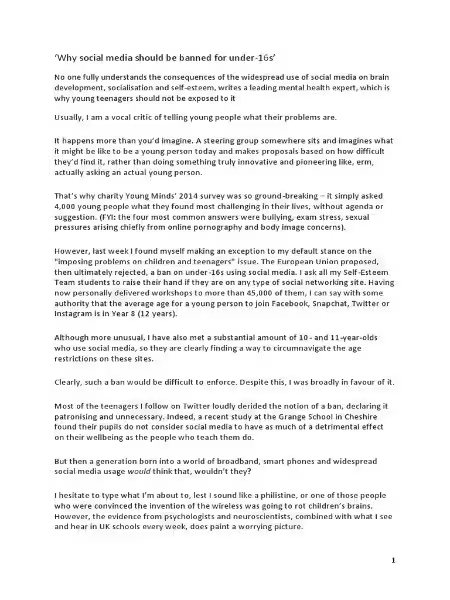
The question of whether TikTok should be banned is a complex one, sparking intense debate worldwide. This article explores the arguments for and against a ban, examining the potential benefits and drawbacks in a balanced manner. Should TikTok be banned? Let’s delve into the pros and cons to find out.
The Case for a TikTok Ban: National Security and Data Privacy
The primary argument for banning TikTok centers on national security and data privacy concerns. TikTok’s parent company, ByteDance, is a Chinese company, and critics fear that the Chinese government could access user data through the app.
This fear isn’t unfounded. China’s National Security Law mandates that Chinese companies cooperate with government requests for data. This raises concerns that the CCP could use TikTok to collect sensitive information about American users, including their location data, browsing history, and even their political leanings. Such data could be used for surveillance, propaganda, or even to influence elections.
Furthermore, the “Digital Silk Road” initiative, a Chinese plan to expand its digital influence globally, adds another layer of concern. A TikTok ban, proponents argue, would be a crucial step in preventing the CCP from leveraging the app to further its geopolitical ambitions and spread its ideology. The potential for subtle manipulation of public opinion through curated content feeds also fuels this concern.
The Counterargument: Freedom of Speech and Economic Impact
Opponents of a TikTok ban argue that such a measure would infringe on freedom of speech and have significant economic repercussions. They contend that banning a platform used by millions to express themselves, connect with others, and even earn a living is a drastic overreach.
A ban would not only silence countless voices but also significantly harm the creators, influencers, and businesses that rely on TikTok for their income. Millions of jobs, both directly and indirectly related to the app, are at stake. The economic impact of such a ban could be substantial, affecting advertising revenue, marketing strategies, and the overall digital economy. Furthermore, a ban could set a dangerous precedent, potentially leading to the censorship of other platforms in the future.
The Balancing Act: Weighing National Security Against Individual Rights
The core of the debate lies in balancing national security concerns with the fundamental right to freedom of speech and the economic implications of a ban. There is no easy answer, as both sides present compelling arguments. The challenge lies in finding a solution that addresses national security risks without stifling individual expression and economic activity.
Proponents of a ban often suggest alternatives, such as stricter data security regulations or requiring TikTok to be more transparent about its data handling practices. However, the effectiveness of these measures remains a subject of debate, with some arguing that they are insufficient to address the fundamental underlying concerns.
International Precedents and the Ongoing Legal Battle
Many countries have already implemented bans or restrictions on TikTok, primarily on government devices. These actions reflect the growing global concern about the app’s potential security risks. However, the legal challenges surrounding a complete ban are significant.
ByteDance’s resistance to selling TikTok to an American company highlights the complexity of the situation. The ongoing legal battles and political maneuvering underscore the difficulty of reaching a resolution that satisfies all parties involved. The sheer scale of TikTok’s user base and its global reach further complicate matters, making a coordinated international response challenging to achieve.
The Role of Regulation: A Middle Ground?
Instead of an outright ban, some suggest focusing on regulation. This approach involves implementing stricter data privacy rules, increasing transparency requirements for TikTok’s algorithms, and enhancing content moderation efforts. Such a strategy aims to mitigate the risks associated with TikTok while preserving the platform’s benefits.
This approach requires careful consideration and collaboration between governments, tech companies, and civil society organizations. It necessitates a deep understanding of the technological capabilities and limitations of monitoring and regulating online content and user data. Finding this balance is crucial, and a hasty or poorly conceived regulatory framework could prove ineffective or even counterproductive.
Conclusion: A Multifaceted Problem Demanding Careful Consideration
The “should TikTok be banned” debate is far from settled. It is a nuanced issue with significant implications for national security, data privacy, freedom of speech, and the global digital economy. A simple “yes” or “no” answer oversimplifies the complex interplay of factors at play.
The decision requires careful consideration of all perspectives, a thorough understanding of the technological landscape, and a commitment to finding a solution that protects national interests while respecting individual rights and fostering a healthy digital environment. Whether a ban, regulation, or a different approach proves most effective remains to be seen, illustrating the evolving nature of this critical challenge in the ever-changing digital world. The ongoing debate itself highlights the need for ongoing discussion and a commitment to finding solutions that balance competing priorities.
Should TikTok Be Banned? An FAQ
What are the main arguments for banning TikTok?
The primary arguments for banning TikTok center around national security and data privacy concerns. Critics fear that TikTok’s Chinese ownership (ByteDance) allows the Chinese Communist Party (CCP) access to user data, potentially enabling surveillance, manipulation of public opinion, and even interference in elections. This concern is amplified by China’s “Digital Silk Road” initiative, aiming to expand its digital influence globally. Furthermore, some argue that TikTok’s content moderation practices are inadequate, leading to the spread of harmful content.
What are the main arguments against banning TikTok?
Opponents of a TikTok ban highlight the infringement on freedom of speech and the economic consequences. A ban would restrict users’ ability to express themselves and connect with others globally. It would also negatively impact the livelihoods of creators, influencers, and businesses reliant on the platform. Furthermore, a ban could strain international relations and lead to retaliatory actions from China. Finally, some argue that a ban is an overreaction and that alternative solutions, such as stricter regulations, could address the concerns without sacrificing free speech or economic activity.
Does TikTok pose a real national security threat?
The extent of the national security threat posed by TikTok is a subject of intense debate. Proponents of a ban point to the potential for data collection and influence operations by the CCP. However, TikTok maintains it has implemented measures to protect user data and denies any direct ties to the CCP influencing its operations. The lack of definitive proof about the extent of CCP access to user data makes this a complex question with no easy answer.
Concerns exist regarding the collection and potential misuse of user data by TikTok. While TikTok claims to have implemented data protection measures, reports of inappropriate data access by employees and the potential for data sharing with the CCP remain significant worries. The lack of transparency and independent verification of TikTok’s data security practices contribute to these concerns.
What is the economic impact of a potential ban?
A TikTok ban would have significant economic consequences. Millions of users, creators, and businesses rely on the platform for income and social connection. A ban would likely cause job losses and disrupt the digital economy. The loss of a major social media platform would also affect advertising revenue and potentially hinder the growth of related industries.
What are the international implications of banning TikTok?
Banning TikTok has international implications. Other countries are also grappling with similar concerns about TikTok’s potential security risks. A US ban could set a precedent for other nations and potentially escalate tensions with China, leading to retaliatory actions against US technology companies.
Are there any alternative solutions to banning TikTok?
Rather than a complete ban, some propose alternative solutions like stricter regulations on data security and content moderation, increased transparency regarding TikTok’s algorithms and data handling practices, and independent audits to ensure compliance. These approaches aim to address the concerns without resorting to a complete ban, which may be seen as heavy-handed and overly restrictive.
What is the current legal status of TikTok in the United States?
The legal status of TikTok in the US is complex and constantly evolving. Legislation has been proposed and amended, aiming to address national security concerns. Legal challenges are ongoing, and the future of TikTok in the US remains uncertain. The outcome will significantly impact the global landscape of social media regulation.
Finding the right workwear can be a challenge. You need durability, comfort, and a good fit, all while staying within budget. This article will guide you through the experience of finding quality workwear in San Jose, specifically focusing on Work World, a store that caters to the needs of professionals across various industries. Work World…
Finding the right support system can be crucial for young adults facing mental health challenges and housing instability. The Orange County Transitional Aged Youth (TAY) program, and its STAY process in particular, offers a comprehensive and personalized approach to helping young people (ages 16-25) navigate these difficulties. This article will delve into the specifics of…
Canine epilepsy is a distressing condition for both pets and their owners. Understanding the various treatment options, including holistic approaches, is crucial for effective management. This article explores holistic seizure treatment for dogs, highlighting the importance of combining natural therapies with conventional veterinary care. Understanding Canine Seizures Seizures in dogs result from abnormal electrical activity…
Navigating the complexities of adoption can be challenging, filled with both joy and uncertainty. Understanding the various adoption situations and the support available is crucial for both birth parents and prospective adoptive parents. This article aims to illuminate different pathways to adoption and address common misconceptions. Adoption Situations for Birth Parents: Dispelling Myths and Offering…
Landing an internship can be a game-changer for your career, and choosing the right location can significantly impact your experience. If you’re drawn to vibrant culture, delicious food, and a rich history combined with exciting professional opportunities, an internship Mexico might be the perfect fit. This article explores what to consider when seeking an internship…
Finding the information you need about your Social Security benefits can sometimes feel overwhelming. Fortunately, the Social Security Administration (SSA) offers a wealth of online resources to simplify the process. While you might still need to visit an office in person for certain situations, understanding the power of online tools can significantly reduce the need…