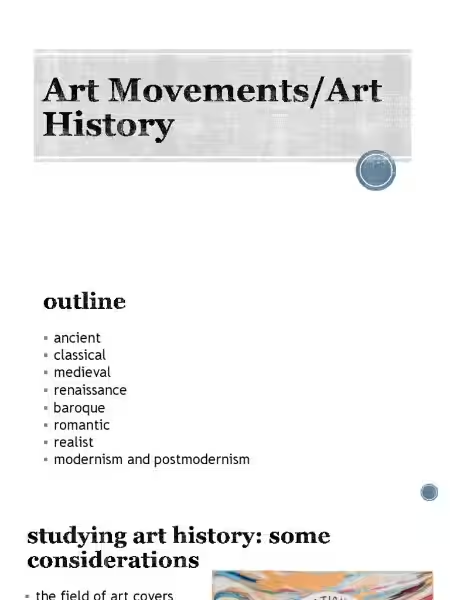
Art, a fundamental aspect of human civilization, reflects our deepest emotions, beliefs, and experiences. From prehistoric cave paintings to cutting-edge digital installations, artistic expression has evolved alongside humanity itself. But how do we unpack this vast and complex history? This article provides a concise yet informative overview, exploring key periods and movements, offering a framework for understanding the art world’s rich tapestry.
The earliest forms of art emerge from the Paleolithic era, approximately 40,000 years ago. Cave paintings in locations like Lascaux, France, and Altamira, Spain, depict animals, hunting scenes, and abstract symbols. These works, created with pigments derived from natural sources, suggest early humans were not only skilled in representation but also engaged in symbolic and possibly ritualistic practices. The meaning and purpose of these early creations remain a subject of ongoing scholarly debate, but their survival offers a remarkable glimpse into the artistic impulses of our ancestors.
Their creation and preservation were significant achievements, demonstrating early human ingenuity and the importance of artistic expression even in survival-focused societies. The survival of these paintings proves their significance to the people who created them, highlighting the enduring power of art to transcend time and convey meaning across generations.
Ancient Civilizations: Mesopotamia, Egypt, and Greece
As societies grew increasingly complex, so too did their artistic output. The civilizations of Mesopotamia, Egypt, and Greece each developed distinct artistic traditions. Mesopotamian art, often associated with powerful rulers, emphasized monumental architecture and intricate relief sculptures. Egyptian art, characterized by its stylized forms and emphasis on the afterlife, produced magnificent tombs, statues, and paintings.
This stylistic consistency across centuries reflects the enduring power of religious and political traditions which heavily influenced artistic expression. The focus on permanence and representation of power in both Mesopotamian and Egyptian art are striking similarities, contrasting with the later Greek focus on human form and ideals.
Greek art, in contrast, moved towards a greater emphasis on human anatomy, naturalism, and idealized beauty. Sculptures like the Venus de Milo and the Doryphoros demonstrate the Greeks’ pursuit of realistic representation and the exploration of human form and movement. This shift signaled a transition towards a more humanistic approach to art, a development that would deeply influence later artistic styles.
The Classical World and Beyond: Rome and the Medieval Period
The Roman Empire inherited and adapted artistic traditions from Greece, expanding their scale and influence across a vast geographical area. Roman art is characterized by its grandeur, practicality, and realistic style. From monumental architecture to intricate mosaics, Roman artists created works that reflected the power and sophistication of the empire.
Roman art shows a practical and imperial bent, focusing on impressive public works and the celebration of Roman power and military success. The contrast with the more contemplative and spiritual art of the medieval period is significant, reflecting the changing social and political landscape.
The art of the medieval period (roughly 5th to 15th centuries) was heavily influenced by the Christian church. Religious themes dominated, and art served as a powerful tool for religious instruction and devotion. Examples include illuminated manuscripts and Gothic cathedrals, showcasing the intricate artistry and spiritual devotion of the era.
The Renaissance and the Reformation
The Renaissance, beginning in Italy in the 14th century, marked a profound shift in artistic perspective. Artists rediscovered classical ideals of beauty, humanism, and naturalism. Masters like Leonardo da Vinci, Michelangelo, and Raphael created works of extraordinary skill and innovation, influencing the development of Western art for centuries to come. Their art moved away from the stylized forms of the medieval period, embracing the study of human anatomy and perspective.
The Renaissance’s emphasis on humanism challenged the religious dominance of the medieval period, ushering in a new era of artistic exploration and innovation. This focus on human potential and achievement profoundly impacted artistic output, leading to unprecedented levels of realism and technical skill.
The Reformation, a religious movement that challenged the authority of the Catholic Church, also significantly influenced art. The production of religious art shifted, with Protestant art often emphasizing simplicity and directness.
The Baroque, Rococo, and Enlightenment
The Baroque period (17th and 18th centuries) was characterized by drama, grandeur, and emotional intensity. Artists like Caravaggio and Bernini employed dynamic compositions and dramatic lighting to create powerful and moving works. Rococo, a more playful and decorative style, emerged as a reaction against the seriousness of the Baroque. It was characterized by delicate pastel colors, elaborate ornamentation, and lighthearted themes. The Enlightenment, emphasizing reason and individualism, further influenced artistic trends, leading to Neoclassicism and a renewed interest in classical ideals.
The contrast between the emotionally charged Baroque and the lighthearted Rococo demonstrates the ever-evolving nature of artistic styles, reflecting the changing tastes and values of society. The Enlightenment’s emphasis on reason and individualism further diversified the artistic landscape, leading to a variety of new styles and movements.
The diversity of styles in this period reflects the multifaceted nature of society itself. Art became increasingly accessible to a wider audience, reflecting the wider social and political changes occurring across Europe.
19th and 20th Century Art: Modernism and Beyond
The 19th century saw the rise of Romanticism, Realism, and Impressionism, each challenging existing artistic conventions. Romanticism emphasized emotion, imagination, and the sublime; Realism sought to depict the world objectively; and Impressionism revolutionized painting techniques through the use of short brushstrokes and vibrant colors.
The rapid succession of artistic movements in the 19th and 20th centuries reflects the accelerating pace of social and technological change. Artists continually experimented with new forms of expression, reflecting the complexities and contradictions of modern life.
The 20th century witnessed an explosion of artistic styles, including Fauvism, Cubism, Surrealism, Abstract Expressionism, Pop Art, and numerous others. These movements pushed the boundaries of traditional art, reflecting the radical social and technological changes of the era. Contemporary art continues to evolve, embracing new technologies and challenging traditional notions of art itself, reflecting our ongoing exploration of human creativity and expression. Art continues to be a powerful means of communication, reflecting our ever-changing world. Its enduring power lies in its ability to connect us to the past, interpret the present, and imagine the future.
Here’s an FAQ section about a brief history of art, drawing upon general knowledge of art history rather than a specific text. I’ll avoid referencing any particular book to prevent plagiarism.
What is art history?
Art history is the academic study of art throughout time and across different cultures. It examines the creation, development, and significance of visual art forms, including painting, sculpture, architecture, photography, and more. It considers not only the aesthetics but also the social, political, economic, and religious contexts in which art was produced and consumed.
When did art history as a field of study begin?
While humans have created art for millennia, the formal study of art history as an academic discipline began to emerge during the Renaissance and gained significant momentum in the 18th and 19th centuries, with scholars starting to systematically categorize and analyze art from different periods and cultures.
What are some major periods covered in art history?
A typical overview of art history would cover periods like Ancient, Classical, Medieval, Renaissance, Baroque, Rococo, Neoclassical, Romantic, Impressionist, Post-Impressionist, Modern, and Contemporary art. Each period is characterized by distinct styles, techniques, and artistic concerns.
Recurring themes in art history include the portrayal of the human form, the representation of nature, religious iconography, the exploration of emotion, social commentary, and the evolution of artistic styles and techniques. These themes often intersect and evolve throughout different periods and cultures.
How is art history organized?
Art history can be organized in various ways: chronologically (following a timeline), geographically (focusing on specific regions or cultures), thematically (exploring recurring motifs or ideas), or stylistically (grouping works based on shared aesthetic characteristics). Many art history surveys use a combination of these approaches.
What kinds of sources do art historians use?
Art historians utilize a variety of sources, including the artworks themselves, written documents (like artist’s letters, treatises on art, and historical records), archaeological evidence, and critical analyses from other scholars. Interpretations often evolve as new evidence emerges or as perspectives change.
Is art history subjective or objective?
Art history involves both objective and subjective elements. While the factual data surrounding an artwork (its creation date, materials, etc.) is objective, the interpretation and analysis of its meaning and significance are inherently subjective and influenced by the scholar’s perspective and the historical context in which they are working.
Why study art history?
Studying art history cultivates visual literacy, critical thinking skills, and an understanding of different cultures and historical periods. It helps us to appreciate the richness and diversity of human creativity and to engage with the world in a more nuanced and informed way. It also allows for a better understanding of how art reflects and shapes society.
How does art history relate to other disciplines?
Art history intersects with numerous other fields, including archaeology, anthropology, sociology, history, literature, philosophy, and religious studies. Understanding these connections enriches the study of art and provides a more holistic perspective on human culture and civilization.
Where can I learn more about art history?
Numerous resources are available for learning about art history, including museums, art books, academic journals, online courses, and documentaries. Many museums offer free or low-cost educational programs, and online platforms provide access to vast collections of images and scholarly articles.
Ukrainian cuisine is a treasure trove of hearty, flavorful dishes, often passed down through generations. This vibrant culinary landscape reflects the country’s rich history and diverse influences. This article aims to explore the fascinating world of Ukrainian recipes, highlighting some iconic dishes and offering a glimpse into the cultural significance embedded within each meal. Iconic…
Protecting arms from workplace hazards is crucial for worker safety and productivity. While there’s a large focus on hand protection, comprehensive arm safety requires a multifaceted approach encompassing gloves and other protective gear. This article explores the importance of arm protection, focusing on advancements in glove technology and strategies for maintaining overall arm safety. The…
The question of whether a felony ever truly goes away is complex, with the answer depending heavily on several factors. While a felony conviction remains a matter of public record, its impact on your life can significantly lessen over time, or even be completely erased through specific legal processes. Understanding these nuances is crucial for…
The male Muslim head covering is a topic often shrouded in misconception. Many assume a single, uniform style, yet the reality is far richer and more diverse. This article aims to clarify the various types of head coverings worn by Muslim men, exploring their cultural significance and historical context. We’ll delve into the intricacies of…
Testicular torture, a term often associated with Cock and Ball Torture (CBT) within the BDSM community, involves the intentional infliction of pain or constriction to the male genitals. While pleasurable for some participants due to masochistic tendencies or the dynamics of power exchange, it carries significant health risks that demand careful consideration and informed consent….
Many immigrants to the United States hold green cards, officially known as Permanent Resident Cards, as a symbol of their legal permanent resident status. But not all green cards are created equal. Some older green cards, issued decades ago, lack an expiration date. This raises questions about their current validity and the potential implications for…