Obtaining temporary guardianship in Georgia can be a complex process, particularly when you’re navigating it for the first time. This guide aims to clarify the process, focusing on the key steps involved and the legal considerations surrounding temporary guardianship in Georgia. We’ll address common questions and concerns to help you understand your rights and responsibilities.
Jurisdiction and Filing Requirements for Temporary Guardianship Georgia
Determining the correct court for filing your petition is the first crucial step. Georgia’s legal system dictates that jurisdiction is dependent on the residency status of both the child and the prospective guardian.
For Georgia residents seeking temporary guardianship of a minor residing with them, the filing must occur within their county of domicile. This means the petition is filed in the probate court of the county where the guardian resides. However, if the applicant is a non-resident of Georgia, the petition must be submitted to the probate court in the Georgia county where the minor currently lives and is under the applicant’s physical control. This ensures the correct court has jurisdiction over the case.
The filing process itself requires meticulous attention to detail. Incomplete submissions will be rejected, resulting in delays and potential complications. Therefore, ensure you have all necessary documents before submitting your petition. This typically includes:
A completed petition (often Form 28 in Gwinnett County)
The court’s guardianship questionnaire
All applicable fees (check the court’s website for current amounts)
A certified copy of the minor’s birth certificate
A valid state-issued ID
Additional proof of residency (if needed, such as a utility bill or lease agreement)
Remember, each child requires a separate petition and associated fees. The court’s website or your local probate court will provide guidance and specific requirements, including detailed instructions on filing procedures.
The Court Process and Required Documentation for Temporary Guardianship Georgia
Once your petition is filed, the probate court will review your application. The court will schedule a hearing where you’ll be required to appear in person and take an oath. This is a crucial step in the process, so ensure you are prepared to answer any questions the court may have. The court will thoroughly investigate the situation to determine if granting temporary guardianship is in the best interests of the child.
It’s vital to understand that the court will not grant temporary guardianship if a custody or temporary guardianship order already exists with another court. In such cases, you must seek modification or termination of the existing order from the original court before proceeding with your petition. This ensures consistency and prevents conflicting legal orders. The court generally prioritizes the child’s welfare, and a second order might affect the child’s stability negatively.
Payment of all filing fees is expected upon submission. The court accepts various payment methods, including cash, credit cards (with a processing fee), personal checks, and money orders. Failing to submit the necessary fees will likely delay the process.
Termination of Temporary Guardianship in Georgia
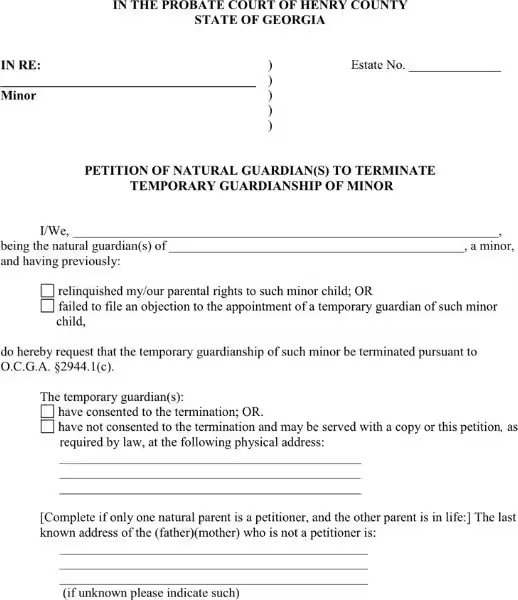
Temporary guardianship is not permanent. Several scenarios can lead to its termination. The guardianship automatically ends when the minor turns 18, is adopted, becomes emancipated, or passes away. The court can also terminate the guardianship through a formal order, often after a hearing.
If the temporary guardian wishes to resign, they must file a consent for resignation. A successor guardian must then file a new petition (often Form 28). Similarly, if the natural guardians wish to end the guardianship, they must file a petition. The temporary guardian will be notified and may consent to the termination or require sheriff-served notification, potentially leading to a juvenile court hearing if they object. The process emphasizes the importance of proper legal procedures even in temporary situations.
Understanding Your Rights and Responsibilities in Temporary Guardianship Georgia
Becoming a temporary guardian entails significant responsibilities. While the specific details may vary depending on the individual circumstances and court orders, several core responsibilities remain consistent.
Providing for the Child’s Needs: Temporary guardians are responsible for the child’s physical, emotional, and educational needs. This includes providing adequate food, clothing, shelter, medical care, and education.
Financial Management: If the child has assets, the temporary guardian may be responsible for managing them, acting in the child’s best interests.
Reporting to the Court: Temporary guardians usually need to submit periodic reports to the court on the child’s well-being.
Respecting the Child’s Rights: Temporary guardianship doesn’t negate the child’s rights. Guardians must respect the child’s autonomy and dignity to the extent appropriate for their age and development.
It’s crucial to remember that while temporary guardianship grants you significant power and responsibilities, it doesn’t automatically grant you physical custody if you don’t already have it. The court will only grant temporary guardianship to someone who already has physical custody of the child. This is a key aspect of temporary guardianship Georgia law. This also means the parents, unless their rights are terminated, still retain certain parental rights, such as the right to be notified and the right to be heard. The best interests of the child remain paramount throughout the entire process.
Remember, this information is for educational purposes only and should not be considered legal advice. Consulting with a qualified attorney experienced in Georgia guardianship law is always recommended to ensure you understand your rights and responsibilities and navigate the legal process successfully. The complexities of Georgia law, especially regarding temporary guardianship, necessitates professional legal guidance.
Frequently Asked Questions: Temporary Guardianship in Gwinnett County, Georgia
Here are answers to frequently asked questions about obtaining temporary guardianship in Gwinnett County, Georgia Probate Court.
Where is the Gwinnett County Probate Court located, and what are its hours?
The Gwinnett County Probate Court is located at 75 Langley Drive, Lawrenceville, GA 30046. It accepts filings Monday through Friday, from 8:00 am to 4:30 pm, excluding holidays.
Who has jurisdiction to hear my Petition for Temporary Guardianship?
Jurisdiction depends on residency. If you are a Georgia resident and the minor resides with you, you must file in your county of domicile. If you are a non-resident, you must file in the county where the minor is located and under your physical control.
What documents do I need to file for temporary guardianship?
You will need a completed Petition for Temporary Guardianship (Form 28), the court’s guardianship questionnaire, all applicable fees (check the Fees page for current amounts), a certified copy of the minor’s birth certificate, and a valid state-issued ID. Gwinnett County residents with out-of-county addresses on their licenses must provide additional proof of residency (utility bill, lease, etc.). Separate petitions and fees are required for each child. All mailed filings must include signatures, verification, and appropriate fees; incomplete submissions will be returned.
What are the acceptable methods of payment for filing fees?
Filing fees are payable upon submission via cash, credit card (with a 2.5% processing fee), personal check, or money order.
What happens if a custody or temporary guardianship order already exists for the child?
The Gwinnett County Probate Court will not grant temporary guardianship if a custody or temporary guardianship order already exists with another court. You must seek modification or termination of the existing order from the original court.
How do I terminate a temporary guardianship?
Terminating a temporary guardianship requires filing a Petition to Terminate Temporary Guardianship. If the temporary guardian objects, the case will proceed to Gwinnett County Juvenile Court. The guardianship automatically ends when the minor turns 18, is adopted, becomes emancipated, or dies. A court order may also terminate it. A resigning temporary guardian must sign a consent for resignation, and a successor guardian must file a new petition (Form 28). Natural guardians wishing to end the guardianship must also file a petition; the temporary guardian may consent or require sheriff-served notification, potentially leading to a Juvenile Court hearing if they object.
Where can I obtain the necessary forms and further instructions?
Forms, including Form 28 (Petition for Letters of Temporary Guardianship of a Minor), and further instructions are available from the Gwinnett County Probate Court.
Do I need to appear in person?
Yes, petitioners must appear in person and take an oath before receiving Letters of Temporary Guardianship.
What are the responsibilities of a temporary guardian?
Temporary guardians have many responsibilities, including providing for the child’s needs (support, care, education, health, and welfare), managing the child’s finances responsibly, and respecting the child’s rights. They must also submit annual reports to the court on the child’s well-being. They are notified of and can object to guardianship termination attempts and can petition to resign, but require court approval.
Can I get temporary guardianship even if the child doesn’t live with me?
No. Temporary guardians only get custody of children already in their care.
Are there any individuals ineligible to be a temporary guardian?
Minors, wards, or those with conflicts of interest (unless overruled by the court) cannot be guardians.
Must the child live with the temporary guardian?
No. Guardianship doesn’t automatically mean the child lives with the guardian.
Choosing the right material for 3D printing is crucial, especially for applications demanding exceptional performance. This is where Somos PerFORM shines. This article dives deep into this high-performance composite stereolithography (SLA) material, exploring its properties, applications, and advantages to help you determine if it’s the right fit for your project. The Exceptional Properties of Somos…
Finding the right financial resources can be a daunting task, especially when it comes to something as significant as buying a home. This article explores the landscape of American financial resources, focusing specifically on how organizations like American Finance Resources (AFR) are working to make homeownership a reality for more families. We’ll examine the crucial…
What if you could dramatically reduce the risks faced by personnel operating in high-threat environments? That’s the core mission of Critical Solutions International (CSI), a company dedicated to providing cutting-edge solutions for route clearance and counter-improvised explosive device (C-IED) operations. This article will delve into CSI’s innovative technologies, their impact on global security, and the…
Understanding the intricacies of the 2021 International Residential Code (IRC) building code can seem daunting, but it’s crucial for anyone involved in residential construction. This comprehensive guide breaks down key aspects of the code, offering a clearer picture of its requirements and implications. This article won’t cover every detail of the 700+ page document, but…
Considering a career as a social worker and wondering about the potential master social worker salary? The earning potential for social workers varies greatly depending on several factors. This article will delve into the key aspects that influence your income, providing you with a clear picture of what you can expect to earn with a…
Choosing the right equipment for your studio photography or videography setup is crucial. One often overlooked but incredibly important piece of gear is the impact c stand. This article will delve into the world of c-stands, explaining their uses, benefits, and how to choose the right one for your needs. Understanding the Impact C Stand…