Facing a sudden crisis involving a loved one who can no longer care for themselves can be overwhelming. Understanding the legal avenues available is crucial. This article focuses on emergency guardianship in Georgia, aiming to provide clarity and guidance during such stressful times.
Emergency guardianship is a legal process designed to provide immediate care and protection for individuals who are incapacitated and unable to make their own decisions. This is distinct from standard guardianship proceedings, which involve a more extensive evaluation and court process. Emergency guardianship in Georgia is often necessary when an individual faces an immediate threat to their health, safety, or well-being.
The need for swift action differentiates emergency guardianship from the more conventional route. It’s meant for situations where delay could be detrimental to the individual’s welfare. This could involve situations like a sudden medical emergency rendering someone incapable of managing their affairs, or a sudden decline in mental capacity leading to unsafe behaviors.
How to Initiate Emergency Guardianship Proceedings
The process for initiating emergency guardianship differs from standard guardianship procedures. Often, the first step involves contacting local authorities, possibly including 9-1-1 for immediate medical or safety concerns. Following this, a formal petition must be filed with the appropriate probate court in the county where the person resides.
This petition must clearly demonstrate the individual’s incapacity and the urgent need for a guardian. Strong evidence is crucial, often including documentation from medical professionals attesting to the individual’s condition and the immediate risk involved. The court will then determine the next steps, potentially including temporary guardianship until a more thorough evaluation can be conducted.
Key Aspects of Emergency Guardianship in Georgia
Several key considerations are paramount in emergency guardianship cases:
Time Sensitivity: The urgency of the situation is central. The court prioritizes cases where immediate intervention is vital.
Evidence of Incapacity: Convincing evidence of the individual’s inability to care for themselves is crucial. This often includes medical records, psychological evaluations, and witness testimonies.
Suitable Guardian: The court meticulously evaluates the proposed guardian, ensuring their suitability and ability to meet the individual’s needs.
Limited Scope: Emergency guardianship is typically temporary. It provides immediate care while a more comprehensive guardianship process unfolds, if necessary.
Legal Representation: Obtaining legal counsel is strongly advised, even in emergency situations. An attorney can guide you through the complex legal procedures and advocate for your loved one’s best interests.
The probate court plays a vital role in all guardianship cases, including emergencies. They carefully assess the evidence presented, ensure due process is followed, and make decisions in the best interests of the incapacitated individual. Their primary goal is to protect the vulnerable person while ensuring fair treatment.
The Importance of Legal Counsel in Emergency Guardianship Cases
Given the legal complexities and time constraints, seeking counsel from a qualified Georgia attorney specializing in probate matters is strongly recommended. An attorney can help you navigate the legal processes, ensuring your petition is appropriately filed and supported by the necessary documentation.
They can also represent you in court, advocating for your loved one’s needs and helping to secure the most appropriate outcome. While the court aims to provide excellent customer service, they cannot offer legal advice.
Finding the Right Legal Assistance
Finding a capable lawyer is a crucial step. You can begin by searching online directories of Georgia attorneys specializing in probate law. Many bar associations offer referral services to help you find experienced and reputable lawyers in your area. Don’t hesitate to contact several attorneys to discuss your situation and find the best fit.
Emergency Situations and the Probate Court
The Fulton County Probate Court, for example, offers walk-in appointments for emergency guardianship/conservatorship petitions on Wednesdays. This highlights the court’s commitment to addressing urgent situations. However, it’s vital to understand that emergency guardianship Georgia procedures can be highly nuanced and context-dependent.
What if it’s not a Wednesday?
For emergencies outside of these walk-in hours, contact 9-1-1 immediately. The court cannot handle immediate crisis interventions; emergency medical services are the appropriate first responders. Once the immediate crisis is addressed, you can then initiate the legal process as needed.
Navigating the system can be daunting. Consider these resources:
Georgia Probate Court Website: Many county probate courts have informative websites outlining procedures and forms.
Legal Aid Organizations: These organizations offer legal assistance to those who qualify, and may be able to help with navigating the process.
Support Groups: Connecting with support groups can provide emotional support and practical advice from others facing similar situations.
Remember, seeking legal counsel is crucial for ensuring the best possible outcome for your loved one. While this article provides general information, it’s not a substitute for personalized legal advice. The complexities of emergency guardianship in Georgia necessitate the guidance of a qualified attorney.
Emergency Guardianship in Georgia: Frequently Asked Questions
What are my options if I need emergency guardianship for someone in Georgia?
In Georgia, if you require immediate guardianship for an adult, you can pursue an Order to Apprehend (OTA) through the local Probate Court. This is for situations where an individual’s mental health, substance abuse, or other condition necessitates immediate evaluation. Note that an OTA is solely for evaluation; it does not guarantee treatment or hospitalization. For emergencies outside of Probate Court business hours, call 9-1-1.
How do I obtain an Order to Apprehend (OTA) in Fulton County, Georgia?
Walk-in submissions for OTAs in Fulton County are accepted Monday-Friday, 8:30 AM – 3 PM (excluding holidays and furlough days). You will need two affidavits from witnesses who have observed the individual within the preceding 48 hours, attesting to the need for involuntary treatment. The individual must reside in Fulton County and not be currently incarcerated or hospitalized. There is no fee for an OTA. Remember, OTAs are valid for only 7 days.
What if the individual I’m concerned about is under 17 years old?
For individuals under 17, you must contact Juvenile Court, not the Probate Court, to pursue an equivalent of an OTA.
Are there walk-in appointments available for other guardianship matters?
Yes, walk-in appointments are available for emergency guardianship/conservatorship petitions and general adult guardianship services every Wednesday from 8:30 AM to 3 PM. For other guardianship matters not considered emergencies, scheduling an appointment is generally recommended.
Can I e-file my guardianship petition?
No, e-filing is not currently available for adult guardianship services in Georgia.
What forms do I need?
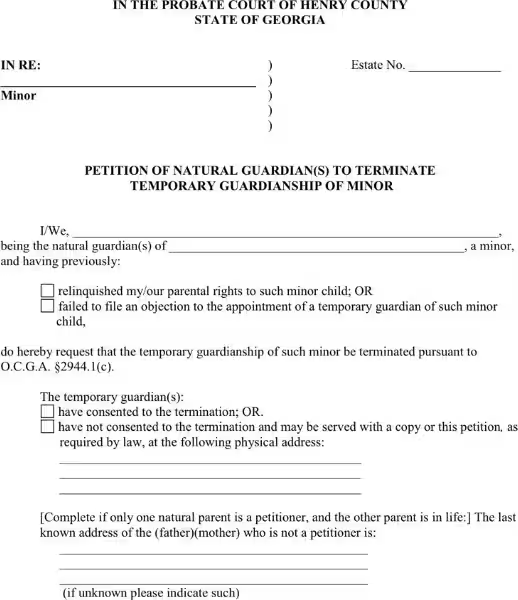
Standard Georgia Probate Court forms are available. It’s advisable to contact the court directly regarding the specific forms required for your situation.
What if I need legal advice regarding guardianship?
Court staff cannot provide legal advice. It is highly recommended to seek guidance from a licensed Georgia attorney for legal interpretation and assistance with the guardianship process. This is particularly crucial given the complexity of guardianship proceedings.
Where can I find more information about guardianship responsibilities?
Informational videos explaining guardianship and conservatorship responsibilities are available through the Probate Court. Those with pending cases may be required to watch these videos and submit signed acknowledgment forms.
Are there any fees involved in the initial guardianship process?
While the OTA itself is free, the standard guardianship process, including filing a “Petition for Appointment of Guardian/Conservator,” incurs fees (at least $125 in some counties). Additional costs may arise depending on the complexity of the case.
What happens after an OTA is issued?
The OTA is delivered to the Fulton County Sheriff’s Office. The individual will be taken for an evaluation. It’s important to understand that this evaluation does not guarantee treatment or hospitalization. The results of the evaluation may influence subsequent steps in the guardianship process.
Many people struggle with the difference between “counsel” and “council.” While they sound exactly alike (they are homophones), their meanings and grammatical functions are quite distinct. This article will clarify their usage, highlighting their differences and the common sources of confusion. The Homophonic Headache: Counsel vs. Council The primary reason for the frequent mix-up between…
Choosing the right legal representation is paramount when navigating the intricacies of U.S. immigration law. This is especially true given the often complex and emotionally charged nature of these proceedings. The process can feel overwhelming, and having a skilled and compassionate attorney by your side can make all the difference. This article explores the expertise…
Many people generously support Médecins Sans Frontières (MSF), also known as Doctors Without Borders, a vital humanitarian organization. However, circumstances change, and you might find yourself needing to understand how to manage your donations, perhaps even considering how to cancel MSF donation. This article provides a comprehensive guide to navigating your donations to MSF, including…
What happens when horrific crimes against humanity transcend national borders? Who is responsible for bringing perpetrators to justice when no single country claims jurisdiction? These questions lie at the heart of the complex and often controversial principle of universal justice. This concept, far from being a simple solution, presents a fascinating legal and ethical challenge,…
Many people dream of holding dual citizenship, offering the benefits of two nations. This article will explore the realities of acquiring and maintaining dual citizenship Mexico and United States, navigating the legal complexities and practical considerations involved. We’ll demystify the process and address common concerns. Understanding Dual Citizenship Dual citizenship, also known as dual nationality,…
Many commuters wonder about the possibility of using commuter benefits for rideshare services like Uber. This question has become increasingly complex in recent years, largely due to shifts in the rideshare industry itself and the interpretation of existing tax laws. Let’s explore the current landscape of commuter benefits and Uber’s role within it. The Evolution…