Racial profiling lawsuits are becoming increasingly common, highlighting the persistent problem of racial bias in various sectors. These lawsuits represent a critical avenue for individuals to seek justice and hold institutions accountable for discriminatory practices. But what constitutes a racial profiling lawsuit, and what are the potential outcomes? Let’s explore this important topic.
The Walmart Case: A High-Profile Example of a Racial Profiling Lawsuit
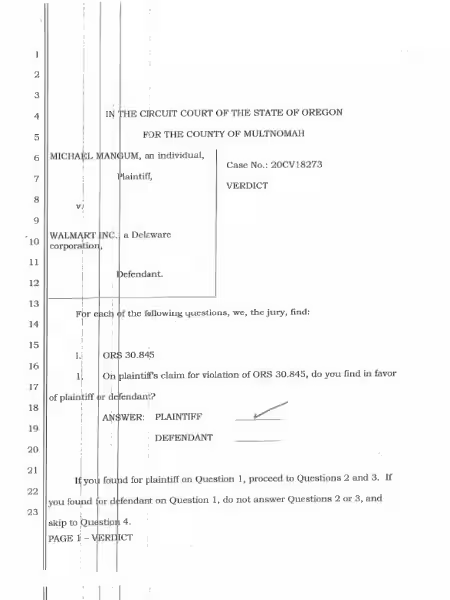
The $4.4 million settlement awarded to Michael Mangum, a Black counselor, after a racial profiling lawsuit against Walmart serves as a powerful illustration of the potential impact of such legal actions. Mangum’s experience, which involved being repeatedly followed and ultimately asked to leave a Walmart store without cause, resonated with many who have experienced similar discriminatory treatment.
The jury’s verdict in Mangum’s favor underscored the severity of the racial profiling he endured. While Walmart maintained their innocence and claimed Mangum interfered with their investigation, the jury ultimately sided with Mangum, finding Walmart responsible for its employee’s discriminatory actions. This highlights the importance of strong evidence and compelling legal representation in these cases. The company’s subsequent claim that the verdict was excessive and that the employee was terminated for a separate incident, rather than the racial profiling, only further fueled criticism regarding their response.
This case not only provided a significant financial settlement for Mangum but also shone a spotlight on the systemic issues within Walmart’s loss prevention practices. The lawsuit’s outcome sends a strong message to corporations regarding the potential financial and reputational consequences of failing to address racial discrimination within their organizations.
Key Elements of a Successful Racial Profiling Lawsuit
Several key elements typically contribute to the success of a racial profiling lawsuit. These include:
Clear Evidence of Discrimination: The plaintiff must demonstrate that they were targeted based on their race or ethnicity. This often involves presenting evidence such as witness testimony, video recordings, and documented instances of disparate treatment compared to individuals of other races.
Establishing a Pattern of Behavior: While a single incident can constitute racial profiling, demonstrating a pattern of discriminatory behavior on the part of the defendant strengthens the case significantly. This could involve evidence of similar incidents against other individuals of the same race.
Demonstrating Damages: Plaintiffs need to show how the racial profiling caused them harm. This could include emotional distress, financial losses, reputational damage, or physical injury.
Proving Intent (or Lack Thereof): While proving intentional discrimination is ideal, plaintiffs can also succeed by showing that the defendant’s actions had a discriminatory effect, even if unintentional. This is where statistical evidence can be very useful.
Effective Legal Representation: Experienced legal counsel plays a crucial role in building a strong case, gathering evidence, and navigating the complexities of the legal system.
Beyond the Walmart Case: The Wider Context of Racial Profiling Lawsuits
The Mangum case is not an isolated incident. Numerous similar lawsuits have been filed against various entities, including law enforcement agencies, retail establishments, and other businesses, highlighting the pervasiveness of racial profiling.
For instance, the Lawyers for Civil Rights (LCR) lawsuit against the Arlington Police Department, detailing the wrongful arrest of Donovan Johnson, underscores how racial profiling manifests in law enforcement interactions. The case highlights the urgent need for comprehensive police reforms, improved training, and increased accountability to address systemic issues contributing to racial bias in law enforcement. The video recording of the arrest, showing the officers’ actions towards Johnson, served as critical evidence.
These cases demonstrate that racial profiling isn’t confined to a single industry or geographic location. It’s a pervasive issue that requires multifaceted solutions, including policy changes, employee training, and increased community engagement.
Filing a Charge: The First Step Towards a Racial Profiling Lawsuit
Before initiating a full-blown lawsuit, individuals often file a charge of discrimination with the Equal Employment Opportunity Commission (EEOC) or a similar state agency. This process generally involves:
Gathering Evidence: Documenting every detail of the incident, including dates, times, locations, names of individuals involved, and any evidence of discriminatory treatment.
Filing the Charge: Completing the necessary forms and submitting them to the appropriate agency.
Investigation: The agency will investigate to determine if there’s sufficient evidence to support a claim of discrimination.
Mediation or Litigation: If the investigation finds merit, the agency may attempt mediation between the parties. If mediation fails, the individual can then pursue litigation.
The Importance of Seeking Legal Counsel
Navigating the legal complexities of a racial profiling lawsuit can be daunting. Seeking guidance from an experienced attorney specializing in civil rights is crucial. An attorney can advise on the viability of the case, assist in gathering evidence, and represent the individual’s interests throughout the legal process. They are also instrumental in helping the plaintiff navigate the timelines and procedural requirements involved in filing a charge and pursuing a case. Choosing an attorney well-versed in racial profiling lawsuits is especially beneficial.
In conclusion, racial profiling lawsuits are powerful tools for combating systemic discrimination. The cases highlighted here demonstrate both the potential for significant financial settlements and the urgent need for broader societal change to address the root causes of racial bias. By understanding the process, gathering evidence, and seeking legal assistance, individuals who have experienced racial profiling can take steps towards achieving justice and accountability.
Racial Profiling Lawsuit FAQ
What is a racial profiling lawsuit?
A racial profiling lawsuit is a legal claim alleging that an individual was targeted by law enforcement or a private entity (like a store) due to their race or ethnicity, rather than any legitimate reason. This targeting can take many forms, including being stopped and frisked, detained, followed in a store, or subjected to harsher treatment than someone of a different race in a similar situation. The lawsuit argues that such actions constitute discrimination and violate civil rights laws.
What happened in the Michael Mangum v. Walmart case?
Michael Mangum, a Black counselor, successfully sued Walmart after a jury found the company liable for racial profiling and harassment. A loss prevention associate repeatedly followed Mangum in a store without cause, ultimately asking him to leave. The jury awarded Mangum a $4.4 million settlement, finding Walmart responsible for its employee’s discriminatory actions. While Walmart claimed Mangum interfered with their investigation, the jury sided with Mangum. The case highlights the potential financial consequences for companies that fail to address racial discrimination within their organizations.
What are the common elements of a successful racial profiling lawsuit?
To successfully pursue a racial profiling lawsuit, the plaintiff generally needs to demonstrate:
Discriminatory Intent or Effect: The plaintiff must prove that their race was a significant factor in the actions taken against them. This can be shown through direct evidence (e.g., discriminatory statements) or circumstantial evidence (e.g., a pattern of similar actions against individuals of the same race).
Violation of Rights: The plaintiff must show that the actions taken violated their rights under federal or state law, such as the Civil Rights Act of 1964 or state anti-discrimination laws.
Damages: The plaintiff must demonstrate they suffered harm as a result of the racial profiling, such as emotional distress, financial losses, or physical injury.
What is the significance of the Mangum v. Walmart settlement?
The $4.4 million settlement underscores the severity of racial profiling and the potential for significant financial liability for companies that fail to adequately address racial discrimination. It also highlights the need for businesses to review and improve their security practices to prevent future incidents of racial profiling. The size of the settlement serves as a warning to other corporations to take racial discrimination seriously.
Are there other similar cases?
Yes, the Mangum case is not isolated. Similar lawsuits alleging wrongful accusations of shoplifting based on race have been filed against Walmart and other retailers in various states. These cases indicate a broader problem of racial bias in retail security practices and underscore the need for systemic change within these industries. The Donovan Johnson lawsuit against the Arlington Police Department, alleging racial profiling, illegal stop, and excessive force, further illustrates the pervasiveness of this issue in law enforcement.
What can individuals do if they believe they have been a victim of racial profiling?
If you believe you have been a victim of racial profiling, you should:
Document the incident: Gather as much evidence as possible, including dates, times, locations, names of individuals involved, and any recordings or witness statements.
Seek legal advice: Consult with an attorney specializing in civil rights law to discuss your options and determine whether you have grounds for a lawsuit.
File a complaint: Depending on the context, consider filing a complaint with the appropriate agency, such as the Equal Employment Opportunity Commission (EEOC) for employment-related discrimination or a local police department’s internal affairs division for police misconduct.
This FAQ provides general information only and does not constitute legal advice. You should consult with a qualified attorney for advice tailored to your specific situation.
The Trump administration’s labeling of certain jurisdictions as “sanctuary cities” sparked significant debate, and Washington state was not immune. The designation, while carrying significant weight, has been plagued by questions regarding its accuracy and the methodology behind it. This article explores the complexities surrounding the claim that Washington state harbors numerous “sanctuary cities,” examining the…
What if your clothing choices weren’t just about fashion, but also about actively participating in a positive social movement? That’s the core proposition of Social Society Clothing, a brand that’s redefining what it means to dress well. This article delves into the unique approach of Social Society Clothing, exploring its mission, target audience, and the…
The field of instructional design is booming, with a constant need for skilled professionals to create engaging and effective learning experiences. But what exactly does it take to thrive in this dynamic area? While a degree can be helpful, possessing the right instructional designer skills is paramount. This article outlines 15 essential skills, categorized for…
The escalating nuclear threats in Europe and East Asia represent a grave global concern, surpassing even the anxieties of the Cold War’s peak. This heightened danger is most acutely felt in two key regions: the ongoing Russo-Ukrainian war and the persistent North-South Korean political standoff. The severity of this situation prompted the UN General Assembly…
Many disaster survivors anxiously await word from FEMA after submitting their applications for assistance. The question on everyone’s mind is: FEMA status pending – how long does it take? Unfortunately, there’s no single answer, as processing times depend on several factors. This article will explore the FEMA application process, the reasons for delays, and what…
Many people wonder, “What is Progressive Management Systems?” This article will explore Progressive Management Systems (PMS), a debt collection agency, and delve into their unique approach, contrasting it with industry norms and highlighting the implications for consumers. PMS: A Different Approach to Debt Collection Progressive Management Systems distinguishes itself from traditional debt collection agencies through…