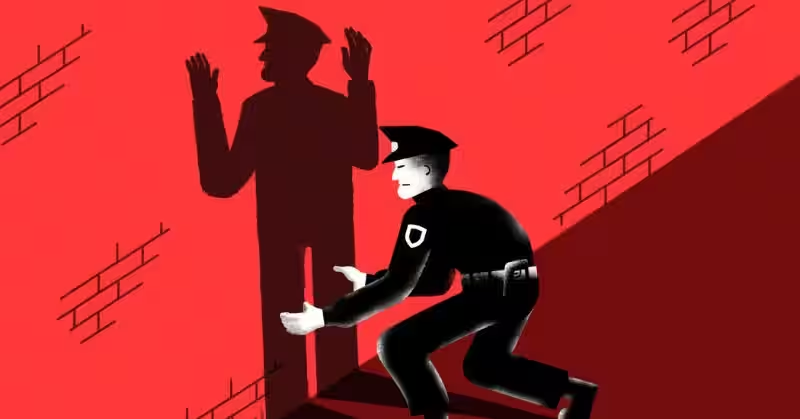
Many people wonder, “Can you sue a cop?” The answer is complex and depends heavily on the specifics of the situation. While police officers are entrusted with significant power, they are not above the law. If you believe your constitutional rights have been violated by a police officer, you may have grounds to pursue legal action. However, it’s a challenging process requiring careful planning and legal expertise.
Before exploring the legal avenues available, it’s crucial to understand what constitutes actionable police misconduct. This isn’t simply about disagreements or perceived unfair treatment. It involves violations of your fundamental rights, often guaranteed by the Constitution.
Common examples of police misconduct include:
Excessive force: The use of force beyond what is reasonably necessary given the circumstances.
False arrest: Being arrested without probable cause or sufficient legal justification.
Racial profiling: Being targeted by law enforcement based on your race or ethnicity.
Illegal search and seizure: Having your property searched or seized without a warrant or probable cause.
Harassment: Repeated and unwarranted interactions with police that create a hostile environment.
Violation of the Fourth Amendment: This amendment protects against unreasonable searches and seizures. A common example is unlawful entry into your home without a warrant.
Violation of the Fifth Amendment: This amendment protects against self-incrimination. Police are required to inform you of your right to remain silent.
Violation of the Fourteenth Amendment: This amendment guarantees equal protection under the law. This is relevant to claims of racial discrimination or biased treatment.
These are just a few examples, and a single incident might involve multiple forms of misconduct. The severity of the misconduct and the resulting harm are key factors in determining the strength of a potential lawsuit. Remember, merely feeling mistreated isn’t enough; you need demonstrable evidence of a rights violation.
The Complexities of Suing a Police Officer
Suing a police officer, or even a police department, is not a simple process. It’s a legally intricate undertaking, often requiring specialized legal knowledge and significant resources. Several key challenges exist:
Governmental immunity protects government agencies from many lawsuits, but it’s not absolute. Similarly, qualified immunity protects officers acting within the scope of their duties and according to established standards. However, if an officer’s actions are deemed unreasonable or negligent, qualified immunity may not apply. Proving this unreasonable or negligent behavior is a significant hurdle.
Identifying the Appropriate Defendant
Determining who to sue is also important. You might sue the individual officer involved, their supervisor, or the police department itself. Suing beyond the direct officer is often difficult, as supervisors are rarely held liable for the actions of their subordinates unless there is evidence of a systemic problem or direct complicity.
Building a Strong Case
A successful lawsuit requires substantial evidence. This includes:
Witness statements: Testimony from individuals who witnessed the incident.
Police reports: Official documentation of the event.
Medical records: Proof of any injuries sustained as a result of the misconduct.
Photos and videos: Visual evidence capturing the incident.
The more comprehensive and compelling your evidence, the stronger your case. Documenting everything meticulously is crucial. This includes maintaining records of communications with the police and any other relevant parties.
Alternative Recourse Options
Before considering a lawsuit, explore alternative options. Filing an internal complaint with the police department’s internal affairs division or filing a complaint with the Department of Justice may be appropriate initial steps. These actions can sometimes lead to disciplinary action against the officer and may even provide helpful evidence for a future lawsuit.
Can You Sue a Cop? The Legal Process and Section 1983
Section 1983 of the U.S. Code offers a crucial legal avenue for suing state actors, including police officers, who violate your constitutional rights under color of law. This means the officer was acting in their official capacity when the violation occurred. To prevail under Section 1983, you must prove:
A violation of your constitutional rights.
The violation was committed by a person acting under color of state law.
You suffered demonstrable damages (physical, financial, or emotional).
Proving all three elements is essential. Moreover, there are statutes of limitations, varying by state, within which you must file your lawsuit. It is vital to seek legal counsel immediately after the incident to ensure compliance with these deadlines.
Navigating the legal complexities of suing a police officer requires the expertise of a qualified attorney specializing in civil rights litigation. This is not a process to undertake alone. An experienced attorney can help you:
Assess the merits of your case.
Gather and organize necessary evidence.
File the appropriate legal documents.
Represent you in court.
Negotiate settlements.
A free case evaluation from such an attorney is often the first significant step. Remember, the sooner you seek legal advice after the incident, the better positioned you’ll be to preserve crucial evidence and build a strong case. Don’t sign any documents without first consulting an attorney – these documents could inadvertently waive your rights. Your rights matter, and seeking appropriate legal counsel is the best way to protect them.
Can I Sue a Police Officer?
Suing a police officer or a police department is a complex process. It requires strong evidence of a rights violation and the expertise of a qualified attorney specializing in police misconduct cases. The success of such a lawsuit depends heavily on the specifics of the situation and the available evidence.
What Types of Police Misconduct Can Be Grounds for a Lawsuit?
Many forms of police misconduct are actionable. These include, but are not limited to: excessive force, false arrest, unlawful search and seizure (4th Amendment violations), racial profiling, discrimination (based on protected characteristics like race, sex, religion, etc.), harassment (including illegal surveillance and discriminatory remarks), perjury, evidence falsification, corruption, abuse of authority, evidence spoliation, and sexual or physical assault. A single incident may involve multiple types of misconduct, potentially leading to multiple claims within a single lawsuit.
What Kind of Evidence Do I Need?
Compelling evidence is crucial. This includes but is not limited to: photographic and video evidence, witness statements, medical records documenting injuries, police reports, and any other documentation related to the incident. The evidence needs to be well-organized and presented effectively by legal counsel.
Who Can I Sue?
Lawsuits can name individual officers, their supervisors, and the police department itself. However, suing beyond the directly involved officer can be difficult, as supervisors are rarely held liable for the actions of their subordinates. Governmental and qualified immunity are common defenses that complicate these cases.
Governmental immunity protects government agencies from many lawsuits, but there are exceptions. Qualified immunity protects officers acting within established job standards; however, negligence or actions deemed unreasonable can still be grounds for suit.
Are There Alternatives to a Lawsuit?
Yes, filing an internal complaint with the police department’s internal affairs division or filing a complaint with the Department of Justice are alternatives. These steps can be taken in addition to, or sometimes instead of, pursuing a lawsuit.
What About the Statute of Limitations?
Time limits exist for filing lawsuits. You must act swiftly to preserve evidence and meet any legal deadlines. Specific limitations vary by jurisdiction (e.g., Louisiana has a one-year statute of limitations for Section 1983 claims). Immediate legal consultation is crucial.
How Can I Protect Myself After an Incident with the Police?
Seek legal advice immediately after any incident involving police misconduct. Avoid signing any documents without consulting with an attorney. Preserving evidence is paramount, and a lawyer can guide you on the best course of action.
What is Section 1983?
Section 1983 of the U.S. Code allows lawsuits against state actors (including police officers) who violate constitutional rights under color of law (while acting in their official capacity). This provides a legal avenue to sue not only the officer but potentially the department or government entity as well.
Is it Worth Pursuing a Lawsuit?
The decision to sue is personal and depends on the circumstances of the case. A free case evaluation with a lawyer specializing in police misconduct is recommended to assess the potential merits of your case and understand the complexities involved. The potential for success and the resources required should be carefully weighed.
Understanding your financial health as a business owner is crucial, especially when seeking funding. Traditional financial analysis often falls short, neglecting the intricate interplay between personal and business finances. This is where global cash flow (GCF) shines. GCF offers a more comprehensive and accurate picture, beneficial for both business owners and their lenders. What is…
Choosing the right mug or tumbler can be surprisingly meaningful, especially when it reflects your faith. Whether you’re looking for a religious cup for personal use, a gift for a loved one, or items to stock your church’s gift shop, understanding the nuances of design, material, and messaging is key. This guide will delve into…
What exactly does a litigation lawyer do? This question often arises when individuals find themselves entangled in complex legal battles. Understanding the role and responsibilities of a litigation lawyer is crucial for anyone facing a civil lawsuit or significant legal dispute. This article provides a comprehensive definition of a litigation lawyer, outlining their key functions…
Century Legal is more than just a legal group; it’s a strategic partner in the realm of debt resolution and legal service optimization. Its collaboration with Century, a debt settlement company, provides a compelling case study in how legal expertise can significantly enhance financial solutions for individuals burdened by debt. But Century Legal’s impact stretches…
Many people find themselves needing to travel internationally unexpectedly. Whether it’s a family emergency, a crucial business opportunity, or an unforeseen circumstance, the need to expedite travel document processing can arise quickly. This article will guide you through the process of expediting travel documents with United States Citizenship and Immigration Services (USCIS). Understanding Expedited Processing…
Elliott Ozment, a name synonymous with tenacious advocacy for immigrants in Nashville, TN, left an indelible mark on the city’s legal and social landscape. His unexpected death at 71 due to complications from a stroke sent shockwaves through the community he tirelessly served. This article explores his life, career, and lasting influence, highlighting the impact…