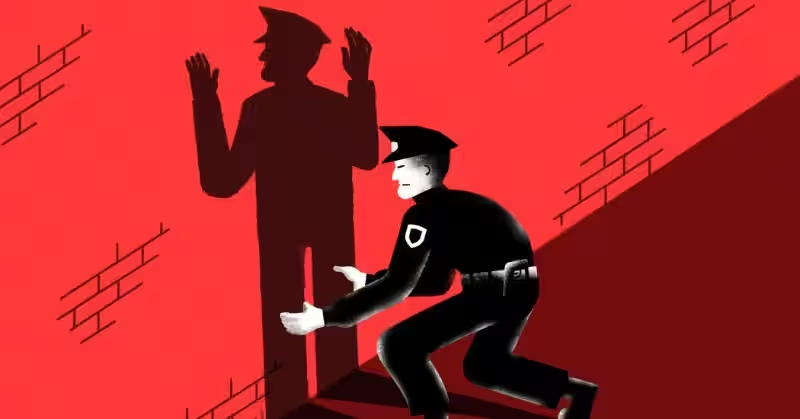
Police harassment is a serious issue with far-reaching consequences for individuals and communities. It represents a misuse of authority, undermining public trust and potentially violating fundamental rights. This article aims to shed light on what constitutes police harassment, the legal avenues available to victims, and the steps you can take if you believe you’ve been a target.
Police harassment isn’t simply a single incident of aggressive behavior. Instead, it’s characterized by a pattern of unwarranted and unjustified interactions with law enforcement. This could involve repeated stops without reasonable suspicion, aggressive questioning, unwarranted searches, or other actions designed to intimidate or control.
The key distinction lies in the absence of legitimate law enforcement justification. While police officers have the authority to stop and question individuals, this authority is limited and must be exercised reasonably. Repeated stops without reasonable suspicion, discriminatory targeting, or actions exceeding the bounds of legal authority constitute harassment.
Legal Recourse Against Police Harassment
The legal avenues available to victims of police harassment depend on the specifics of the situation and the nature of the misconduct. Federal laws offer several options, primarily divided into criminal and civil cases.
Criminal Cases
Criminal cases focus on punishing individual officers for violating federal rights, such as those outlined in 18 U.S.C. §§ 241 and 242. These cases require evidence that the officer acted “under color of law,” meaning they were acting in their official capacity, even if exceeding their authority. Examples of criminal misconduct include excessive force, sexual assault, false arrest, theft, or fabrication of evidence that leads to a loss of liberty. The burden of proof is high (“beyond a reasonable doubt”), and penalties can include fines and imprisonment. Importantly, there’s no private right of action under these statutes; individuals cannot directly sue under them. Instead, the FBI or the US Attorney’s Office investigates these allegations.
Civil Cases
Civil cases generally target law enforcement agencies and their policies, aiming for systemic change rather than solely punishing individual officers. Several federal laws are relevant:
Police Misconduct Provision (34 U.S.C. § 12601): This addresses patterns or practices of misconduct, not isolated incidents. The Department of Justice (DOJ) must demonstrate an unlawful agency policy or a pattern of unlawful conduct. Remedies are injunctive – focusing on policy changes – rather than monetary compensation for victims. There’s no private right of action.
Title VI of the Civil Rights Act of 1964 and the OJP Program Statute (42 U.S.C. § 2000d, et seq. and 34 U.S.C. § 10228): These prohibit discrimination based on race, color, national origin, sex, and religion by agencies receiving DOJ funding. They cover both individual incidents and patterns. Remedies include policy changes and potentially individual relief. Individuals can sue but must first exhaust administrative remedies (file a complaint with the DOJ) under the OJP Program Statute.
Title II of the Americans with Disabilities Act (ADA) of 1990 and Section 504 of the Rehabilitation Act of 1973 (42 U.S.C. § 12131, et seq. and 29 U.S.C. § 794): These prohibit disability discrimination by state and local agencies. The ADA applies regardless of DOJ funding; Section 504 only applies to agencies receiving DOJ funding. Remedies include individual relief and policy changes. Individuals have a private right of action without needing to file a prior complaint with the DOJ.
It’s crucial to understand that not every negative interaction with law enforcement constitutes police harassment. However, repeated stops without justification, discriminatory targeting, excessive force, or unlawful searches can all fall under this umbrella. The key element is a pattern of behavior that violates an individual’s rights and creates a climate of fear or intimidation.
The forms police harassment can take are diverse, including:
Illegal Stop and Frisk: While permissible under specific circumstances, stop and frisk is often misused and can easily become a tool for harassment.
False Arrest: Arrest without legal cause or probable cause.
Excessive Force: The use of more force than necessary in a given situation.
Racial or Ethnic Profiling: Targeting individuals based solely on their race or ethnicity.
Sexual Harassment: Unwelcome sexual advances or conduct by police officers.
Illegal Searches and Seizures: Searches conducted without a warrant or probable cause.
Taking Action
If you believe you are a victim of police harassment, taking swift action is crucial. Document every incident, including dates, times, locations, officers involved (if possible), and any witnesses. Consider recording interactions with your phone (check local laws regarding recording law enforcement).
Consult with an attorney experienced in civil rights and police misconduct cases. They can advise you on the best course of action, help you gather evidence, and represent you in any legal proceedings. Many lawyers offer free initial consultations. Remember, pursuing legal action is crucial not only for personal redress but also for holding abusive officers accountable and preventing future harassment of others. The fight against police harassment requires both individual action and systemic change.
Frequently Asked Questions about Police Harassment
What is police harassment?
Police harassment is the misuse of police authority to repeatedly or arbitrarily stop, question, search, or otherwise interact with individuals without legal justification. This goes beyond a single incident and involves a pattern of behavior designed to intimidate, annoy, or otherwise violate an individual’s rights. It can include actions that may seem within police protocol, such as stop and frisk, if conducted without reasonable suspicion. Examples include illegal searches, false arrests, excessive force, racial profiling, and sexual harassment.
What are the legal grounds for addressing police harassment?
Several federal laws address police misconduct, both at the individual officer and systemic levels. Criminal charges can be brought against officers who violate federal rights (e.g., excessive force, false arrest). However, individuals cannot sue under these criminal statutes. Civil lawsuits can target law enforcement agencies for systemic issues or patterns of misconduct, potentially leading to policy changes. Specific laws include Title VI of the Civil Rights Act of 1964 (prohibiting discrimination), Title II of the Americans with Disabilities Act (ADA), and Section 504 of the Rehabilitation Act of 1973 (both addressing disability discrimination). The Police Misconduct Provision (34 U.S.C. § 12601) also addresses patterns of misconduct by agencies. The availability of a private right of action (the ability to sue directly) varies depending on the specific law involved. For example, individuals can sue under Title II of the ADA but may need to exhaust administrative remedies before filing suit under the OJP Program Statute.
How can I file a complaint about police harassment?
The process differs depending on whether you want to pursue a criminal or civil claim. For criminal complaints alleging violations of federal law by a law enforcement officer, contact the FBI or the local U.S. Attorney’s Office. For civil complaints against state or local agencies alleging patterns of misconduct or discrimination, contact the Department of Justice (DOJ) at civilrights.justice.gov. Note that the DOJ does not provide legal advice.
What kind of evidence is needed to prove police harassment?
The type of evidence needed will depend on the specific allegations and the legal claim being pursued. However, strong evidence typically includes witness testimonies, police body camera footage (if available), documentation of any injuries or property damage, and records of prior similar incidents. If alleging a pattern of discriminatory behavior, evidence demonstrating systemic issues within the police department will be crucial. An attorney experienced in police misconduct cases can help you gather and present this evidence effectively.
Do I need a lawyer to address police harassment?
While not strictly required, consulting with an attorney is highly recommended. An attorney can advise you on your legal options, help you gather evidence, and represent you in any legal proceedings. They can also help you understand the complexities of the relevant laws and navigate the legal process.
What are the potential outcomes of a police harassment case?
Outcomes vary significantly depending on the specific circumstances of the case and the type of legal action pursued. Criminal cases could result in fines or imprisonment for the officer. Civil cases might lead to policy changes within the police department, monetary compensation for damages, and/or injunctive relief.
Where can I find a lawyer specializing in police misconduct cases?
You can find lawyers specializing in police misconduct cases through online legal directories, referrals from other attorneys, or by contacting your local bar association. It is important to thoroughly research potential lawyers, reviewing their experience, client testimonials, and case results. Many law firms offer free initial consultations.
Disclaimer: This FAQ section provides general information and should not be considered legal advice. The information provided is based on publicly available resources and is intended for informational purposes only. You should consult with a qualified legal professional for advice specific to your situation.
Is AmericanEmergencyFund.com a legitimate source of financial aid, or is it a cleverly disguised lead generation scheme? Many people have encountered enticing Facebook posts promising quick cash, and this website is often at the center of such misleading advertisements. This article will delve into the legitimacy of AmericanEmergencyFund.com and provide crucial information to help you…
Many immigrants facing a potential 3- or 10-year re-entry ban due to unlawful presence in the United States wonder about the 601 waiver processing time. This crucial waiver, officially known as Form I-601A, allows eligible individuals to apply for a waiver before leaving the U.S., potentially avoiding a lengthy period of separation from their loved…
Many people worry about the security of their smartphones. The question, “¿Como hackear un celular?” often arises out of concern, not malicious intent. This article will not teach you how to hack a phone; instead, it focuses on understanding how phones can be compromised and, more importantly, how to protect yourself. Señales de que tu…
Facing a disaster—whether a devastating hurricane, a raging wildfire, or a sudden industrial accident—can be overwhelming. The immediate aftermath is often characterized by chaos and uncertainty, leaving individuals and businesses struggling to understand their next steps. This is where expert guidance becomes invaluable. This article will explore the crucial role of global disaster solutions in…
Navigating the complexities of state regulations can be daunting for businesses, especially when it comes to annual reporting requirements. In Georgia, this often involves the GA Form 3300, a document that many business owners find confusing. This article aims to demystify the GA Form 3300, providing a comprehensive guide to understanding its purpose, completion, and…
The terms hijab, niqab, and burqa are often used interchangeably, leading to confusion and misinterpretations. This article aims to clarify the distinctions between these garments, exploring their cultural and religious significance while emphasizing the importance of respecting individual choices. What is a Hijab? The word “hijab” itself simply translates to “veil” or “screen,” making it…