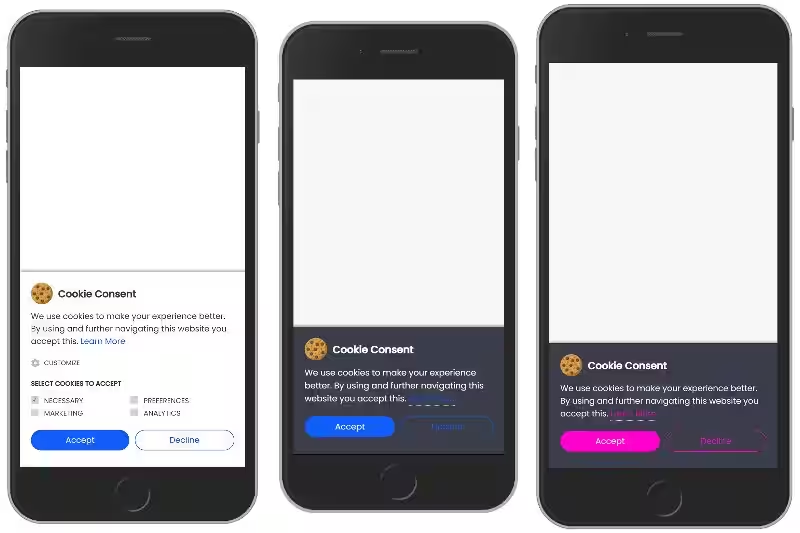
Choosing the right cookie banner is crucial for website owners. It’s not just about a pretty notification; it’s about adhering to regulations like GDPR and CCPA and maintaining user trust. This article will guide you through the process of selecting a compliant and effective solution, focusing on the importance of a well-designed sub for a cookie banner.
Website cookie banners are mandatory for most websites using cookies, especially those with users in the European Union or other regions with stringent data privacy laws. These banners aren’t just a formality; they’re a legal requirement designed to protect user data and ensure transparency.
The core purpose of a cookie banner is to inform users about the website’s use of cookies, their purpose, and how the user can manage their preferences. This includes specifying the types of cookies used (e.g., necessary, performance, advertising) and providing a link to a comprehensive cookie policy for more detailed information. The banner itself acts as a concise summary of this policy.
Choosing Between Explicit and Implicit Consent
There are two main approaches to obtaining user consent: explicit (opt-in) and implicit (opt-out). Understanding the difference is vital in selecting the right sub for a cookie banner.
Explicit Consent (Opt-in)
Explicit consent requires users to actively confirm their agreement to the use of cookies. This usually involves clicking an “Accept” button or a similar affirmative action. This method is generally preferred for stricter regulations and offers the highest level of compliance. It leaves no room for ambiguity and demonstrates a commitment to user privacy. The resulting user experience provides clarity and enhances trust.
Implicit Consent (Opt-out)
Implicit consent allows users to browse the website initially without explicitly giving consent. However, the banner must still clearly inform users about cookie usage, their rights, and how to opt out. This approach might be suitable in certain jurisdictions, but it’s crucial to carefully consider the legal implications and ensure you comply with all relevant regulations. The ease of use provided by this method is balanced against the stricter requirements for clear and accessible opt-out mechanisms.
Finding the right balance between user experience and legal compliance is key. A well-designed sub for a cookie banner, irrespective of the consent type, facilitates both goals.
The Importance of a Well-Designed Sub for a Cookie Banner
The “sub” in this context refers to the supplementary information presented within the cookie banner or linked from it. This information is as critical as the banner itself. A poorly designed sub can undermine the effectiveness of the entire consent process.
Key elements of a well-designed sub:
Clear and Concise Language: Avoid jargon and technical terms. Use simple, easy-to-understand language that accurately reflects the website’s cookie usage.
Categorization of Cookies: Clearly categorize cookies by type and purpose (e.g., strictly necessary, performance, functionality, advertising).
Detailed Descriptions: Provide detailed descriptions of each cookie category and their function.
Control Mechanisms: Offer clear and easy-to-use mechanisms for users to manage their cookie preferences. This is vital for providing meaningful choice.
Transparency and Trust: The sub should reflect a commitment to transparency and user data protection. Honest and straightforward communication builds trust.
Accessibility: Ensure the sub is accessible to users with disabilities, following accessibility guidelines (e.g., WCAG).
A well-crafted sub for your cookie banner is not merely an addendum; it’s an integral part of obtaining valid consent and demonstrating a commitment to user privacy. The ease of navigation and clear presentation of options in the sub significantly impact user trust and overall compliance.
Avoiding Non-Compliant Banners
“Notice-only” banners, which simply inform users of cookie usage without providing options to accept or reject, are insufficient for compliance with GDPR and similar regulations. These banners fail to obtain explicit consent, leaving websites vulnerable to penalties and reputational damage. They create a false sense of compliance and fail to respect user rights.
Choosing the right cookie banner solution, with a well-designed sub, is a significant investment in protecting your website and your users. Failing to do so can lead to substantial penalties and erode user trust.
Utilizing Cookie Banner Generators and Tools
Numerous tools and generators are available to assist in creating compliant cookie banners. These tools often offer features such as:
Geolocation detection: Automatically adapting banner content to meet the requirements of different jurisdictions.
Customization options: Allowing you to tailor the banner’s appearance to your website’s design.
Pre-built templates: Making it easier to create a compliant banner quickly.
Integration with other tools: Simplifying the process of integrating your banner with analytics platforms and other services.
By using these resources, you can create a cookie banner that’s both compliant and user-friendly, complete with a well-structured sub that provides all the necessary information. The time and effort invested in this process contribute significantly to long-term compliance, protecting your website from potential legal issues and fostering user trust. It’s a crucial step in responsible data handling practices.
Here are some frequently asked questions about alternatives to traditional cookie banners, focusing on compliant and user-friendly solutions.
What is a cookie banner, and why is it necessary?
A cookie banner is a notification that informs website visitors about a website’s use of cookies and requests their consent to store them. It’s crucial for compliance with data privacy regulations like GDPR and CCPA, which require websites to obtain informed consent before using cookies, particularly those that track user behavior. The banner outlines the types of cookies used (e.g., necessary, performance, advertising), their purpose, and how users can manage their preferences. It also typically includes a link to a comprehensive cookie policy.
What are the different types of cookie banners?
There are two main types:
Explicit (Opt-in): Requires active consent from the user before any non-essential cookies are activated. This usually involves clicking an “Accept” button. This is generally the safest approach for compliance.
Implicit (Opt-out): Allows users to initially browse the website without giving consent to non-essential cookies but provides clear information on cookie usage, the right to opt out, and a link to the cookie policy. The user can actively choose to decline non-essential cookies.
The choice between these types depends on user location and applicable regulations.
What are the consequences of not using a compliant cookie banner?
Failure to implement a compliant cookie banner can result in significant legal and financial penalties, including hefty fines. It also damages user trust and can negatively impact your website’s reputation.
Clearly inform users about the website’s use of cookies.
Specify the types of cookies used and their purposes.
Offer users clear and easy-to-use controls to manage their cookie preferences (accept, reject, customize).
Provide a link to a comprehensive cookie policy.
Obtain explicit or implicit consent, depending on the chosen banner type and applicable regulations.
What is a “notice-only” banner, and why is it insufficient?
A “notice-only” banner simply informs users about cookie usage without obtaining their explicit consent. It usually only has an “OK” or similar button. This is insufficient for compliance with regulations like GDPR, which mandate explicit consent. It fails to give users control over their data.
Are there any alternatives to traditional cookie banners that still ensure compliance?
While a traditional banner is the most common approach, some innovative solutions are emerging that aim to improve user experience while maintaining compliance. These may involve more integrated consent management systems or less intrusive notification methods, but the core principles of transparency and obtaining informed consent must remain. The focus should always be on providing users with clear choices and control over their data.
What features should I look for in a compliant cookie banner solution?
A good solution should:
Be easy to install and use.
Offer customization options to match your website’s design.
Support multiple languages.
Integrate with popular analytics platforms like Google Analytics (using Google Consent Mode V2).
Have minimal impact on website performance.
Provide comprehensive documentation and support.
Be regularly updated to reflect changes in data privacy regulations.
Allow for both implicit and explicit consent options to cater to various compliance needs.
Where can I find a compliant cookie banner solution?
Many services offer cookie banner generators and consent management platforms. Research different options and choose one that meets your website’s specific needs and complies with applicable regulations. Always thoroughly review the terms and conditions and ensure the solution complies with relevant legislation in all applicable jurisdictions.
Buying a home can be a daunting process for anyone, but for healthcare professionals, the challenges can be even greater. Long hours, demanding schedules, and often unpredictable income can make saving for a down payment and navigating the complexities of mortgages feel overwhelming. However, there are programs designed to help ease these burdens and make…
Are you a high school student fascinated by the world of law? Do you dream of courtroom drama, persuasive arguments, and the power to advocate for justice? Then the Envision Law Program might be the perfect springboard for your ambitions. This intensive program, offered in collaboration with Stanford Law School, provides a unique and invaluable…
Finding the right darts for your Nerf blaster can be a challenge. Whether you’re a casual player or a competitive warrior, the dart’s performance directly impacts your gameplay. This guide focuses specifically on worker short darts, exploring their features, benefits, and suitability for various scenarios. Understanding Worker Short Darts: Size and Performance Worker short darts…
Using an underground shipping container to create a subterranean structure presents a compelling alternative to traditional construction methods. However, this approach necessitates careful planning and execution to ensure safety and longevity. The inherent flexibility of repurposing these containers is appealing, but the unique challenges involved shouldn’t be underestimated. Structural Integrity: The Core Challenge The biggest…
Many businesses struggle with efficient resource allocation. Finding the right person for the right task at the right time can feel like a constant juggling act. This is where a robust resource scheduling system comes into play. This article will delve into the benefits and functionalities of a service like “RSC Now,” a hypothetical, powerful…
Are you worried about the future of work? Do you feel like the economic system is failing to support the average person? Andrew Yang’s book, The War on Normal People, tackles these anxieties head-on, arguing that technological advancements, globalization, and financialization are creating a crisis for millions. This article will explore Yang’s central arguments and…