The terms hijab, niqab, and burqa are often used interchangeably, leading to confusion and misinterpretations. This article aims to clarify the distinctions between these garments, exploring their cultural and religious significance while emphasizing the importance of respecting individual choices.
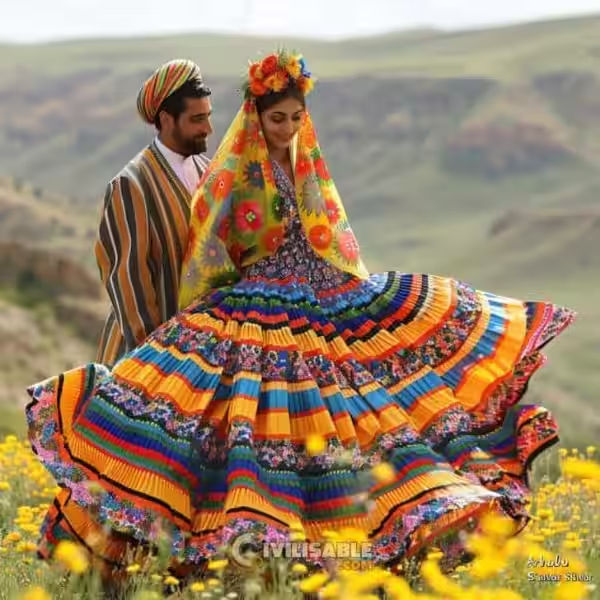
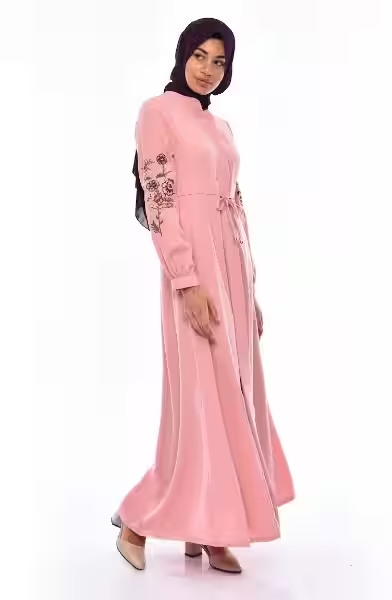
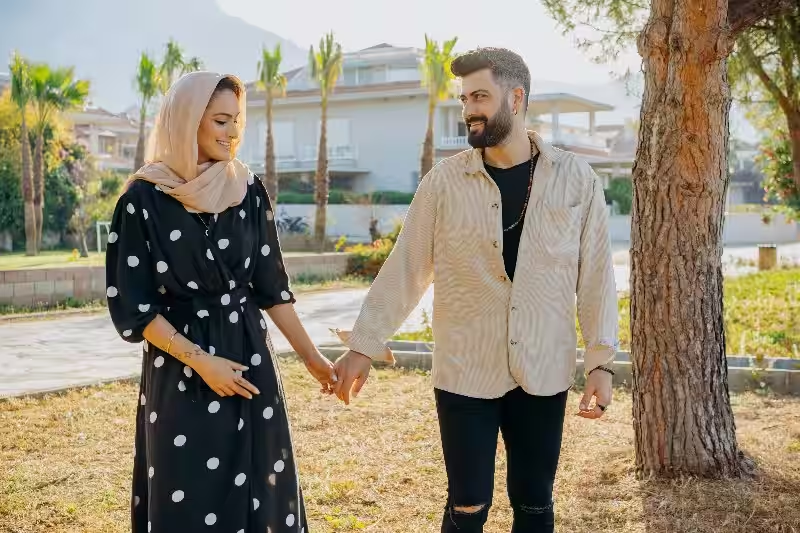
The word “hijab” itself simply translates to “veil” or “screen,” making it a broad term encompassing various forms of head coverings. It’s crucial to understand that the hijab is not a single garment with a uniform style. Instead, it represents a diverse range of styles and interpretations. A hijab can be a simple headscarf, a more elaborate shawl, or even a combination of garments that cover the hair, neck, and chest. The specific style and way of wearing it varies greatly across cultures and personal preferences, reflecting the rich tapestry of Islamic traditions worldwide.
The significance of the hijab is deeply rooted in religious and cultural contexts. For many Muslim women, it symbolizes modesty, devotion, and connection to their faith. However, it’s vital to emphasize that the decision to wear a hijab is deeply personal and should never be assumed or generalized. Some women may choose to wear it from a young age, while others may adopt it later in life, or not at all. The reasons behind this choice are multifaceted and personal.
Niqab: A Deeper Veil
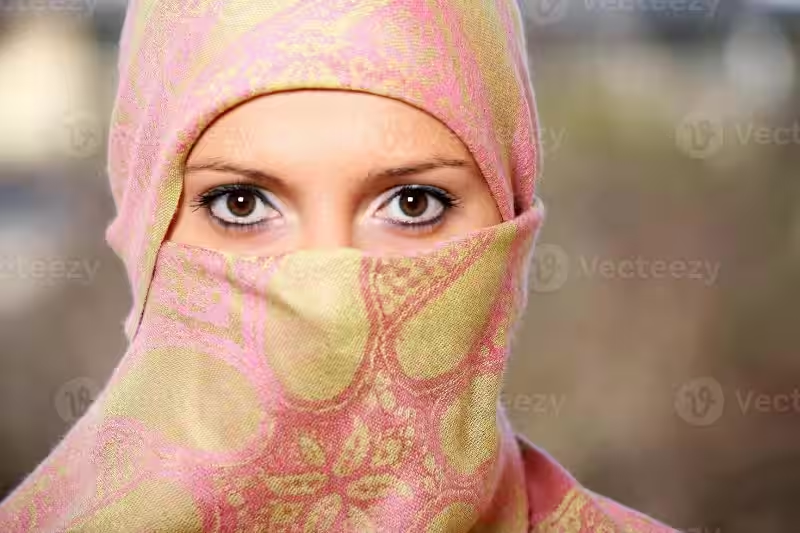
Beyond the hijab, the niqab represents a more extensive form of facial covering. While it still covers the hair, the niqab also veils the face, typically leaving only the eyes visible. Similar to the hijab, the design and material of the niqab can vary widely, reflecting regional preferences and personal choices. The adoption of the niqab is often associated with a more conservative interpretation of Islamic modesty than the hijab. However, this is not universally true, as the choice remains deeply personal and linked to individual understanding of religious teachings and cultural norms.
It’s essential to remember that neither the hijab nor the niqab are mandated by a single, universally accepted Islamic text. Their usage and interpretation differ significantly across various schools of thought and cultural contexts. The decision to wear either garment is a deeply personal one, reflecting individual faith, cultural identity, and personal beliefs.
The burqa represents the most concealing form of these garments. It’s a full-body covering that completely conceals the woman’s face and body, typically featuring a mesh screen or a small opening for vision. Unlike the hijab and niqab, which are relatively common across many Muslim-majority countries, the burqa is primarily associated with specific cultural contexts, notably Afghanistan and parts of Pakistan. Even within these regions, its use is not universal and is a matter of personal choice, shaped by cultural norms and individual beliefs.
It’s crucial to dispel the misconception that wearing a burqa is obligatory for all Muslim women. The choice to wear a burqa, like that of wearing a hijab or niqab, is inherently personal and driven by a complex interplay of religious interpretation, cultural traditions, and personal convictions. Attributing a single motive to all women who choose to wear it is a simplification that ignores the diversity of experiences and reasons behind their choices.
Beyond the Garments: Understanding the Context
The hijab, niqab, and burqa are significantly more than just pieces of clothing; they are potent symbols laden with religious, cultural, and political meanings. Understanding their significance requires moving beyond simple descriptions and acknowledging the complex realities surrounding their use. These garments have become entangled in broader social and political debates, frequently sparking controversies related to religious freedom, women’s rights, and secularism. In certain countries, bans on face coverings have ignited intense discussions about the balance between individual liberties and societal norms.
Ultimately, understanding the nuances of the hijab, niqab, and burqa demands sensitivity, respect for individual choices, and a recognition of the immense diversity of interpretations within Islamic faith and culture. Avoiding generalizations and engaging in respectful dialogue are crucial steps towards fostering a more informed and understanding perspective. The key takeaway is that each woman’s choice regarding these garments is deeply personal and should be respected without judgment or imposition.
Here’s an FAQ section on the hijab and burqa, addressing common misconceptions and clarifying the differences between various forms of Islamic head and face coverings.
What is the difference between a hijab, niqab, and burqa?
The terms hijab, niqab, and burqa often get confused, but they represent distinct garments. The hijab is the broadest term, encompassing any head covering worn by Muslim women. This can range from a simple scarf to more elaborate styles covering the neck and chest. The niqab is a face veil that covers all but the eyes, usually worn with a hijab. The burqa is a full-body covering, concealing the entire face except for a mesh screen for vision. It’s important to remember that these are not universally worn by Muslim women, and the choice to wear any of them is entirely personal.
Why do some Muslim women choose to wear these garments?
The primary reason cited is religious observance, stemming from interpretations of Islamic teachings on modesty and female piety. However, cultural norms, family traditions, and personal beliefs also significantly influence this choice. It’s crucial to avoid generalizations and recognize the diverse motivations behind these personal decisions. For many women, wearing these garments is a powerful expression of their faith and identity, representing empowerment and connection to their community.
Is wearing a hijab, niqab, or burqa mandatory in Islam?
No. Wearing any of these garments is not religiously mandated. The Quran does encourage modesty, but the specific interpretation and practice vary widely among individuals and communities. The decision to wear these garments is a personal one, reflecting individual beliefs and interpretations of Islamic teachings. Many Muslim women choose not to wear any of these coverings, and this is equally valid within the faith.
Are there different styles of hijab?
Yes, the styles of hijab are incredibly diverse and vary greatly across cultures and personal preferences. There’s no single “correct” way to wear a hijab. The style can range from simple scarves to more elaborate wraps and turbans. The fabric, color, and method of draping can all be chosen based on individual taste and cultural norms.
What are the social and political controversies surrounding these garments?
In some countries, there are legal restrictions or bans on face coverings like the niqab and burqa, sparking debates about religious freedom, women’s rights, and secularism. These debates highlight the complex interplay between religious practices, cultural identity, and legal frameworks. Understanding these complex issues requires sensitivity and a willingness to engage in respectful dialogue.
Is it appropriate to ask a Muslim woman why she wears a head covering?
Approaching this topic requires sensitivity and respect. While some women may be open to discussing their personal choices, others may not feel comfortable doing so. It’s essential to avoid making assumptions or imposing one’s own views. Respecting individual privacy and choices is paramount. If a woman chooses to share her reasons, listen attentively and respectfully; if she doesn’t, accept her decision without further inquiry.
Where are the burqa and niqab most commonly worn?
The burqa is more common in specific regions, particularly Afghanistan and parts of Pakistan, often deeply interwoven with cultural practices. The niqab is worn in various regions with Muslim-majority populations, but its prevalence varies significantly. It’s crucial to avoid making generalizations about the geographic distribution of these garments.
In conclusion, understanding the hijab, niqab, and burqa requires acknowledging their diverse interpretations and the personal choices of the women who wear them. Respectful engagement and a willingness to learn are crucial to fostering constructive dialogue about these complex issues.
Many young people involved in youth groups find their faith waning once they leave that structured environment. This isn’t necessarily a reflection on their commitment, but rather a potential systemic issue within youth ministry itself. The book “Faith Beyond Youth Group” tackles this head-on, exploring why so many young people who appear devout during their…
Do you want to know how your website appears to users in different parts of the world? Understanding how your website functions and is perceived geographically is crucial for success in today’s global market. This article explores the importance of viewing your website from different countries and the tools available to help you optimize your…
Finding reliable social services can be daunting, especially during times of crisis. Understanding the resources available in your community is crucial. This article explores the extensive work of Catholic Charities Sacramento and how they address critical needs within the Sacramento region. The Breadth of Services Offered by Catholic Charities Sacramento Catholic Charities Sacramento isn’t just…
The Israeli House is more than just a building; it’s a vital initiative of the Israeli Ministry of Aliyah and Integration, acting as a crucial lifeline for Israelis living abroad. It fosters a strong connection between Israelis residing internationally and their homeland, offering multifaceted support that extends beyond mere logistical assistance. This article delves into…
Finding the perfect font can transform a project. For designs inspired by urban art, graffiti, and street culture, the right typeface is key. This article delves into the exciting world of street style fonts, exploring their characteristics, applications, and how to find the perfect one for your creative endeavors. Understanding the Unique Characteristics of Street…
Many organizations grapple with the question: how can we optimize our procurement processes to reduce costs, improve efficiency, and enhance overall competitiveness? The answer often lies in understanding the challenges and successful strategies revealed through detailed procurement case studies. This article explores common hurdles and effective solutions highlighted in a collection of 50 diverse case…