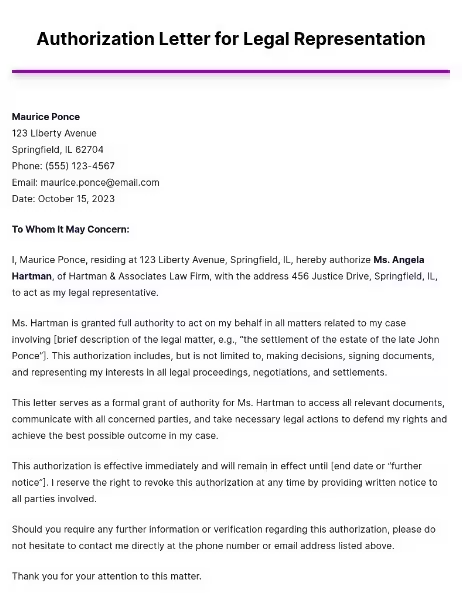
A legal representation letter is a crucial document in many legal situations. It formally notifies relevant parties that you have retained legal counsel and that all future communication should go through your attorney. This seemingly simple letter carries significant weight and implications for your case. Understanding its purpose and components can significantly improve your chances of a favorable outcome.
A legal representation letter is a formal communication from an attorney to a third party, usually an insurance company, opposing counsel, or a government agency. Its primary purpose is to officially declare the attorney-client relationship and direct all future communication regarding a specific legal matter through the attorney. This prevents direct contact between the client and the other party, protecting the client’s interests and ensuring a coordinated legal strategy.
This isn’t simply a courtesy; it establishes a clear line of communication and protects against potentially damaging statements or actions made by the client without the benefit of legal counsel. The letter acts as a gatekeeper, ensuring that all information exchanged is carefully considered and strategized by a legal professional. It also signals a serious intent to pursue the case and sets the tone for future negotiations or legal proceedings.
Key Components of an Effective Legal Representation Letter
Several key elements are crucial for a comprehensive and effective legal representation letter. These components work together to establish the attorney’s representation, lay out the case’s foundational facts, and set the stage for future actions.
Formal Notification of Representation
The letter must clearly and unequivocally state that the named attorney represents the client in the specified legal matter. This is not a place for ambiguity. The letter should identify the client, the attorney, the law firm, and the specific case—for example, a personal injury claim arising from a car accident. This unambiguous declaration sets the legal foundation for all future communications. Any attempt to contact the client directly after this notification should be channeled through the attorney.
The letter should provide a concise summary of the case’s facts. In a personal injury case, this would include a brief description of the accident, the client’s injuries, and the potential liability of the other party. The level of detail will vary depending on the specifics of the case, but the goal is to provide enough information to inform the recipient without revealing the entire strategy.
Policy Limits Inquiry (in relevant cases)
In personal injury cases involving insurance claims, the letter often includes a request for information regarding the insurance policy limits. This is a crucial step in assessing the potential value of the claim and guiding settlement negotiations. Knowing the policy limits allows the attorney to set realistic expectations for the client and develop an appropriate strategy.
Contact Information and Next Steps
The letter should clearly provide contact information for the attorney and the law firm. This includes phone numbers, email addresses, and physical addresses. It may also indicate the next steps in the process, such as the anticipated submission of medical records or the scheduling of a deposition. This transparency fosters efficient communication and collaboration.
Potential for Combined Letters
In some cases, a legal representation letter may be combined with other notices, such as a spoliation letter. A spoliation letter warns the opposing party against destroying or concealing evidence relevant to the case. Combining these letters can be an efficient way to address multiple legal concerns simultaneously. This proactive approach demonstrates the attorney’s commitment to protecting the client’s interests.
The Importance of Professional Legal Representation
Navigating the complexities of legal matters, especially those involving significant financial implications like personal injury cases, can be daunting. A legal representation letter is just one aspect of the broader process of securing professional legal representation. The benefits of having an experienced attorney handling your case extend far beyond the simple act of sending this letter. Your attorney will provide guidance, protect your rights, and work to achieve the best possible outcome for you. While resources exist to help guide self-representation, the expertise of a seasoned legal professional is often invaluable in protecting your interests and maximizing your chances of success. Consider the potential cost of mistakes made without professional guidance when weighing your options. A legal representation letter is the first step in a process that is best handled with qualified legal assistance.
A legal representation letter is a formal notification sent by an attorney to relevant parties (e.g., insurance companies, opposing counsel, or government agencies) informing them that the attorney represents a specific client in a legal matter. It establishes the attorney-client relationship and directs all future communication through the attorney. This prevents direct contact between the client and the opposing party, protecting the client’s interests and ensuring consistent communication strategy.
What is the purpose of a Legal Representation Letter in a personal injury case?
In a personal injury case, like a car accident, the letter serves several crucial purposes. It formally notifies the insurance company of the attorney’s representation, initiating the claims process. It summarizes the accident and the client’s injuries, providing a concise overview of the case. It also requests information about the at-fault driver’s insurance policy limits, signaling the potential for a significant claim. Finally, it establishes a professional communication channel, streamlining the process and ensuring all relevant information is properly exchanged.
What information does a Legal Representation Letter typically include?
A typical letter includes the attorney’s contact information, the client’s name, a brief description of the accident or incident, a summary of the client’s injuries, and a clear statement of representation. It often requests information about the insurance policy limits and may also indicate the intention to provide further documentation, such as medical bills and reports. In some cases, it might also include a request for preservation of evidence (spoliation notice). The letter is often sent with a return receipt requested to confirm its delivery.
Is a Legal Representation Letter the same as an Engagement Letter?
No, a legal representation letter and an engagement letter are distinct documents. The representation letter simply informs others of the attorney’s representation. The engagement letter, on the other hand, is a contract between the attorney and the client, outlining the terms of their agreement, including fees, services to be provided, and the scope of representation.
When is a Legal Representation Letter typically sent?
The timing of sending a representation letter varies depending on the specific circumstances. It’s often sent after the attorney-client relationship is established and before a demand letter, especially in personal injury cases. It can also be sent after receiving notice of a claim against a client or after the decision to file a lawsuit has been made. Essentially, it’s used to establish clear communication lines early in the legal process.
What happens after a Legal Representation Letter is sent?
After sending the letter, the attorney will typically begin gathering evidence, communicating with the opposing party or their insurance company, and working toward a resolution of the case. This may involve negotiations, mediation, or litigation, depending on the specifics of the case and the responses received. The process following the letter sets the stage for the subsequent steps in resolving the legal matter.
This article explores the complexities of translating Spanish to English, focusing on the seemingly simple question, “¿Qué hacemos?” and its implications for accurate and natural-sounding translation. Understanding the nuances involved is crucial for anyone working with translations, whether professionally or personally. The Seemingly Simple “¿Qué Hacemos?” The Spanish phrase “¿Qué hacemos?” translates literally as “What…
Announcing your pregnancy is a momentous occasion, a moment you’ll want to cherish forever. But with so many ways to share this exciting news, choosing the perfect method can feel overwhelming. This article explores creative ideas para dar noticia de embarazo, focusing on making the announcement a truly memorable experience for both you and your…
Many people interact with the legal system only rarely, and when they do, it’s often under stressful circumstances. Understanding the basics of how courts operate can be empowering, helping individuals navigate potential legal challenges with greater confidence. This article focuses on civilian courts, explaining their role and how they differ from their military counterparts. The…
Navigating the immigration process can be complex, and understanding the role of the various USCIS offices is crucial. This guide focuses on the Application Support Center (ASC) in Tucson, Arizona, helping you prepare for your appointment and understand what to expect. Many people wonder about the specific services offered and how to best interact with…
Are you struggling to effectively showcase your analytical skills on your resume? Simply listing “analytical skills” isn’t enough to impress today’s employers. In a competitive job market demanding strong problem-solving abilities, you need a resume that demonstrates your analytical prowess. This article will guide you through the process, equipping you with the strategies to create…
Joining the Israeli Defence Forces (IDF) is a significant decision, one with implications for both personal life and national service. This guide aims to demystify the process, providing a clear overview of what to expect. The path to becoming a soldier in the IDF involves several key stages, and understanding these steps is crucial for…