Obtaining dual citizenship, particularly a combination like dual citizenship USA and Ireland, is a dream for many. It offers the benefits of two nationalities, opening doors to travel, work, and even voting rights in two countries. However, the process can be complex and often involves navigating bureaucratic hurdles. This guide will aim to clarify the path to achieving dual citizenship with a focus on the Irish side of the equation. We’ll explore the process, requirements, and potential challenges you might encounter.
Irish citizenship provides a passport granting visa-free or visa-on-arrival access to a significant number of countries worldwide. It also confers the right to live and work in Ireland without immigration restrictions. Importantly, Ireland permits dual citizenship, allowing you to retain your US citizenship while gaining Irish citizenship.
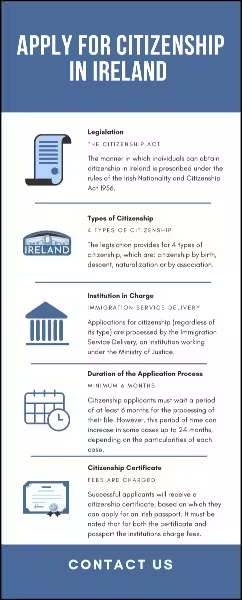
The primary pathways to Irish citizenship are birthright citizenship and naturalization. Birthright citizenship is granted if you were born in Ireland or if one of your parents was an Irish citizen at the time of your birth. This is generally a straightforward process.
Naturalization: The Path for US Citizens
For US citizens without an automatic birthright claim, naturalization is the route to Irish citizenship. This involves meeting specific residency requirements and fulfilling other criteria.
The most significant hurdle is the residency requirement. Typically, this involves five years of “reckonable residence” in Ireland. This is a crucial point. Not all time spent in Ireland counts towards this five-year period. Tourist visas and student visas, for instance, do not contribute to the reckonable residence requirement.
Reckonable Residence Explained
To clarify, reckonable residence refers to legal and continuous residency in Ireland. This means maintaining a legal right to reside in the country throughout the five-year period. Evidence of this will be required during the application process. This could include documentation such as rental agreements, employment contracts, and tax returns. The Irish Naturalisation and Immigration Service (INIS) is the body responsible for assessing applications, and they will thoroughly scrutinize all documentation.
There are exceptions to the standard five-year rule. Spouses or civil partners of Irish citizens may qualify after only three years of legal residence. Similarly, refugees granted asylum in Ireland also benefit from a reduced three-year residency requirement.
The Application Process for Dual Citizenship USA and Ireland
The application for naturalization is a detailed process involving significant paperwork. Be prepared to provide comprehensive evidence of your legal residency in Ireland throughout the required period. You’ll likely need to submit various documents such as passport copies, proof of address, employment history, and potentially references. Interviews might also form part of the process. There are associated application fees, but there are no explicit financial requirements beyond demonstrating sufficient means to support yourself in Ireland.
Navigating Potential Challenges
During the application process, it’s crucial to ensure all documentation is accurate and complete. Any discrepancies or missing information can delay the process, sometimes significantly. Seeking assistance from an immigration lawyer experienced in Irish naturalization matters can be invaluable. They can guide you through the complexities of the application, ensuring you fulfil all requirements and submit your application correctly the first time.
Post-Naturalization: Maintaining Both Citizenships
Successfully completing the naturalization process grants you full Irish citizenship. You will receive an Irish passport and will be entitled to all the rights and responsibilities of an Irish citizen. Importantly, you can retain your US citizenship simultaneously, enjoying the benefits of both. This means you can vote in both countries (subject to the specific regulations of each), access healthcare benefits, and avail of other privileges afforded to citizens of both nations. Travel between the USA and Ireland, or indeed to other nations, will not jeopardize your Irish citizenship status. It’s important to stay informed of any changes to the laws and regulations of both countries, which could affect your dual citizenship.
Achieving dual citizenship USA and Ireland offers a fantastic opportunity, but the path demands careful planning and meticulous attention to detail. Understanding the requirements, especially the nuanced aspects of reckonable residence, is critical for a smooth application process. Remember to seek professional advice if needed, ensuring a successful outcome and the benefits of a dual citizenship. While the website you encountered may have been temporarily inaccessible, the information provided in this article clarifies the critical steps towards attaining your dual citizenship.
Here are some frequently asked questions about obtaining dual citizenship between the United States and Ireland. Please note that due to the temporary unavailability of the official Irish Naturalisation and Immigration Service website, some details may be limited. Information provided here is based on commonly understood principles and may not reflect the most up-to-date official guidelines. Always refer to the official website when it is back online for the most accurate and current information.
How can I obtain Irish citizenship?
Irish citizenship can be acquired through two main pathways: birthright citizenship (jus soli) and naturalization. Birthright citizenship applies if you were born in Ireland to Irish parents or if you meet specific criteria related to your parents’ residency and citizenship status prior to your birth. Naturalization is the process for foreign nationals, including US citizens, to become Irish citizens.
What are the requirements for naturalization?
Generally, naturalization requires a minimum period of continuous legal residence in Ireland. While the standard is typically five years of “reckonable residence,” this time frame can be reduced to three years under certain circumstances, such as being married to an Irish citizen or being a refugee. Crucially, not all time spent in Ireland counts towards this requirement. Tourist visas and student visas, for example, do not contribute to the reckonable residency period. You must demonstrate continuous legal residency throughout the entire required period.
Can I maintain my US citizenship while becoming an Irish citizen?
Yes, Ireland permits dual citizenship. Obtaining Irish citizenship does not automatically revoke your US citizenship. You can hold both nationalities simultaneously.
What is “reckonable residence”?
Reckonable residence refers to the period of legal residency that counts towards fulfilling the naturalization requirement. It does not include time spent in Ireland on temporary visas such as tourist or student visas. The exact definition and required documentation to prove reckonable residence can be found on the official Irish Naturalisation and Immigration Service website once it is restored.
What is the application process like?
The application process involves submitting comprehensive documentation to prove your legal residency in Ireland and meeting all other eligibility requirements. This likely includes providing proof of identity, address, and continuous legal residency. The process might also involve interviews. While specific financial requirements aren’t publicly known, application fees are likely involved.
What rights do I gain with Irish citizenship?
Irish citizenship grants you the right to live and work permanently in Ireland without immigration restrictions. It also allows you to vote in Irish elections and access other rights and responsibilities afforded to Irish citizens. Importantly, obtaining Irish citizenship does not affect your ability to travel internationally; you can still maintain your US passport and travel freely.
What should I do if I am experiencing problems accessing the official website?
The official Irish Naturalisation and Immigration Service website is currently experiencing technical difficulties. The error message suggests a potential authorization or permission issue. Try accessing the site again later. If problems persist, you might explore contacting the Irish embassy or consulate in your area for assistance. Remember to always use official channels for information regarding citizenship applications.
Finding funding for your legal aid project can be challenging. But did you know the American Bar Association, through its American Bar Endowment (ABE), offers significant opportunities? This article delves into the ABE’s Opportunity Grant Program, outlining the key elements for a successful application. Understanding the American Bar Association Grants Focus: Access to Justice The…
Facing a Class 6 felony charge in Arizona can be daunting, but understanding the nuances of this specific classification is crucial. While it’s the least severe type of felony, a conviction still carries significant consequences. This article will break down the key aspects of a Class 6 felony in Arizona, offering clarity and guidance to…
Dealing with bad neighbors is unfortunately a common problem. That persistent barking dog, the late-night parties, the overflowing trash cans – these annoyances can significantly impact your quality of life. But before you reach for the phone to call a lawyer, there are steps you can take to address the situation peacefully and legally. This…
Do misdemeanors go away in Texas? This is a question many Texans grapple with after facing a minor offense. The short answer is: not naturally. While a misdemeanor conviction doesn’t haunt you forever, it remains on your record unless actively removed through legal processes like expunction or non-disclosure. Understanding these processes is crucial for mitigating…
Choosing the right attire as a female lawyer is a delicate balancing act. It’s about projecting confidence and competence while staying true to your personal style. This article explores the complexities of lawyer attire female and offers practical advice to help you navigate this often-challenging aspect of your career. Authenticity and Confidence: The Cornerstone of…
Planning a trip to Chile? September offers a unique blend of pleasant weather, fewer crowds than peak season, and the vibrant celebrations of Fiestas Patrias. This article will explore why September in Chile is an ideal time to visit, highlighting the diverse experiences available from north to south. Exploring Chile in September: A Seasonal Overview…