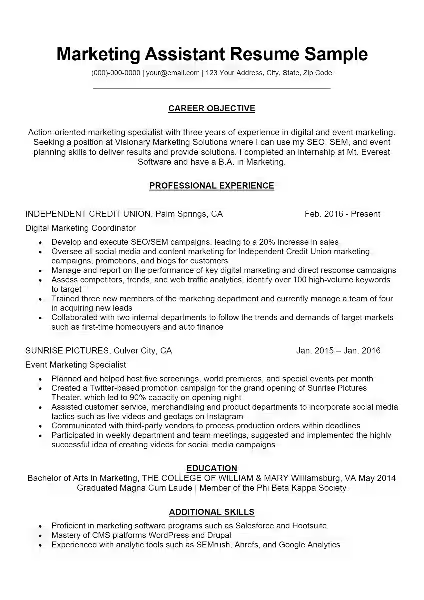
Landing your dream Security Supervisor job in 2025 requires more than just experience; it necessitates a compelling and strategically crafted resume. This guide will walk you through creating a security supervisor resume that stands out from the competition and gets you noticed by recruiters.
Understanding the Security Supervisor Resume Landscape
The job market for security supervisors is competitive. Applicant Tracking Systems (ATS) scan resumes for keywords, and recruiters spend only seconds initially reviewing each application. Your resume needs to be both ATS-friendly and visually appealing to capture attention and highlight your qualifications effectively. This means focusing on both hard skills (technical skills directly related to security) and soft skills (interpersonal and leadership abilities essential for effective supervision).
A well-structured resume presents your achievements and experience clearly and concisely. This is crucial because recruiters often only spend a few seconds initially reviewing each resume. Therefore, it’s vital to present your most relevant qualifications immediately.
Choosing the Right Resume Format
There are three main resume formats to consider:
Chronological: Best for experienced security supervisors. This format presents your work history in reverse chronological order, highlighting your career progression and highlighting consistent growth within the field.
Functional: Ideal for entry-level candidates or those changing careers. This format emphasizes skills and accomplishments over work history, making it suitable for showcasing transferable skills from different fields.
Combination: A blend of chronological and functional formats. This allows you to highlight both your skills and work experience, making it suitable for mid-career professionals.
Regardless of your chosen format, ensure your resume is clean, easy to read, and visually appealing. Use a professional template, incorporate bullet points effectively, and consistently maintain formatting throughout the document. A visually appealing resume makes a positive first impression.
Essential Components of a Winning Security Supervisor Resume
Let’s break down the key sections of a successful security supervisor resume:
1. Compelling Introduction: Professional Summary or Objective
This crucial section is your elevator pitch. For experienced professionals, a professional summary concisely highlights your key achievements and skills, directly addressing the employer’s needs. For entry-level candidates, a resume objective clearly outlines your career goals and relevant skills, demonstrating your potential.
A strong summary for an experienced candidate might read: “Highly accomplished Security Supervisor with 10+ years of experience in high-security environments. Proven ability to reduce security breaches by 15% and successfully manage teams of up to 15 officers. Expertise in risk assessment, emergency response, and surveillance system operation.”
An effective objective statement for an entry-level candidate could be: “Highly motivated and detail-oriented recent graduate seeking a Security Supervisor position. Possesses strong leadership and communication skills, complemented by training in security protocols and emergency response procedures. Eager to contribute to a dynamic team and learn from experienced professionals.”
2. Detailed Skills Section: Hard and Soft Skills
This section showcases your abilities. Highlight both hard skills (e.g., CCTV operation, access control, incident reporting, risk assessment, emergency response planning, investigation techniques) and soft skills (e.g., leadership, communication, problem-solving, conflict resolution, teamwork, adaptability, decision-making under pressure). Quantify your accomplishments whenever possible (e.g., “Reduced security incidents by 20%,” “Successfully trained 10 new security officers”).
3. Comprehensive Work History Section: Focus on Results
This section details your past roles, using the reverse-chronological order (most recent experience first). For each role, list your responsibilities using action verbs and quantify your achievements whenever feasible (e.g., “Implemented new security protocols, resulting in a 10% decrease in theft incidents”). Your work history section should demonstrate a consistent progression of responsibilities and accomplishments, showcasing increased responsibilities and achievements over time.
4. Education Section: Certifications and Training
Clearly list your educational background, including degrees, certifications (e.g., Certified Protection Professional (CPP), Certified Security Supervisor), and relevant training programs. Highlight coursework related to security management, risk assessment, and emergency response.
5. Optional Additional Sections
Consider including sections for:
Training and Certifications: Further detail on specialized training completed.
Awards and Honors: Recognition for outstanding performance.
Professional Memberships: Affiliation with relevant professional organizations.
Languages Spoken: Demonstrating multilingual skills, if applicable.
Volunteer Experience: Showcasing dedication and commitment beyond professional roles.
This final section will help you improve your resume’s effectiveness.
Keywords: Incorporate keywords from the job description to improve ATS scan results.
Action Verbs: Use strong action verbs (e.g., managed, implemented, developed, improved) to describe your accomplishments.
Quantifiable Results: Whenever possible, quantify your accomplishments with numbers and data.
Concise Writing: Use clear, concise language, avoiding jargon.
Proofreading: Thoroughly review your resume for grammar and spelling errors.
Cover Letter: Always include a tailored cover letter to elaborate on your accomplishments and career trajectory. A cover letter generator can assist with this process.
By following these guidelines and tailoring your security supervisor resume to each specific job application, you’ll significantly increase your chances of securing an interview. Remember, your resume is your first impression – make it count!
What is the best format for a Security Supervisor resume in 2025?
The optimal format depends on your experience level. A chronological format best showcases extensive experience, while a functional format is ideal for entry-level candidates or those changing careers. A combination format works well for mid-career professionals. Regardless of the format, prioritize a clean, easily scannable design using bullet points and action verbs.
How do I make my resume stand out from other applicants?
Tailor your resume to each job description, using keywords from the posting. Quantify your accomplishments with numbers (e.g., “Reduced security breaches by 15%”) to demonstrate impact. Highlight both hard skills (surveillance, risk assessment) and soft skills (communication, teamwork). A compelling professional summary (for experienced candidates) or objective statement (for entry-level) is crucial to grab the recruiter’s attention within the first seven seconds. Finally, ensure your resume is visually appealing, error-free, and concise.
What should I include in my skills section?
Your skills section should showcase a balance of hard and soft skills relevant to the Security Supervisor role. Hard skills might include: surveillance system operation, risk assessment, emergency response procedures, access control, investigation techniques, CCTV monitoring, alarm system management, and knowledge of security regulations. Soft skills to highlight would be: communication, leadership, problem-solving, teamwork, conflict resolution, decision-making, adaptability, and stress management. Quantify your skills whenever possible (e.g., “Proficient in operating and maintaining multiple surveillance systems”).
Use the reverse-chronological order, listing your most recent experience first. For each role, concisely describe your responsibilities and quantify your achievements using action verbs and numbers. Aim for three measurable accomplishments per role that showcase your impact (e.g., “Improved team efficiency by 10% through implementing a new scheduling system”).
What should I include in my education section?
List your degrees, certifications (like Certified Security Supervisor), and relevant training. Highlight any coursework related to security management, risk assessment, or emergency response.
Should I include a cover letter?
Yes, a strong cover letter is highly recommended. It allows you to further elaborate on your accomplishments and career trajectory, providing context and demonstrating your personality. Consider using a cover letter generator to streamline the process.
How long should my resume be?
Aim for a one-page resume unless you have extensive experience that necessitates a second page. Conciseness and impact are key.
How important are keywords in my resume?
Keywords are crucial. Applicant Tracking Systems (ATS) scan resumes for specific terms. Incorporating keywords directly from the job description significantly increases your chances of getting your resume noticed by the ATS and the hiring manager.
What is the difference between a professional summary and a resume objective?
A professional summary (for experienced candidates) highlights past accomplishments and skills, demonstrating how your experience directly addresses the employer’s needs. A resume objective (for entry-level or career changers) focuses on future aspirations and emphasizes transferable skills and potential.
How can I ensure my resume is ATS-friendly?
Use a clean, simple resume format. Avoid fancy fonts or graphics that might confuse the ATS. Use keywords from the job description throughout your resume, especially in the skills and experience sections. Save your resume as a PDF to preserve formatting.
Landing your dream social work job starts with a compelling resume. But showcasing your skills effectively requires more than just listing your experience; it demands a strategic approach that highlights your unique blend of hard and soft skills. This guide will walk you through crafting a social work skills resume that stands out, making you…
Are you a skilled programmer looking to give back to your community? Do you want to use your technical abilities to make a real difference? Then exploring volunteer programming opportunities is a rewarding path. This article will guide you through the process of finding and engaging in meaningful volunteer projects that leverage your programming skills….
Designing and ordering custom DNA oligonucleotides can seem daunting, but understanding the process, particularly the nuances of primer order, is key to successful research. This article will break down the key aspects of ordering custom oligos, focusing on factors that influence the yield, quality, and speed of delivery. Primer Order: Factors Affecting Yield and Quality…
Finding the perfect rosary can be a deeply personal journey. For many, the inherent spirituality and craftsmanship are paramount. If you’re drawn to the rich cultural heritage and artistry of Mexico, a Mexico rosary might be the perfect choice. This guide explores the unique qualities of rosaries crafted in Mexico, delving into their history, materials,…
The recent announcement regarding the Denver Assessment, Intake, and Diversion (AID) Center has caused significant concern and confusion within the community. Initially slated for closure, the city has temporarily reversed its decision, creating uncertainty about the future of this vital resource for Denver’s vulnerable population. This article aims to clarify the situation, explain the implications,…
Are you looking to adopt a loving and loyal companion? Chihuahuas, with their big personalities and small stature, make wonderful pets for the right owner. If you live in or around Atlanta, Georgia, and are considering adopting a Chihuahua, you’re in luck! There are several excellent rescue organizations dedicated to finding these adorable dogs their…