Developing a successful marketing campaign requires more than just a catchy slogan. It demands a strategic and creative approach that seamlessly blends brand vision with audience needs. This article explores the key elements of creative campaign development, offering a practical framework for creating impactful campaigns that drive measurable results.
Understanding the Creative Campaign Development Process
The foundation of any effective campaign lies in a well-defined process. A structured approach ensures that all aspects of the campaign, from initial strategy to final execution, are aligned and optimized for success. This isn’t about stifling creativity; rather, it’s about channeling it effectively. Think of it as providing a strong scaffolding for your creative genius to flourish.
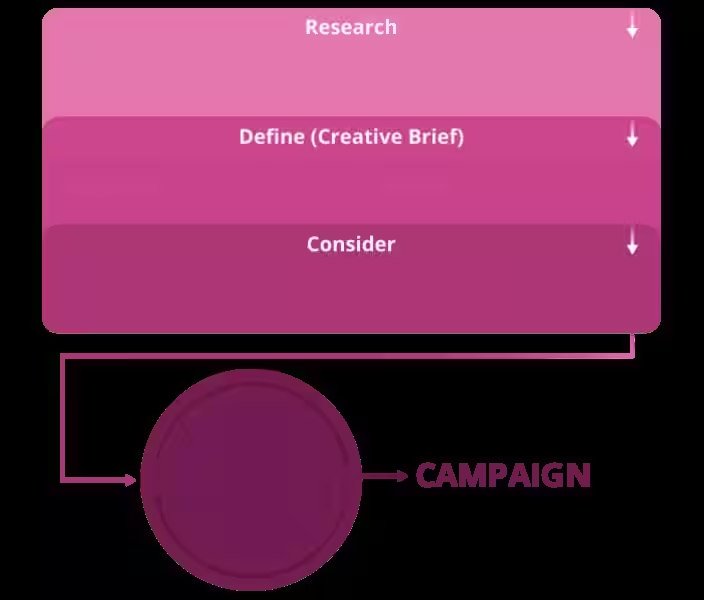
This structured process typically involves several key phases: initial research and planning, creative brainstorming and concept development, production and execution, and finally, measurement and optimization. Each stage builds upon the previous one, ensuring a cohesive and impactful final product. Ignoring any of these steps can lead to a less effective, and ultimately less successful, campaign. The iterative nature of the process allows for adjustments and refinements along the way, maximizing the chances of achieving your objectives.
The Nine Steps to Creative Campaign Success
Sunup, a leading marketing agency, employs a nine-step process for creative campaign development. This proven methodology ensures a strategic and creative approach, resulting in campaigns that resonate with audiences and deliver tangible results. Let’s delve into each step:
1. Discovery & Alignment: Laying the Foundation
The initial stage involves in-depth discussions with the client to clearly define objectives, expectations, and the scope of the campaign. This crucial step lays the groundwork for a successful partnership and ensures everyone is on the same page from the outset. A comprehensive contract solidifies the agreement and outlines key responsibilities.
This phase is not just about gathering information; it’s about building a collaborative relationship built on trust and mutual understanding. Open communication at this stage prevents misunderstandings later in the process.
2. Research & Insights: Understanding Your Audience
Thorough research is paramount. This goes beyond simple data analysis; it involves deeply understanding your target audience’s motivations, pain points, and aspirations. Discovering the unique drivers that influence their decisions is key to crafting truly resonant messaging.
This stage involves a deep dive into market trends, competitor analysis and customer profiling. You need to understand not just who your audience is, but why they would engage with your brand.
3. Creative Brief: Your Campaign Roadmap
The creative brief serves as the guiding document for the entire campaign. It outlines project details, target audience, campaign goals (including KPIs), brand voice and visual direction, inspiration sources, guidelines, stakeholders, and timelines. Client sign-off ensures everyone is aligned on the direction and objectives.
This detailed document serves as a single source of truth, preventing conflicting interpretations and maintaining consistency throughout the project.
This is where the creative magic happens! Collaborative brainstorming sessions bring together content, design, and strategy experts to generate innovative ideas aligned with the creative brief. The focus is on quantity over quality at this stage, encouraging diverse perspectives and pushing creative boundaries.
This stage requires a supportive and open environment where team members feel comfortable sharing even seemingly outlandish ideas.
5. Tissue Meeting: Early Feedback and Iteration
A “tissue meeting” is an informal presentation of preliminary concepts to key client stakeholders. This allows for early feedback and buy-in, preventing costly rework later in the process. It’s an opportunity for collaborative refinement based on initial reactions.
This informal setting fosters open dialogue and allows for quick adjustments to the direction of the campaign.
6. Concept Refinement: Shaping the Winning Idea
Based on feedback from the tissue meeting, the concepts are refined and improved. This iterative process ensures the final concepts strongly align with the client’s vision and address any potential issues identified earlier.
Refinement might involve adjusting the messaging, visuals, or overall approach to better resonate with the target audience.
7. Concept Presentation: Selecting the Best Approach
A formal presentation of at least two fully realized campaign directions is made to a wider group of stakeholders. This comprehensive presentation includes detailed activation plans and mockups, allowing for a thorough evaluation and selection of the optimal concept.
This presentation allows for a more informed decision, based on a comprehensive understanding of each concept’s strengths and weaknesses.
8. Production & Execution: Bringing the Campaign to Life
Once a concept is selected, the production phase begins. This involves the development of all necessary campaign assets, ensuring seamless execution across all channels. Continuous client feedback is incorporated throughout this stage.
This phase requires meticulous attention to detail and strong project management skills to ensure timely and accurate delivery.
The final stage involves monitoring campaign performance against the pre-defined KPIs. Data-driven insights are used to optimize the campaign’s effectiveness throughout its lifecycle, ensuring maximum impact and return on investment.
This continuous monitoring and optimization are crucial for maximizing the campaign’s impact and achieving the desired results.
Creative Campaign Development: A Continuous Process
Creative campaign development is a dynamic and iterative process. While Sunup’s nine-step process offers a robust framework, flexibility is key. Adapting the process to each client’s unique needs and goals ensures that creativity is always strategically grounded, resulting in campaigns that resonate and deliver measurable business results. The emphasis on clear communication, iterative feedback loops, and data-driven optimization maximizes the campaign’s overall impact. Remember, the ultimate goal is to create a campaign that not only looks great but also achieves its objectives.
Here’s an FAQ section on creative campaign development, based on the provided information, avoiding plagiarism:
What is Sunup’s approach to B2B creative campaign development?
Sunup employs a nine-step process that blends strategic planning with creative execution. This structured approach prioritizes collaboration and iterative refinement, ensuring the campaign aligns perfectly with the client’s vision and desired outcomes. The process is flexible and adapts to each client’s unique needs and goals, always ensuring a strategically grounded and creative campaign. Clear communication, iterative feedback, and data-driven optimization are central to maximizing the campaign’s impact.
What are the key stages in Sunup’s campaign development process?
The process begins with Discovery & Alignment, establishing clear objectives and expectations. This is followed by thorough Research & Insights to understand the target audience. A comprehensive Creative Brief then serves as the campaign roadmap. Brainstorming & Concepting generates innovative ideas, followed by a Tissue Meeting for initial client feedback. Concept Refinement incorporates this feedback, leading to a formal Concept Presentation where the winning concept is selected. Production & Execution develops all campaign assets, and finally, Measurement & Optimization tracks performance and refines the campaign’s effectiveness.
How does Sunup ensure client involvement throughout the process?
Client involvement is crucial at every stage. From the initial Discovery & Alignment to the Tissue Meeting for preliminary feedback and the formal Concept Presentation, Sunup ensures continuous collaboration. Regular feedback loops throughout Production & Execution guarantee the final product aligns perfectly with client expectations. This collaborative approach minimizes rework and maximizes the chances of achieving the desired results.
What makes Sunup’s approach different?
Sunup’s approach distinguishes itself through its blend of structured methodology and flexibility. While the nine-step process provides a framework, it’s tailored to each client’s specific needs. This adaptability ensures that the creative process is always strategically aligned, delivering both audience resonance and measurable business results. The emphasis on data-driven optimization further differentiates Sunup, maximizing campaign impact through continuous monitoring and refinement.
What kind of results can clients expect from Sunup’s process?
Clients can expect campaigns that are both creatively compelling and strategically effective. The process ensures alignment between the client’s vision and campaign outcomes, resulting in campaigns that resonate with the target audience and deliver measurable business results. Sunup’s focus on data-driven optimization guarantees continuous improvement and maximizes the return on investment for the campaign. The end result is a successful campaign that achieves its objectives and leaves a lasting impact.
How does Sunup handle creative brainstorming and concept refinement?
Sunup’s brainstorming sessions involve a multidisciplinary team, fostering innovative ideas aligned with the creative brief. The Tissue Meeting provides an informal platform for early client feedback, preventing costly rework later. Following this, the concepts undergo refinement, culminating in a formal presentation of at least two fully realized campaign directions. This rigorous process ensures that the chosen concept is robust, well-refined, and aligned with client needs and business objectives.
This article explores the multifaceted nature of international aid organizations, using Caring International as a case study to illustrate the complexities and nuances involved in addressing global poverty and hunger. We’ll delve into the challenges these organizations face, the strategies they employ, and the crucial role they play in improving lives worldwide. The Challenges of…
Many people wonder about the legal implications when an undocumented immigrant marries a US citizen. This is a complex area of immigration law, and understanding the process is crucial for both partners. This article will explore the challenges and potential solutions involved in this situation. The Challenges of an Undocumented Spouse Marrying a US citizen…
Protecting your business and enhancing the customer experience often go hand-in-hand. A robust system for managing bookings, refunds, and ancillary services can be the key to achieving both. This article explores how a comprehensive platform, such as a hypothetical “Protect Plus” system, can achieve this vital balance. The Importance of Refundable Bookings Offering refundable bookings…
Many people convicted of a felony in California wonder, “Does a felony go away after 7 years?” The simple answer is no; a felony conviction stays on your record for life unless you successfully petition for expungement. However, expungement doesn’t erase the conviction completely – it’s more like a significant scrubbing that greatly improves your…
Finding your dream home can be an exciting, yet daunting, journey. Navigating the Oakland, CA real estate market, with its diverse neighborhoods and competitive landscape, requires careful planning and informed decision-making. This guide will help you understand the current market conditions, popular neighborhoods, and resources available to aid your search for open homes Oakland CA….
Finding the perfect home is a significant life event, and choosing a location that offers both opportunity and a fulfilling lifestyle is paramount. Turlock, California, increasingly stands out as a desirable place to buy a new home, offering a compelling blend of small-town charm and city amenities. This guide will explore what makes Turlock so…