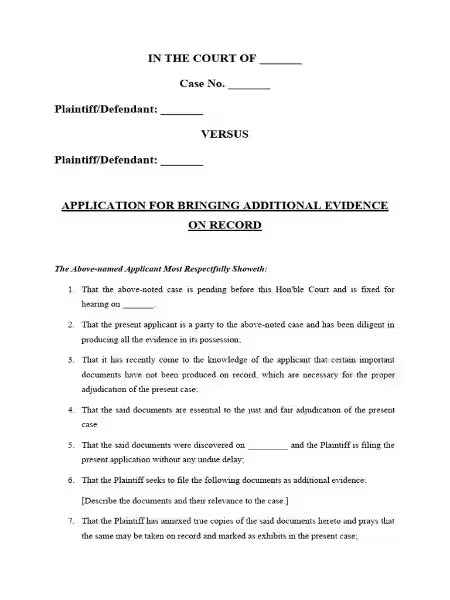
A Request for Evidence (RFE) from United States Citizenship and Immigration Services (USCIS) can be a daunting experience for immigration applicants. It doesn’t mean your application is automatically rejected, but it does signal that USCIS needs more information to make a decision. Understanding what an RFE is, how to respond effectively, and the potential consequences of inaction is crucial for a successful outcome.
An RFE is essentially a formal request from USCIS for additional information or documentation to support your pending immigration application or petition. Think of it as a clarification request, not a rejection notice. The agency needs further evidence to confirm the accuracy and completeness of your initial submission.
This is a common occurrence in the immigration process, and receiving an RFE doesn’t necessarily indicate a problem with your application. It simply means USCIS requires more detail or proof to reach a well-informed decision about your eligibility. Responding promptly and thoroughly is key to mitigating any potential negative impact.
Understanding the Contents of an RFE
The RFE will explicitly outline the specific evidence required to address identified deficiencies in your initial application. This might include details like missing forms, unclear documentation, or insufficient proof of a specific claim. The RFE will also specify a strict deadline—typically 30 to 60 days—for your response.
Crucially, the RFE will detail the consequences of failing to respond adequately or missing the deadline. Ignoring an RFE or submitting an incomplete response will almost certainly lead to the denial of your application. The level of detail provided in the RFE differs based on the application type and the specific nature of the required evidence.
Common Types of Evidence Requested
The type of evidence requested varies greatly depending on the application type. Some examples include:
Family-based petitions: Photographs, correspondence, financial records showcasing joint support, and proof of the relationship between the petitioner and beneficiary.
Employment-based petitions: Proof of the petitioner’s qualifications, the beneficiary’s job responsibilities, and evidence supporting the legitimacy of the employer-employee relationship.
Asylum applications: Detailed accounts of persecution, corroborating evidence, and country condition reports.
Responding Effectively to a Request for Additional Evidence
Responding to an RFE requires meticulous attention to detail and careful organization. Your response must directly address each point raised in the RFE, providing concise and clear answers supported by strong evidence. Simply resubmitting your original application is insufficient. The response must specifically address the shortcomings highlighted by USCIS.
Carefully review the RFE: Understand precisely what USCIS is requesting.
Gather all necessary documentation: This might include birth certificates, marriage certificates, tax returns, bank statements, employment records, and educational transcripts. Ensure all documents are originals or certified copies.
Organize your evidence logically: Use clear labeling and numbering to correspond with the specific requirements of the RFE, making it easy for USCIS to review your response.
Translate documents: If necessary, ensure all documents are translated into English by a certified translator.
Seek professional help: Consider consulting with an immigration attorney to ensure your response is complete, accurate, and properly formatted.
The Importance of Time Management and Authenticity
Time management is crucial when dealing with an RFE. Missing the deadline is a serious mistake, often leading to application denial, even if the evidence submitted is sufficient. Begin gathering the necessary documentation immediately upon receiving the RFE. Submit your response well before the deadline to account for potential unforeseen delays.
The authenticity and accuracy of all submitted documents are paramount. Submitting forged or fraudulent documents will not only fail to satisfy the RFE but will also have significant legal consequences. Only submit legitimate and verifiable evidence to support your claim. A request for additional evidence is your opportunity to show the validity of your case.
Addressing Specific Concerns in the RFE
Your response should not simply reiterate the information already submitted. Instead, it should directly address the specific concerns raised in the RFE. This might involve providing additional explanations, clarifying ambiguities, or offering supplemental evidence to support your claims.
The Role of Primary and Secondary Evidence
USCIS prefers primary evidence whenever possible. This is original documentation directly relevant to your case, such as birth certificates, marriage certificates, or employment contracts. However, if primary evidence is unavailable, you may submit secondary evidence to support your claims (such as affidavits from witnesses). The request for additional evidence might specifically request one or the other.
If primary evidence is unavailable due to exceptional circumstances beyond your control, you must proactively demonstrate this to USCIS and provide compelling secondary evidence. This may involve obtaining a statement from the issuing authority explaining the unavailability of the primary document. The strength and relevance of the secondary evidence is crucial in these cases.
When to Seek Legal Counsel
Navigating the complexities of immigration law can be challenging. An immigration attorney can provide invaluable guidance and support in responding to an RFE. They can help you understand the requirements of the RFE, gather the necessary documentation, and ensure your response accurately and effectively addresses USCIS’s concerns. This is especially true when dealing with intricate situations or a high degree of technicality in the request for additional evidence. The attorney can also assess the overall strength of your application and advise you on the best course of action.
While receiving an RFE can be stressful, it presents a valuable opportunity to address any deficiencies in your application. By responding promptly, comprehensively, and accurately to the specific details outlined in the RFE, you significantly improve your chances of a favorable outcome. Remember that a carefully prepared and timely response demonstrates your commitment to the process and the validity of your application. Don’t hesitate to seek professional legal assistance to navigate this critical step successfully.
Frequently Asked Questions: Request for Evidence (RFE) from USCIS
What is a Request for Evidence (RFE)?
An RFE from United States Citizenship and Immigration Services (USCIS) means they need more information or documents to support your pending immigration application or petition. It’s not a rejection, but a request for further clarification or proof of what you’ve already submitted. Receiving an RFE doesn’t guarantee denial, but a prompt and complete response is crucial for approval.
What does an RFE typically include?
The RFE will clearly specify the exact evidence needed, the deadline for submission (usually 30-60 days), and the consequences of not responding adequately by the deadline.
What happens if I ignore an RFE or submit an incomplete response?
Ignoring an RFE or providing an incomplete response will likely lead to the denial of your application or petition.
What kind of evidence might be requested in an RFE?
The required evidence varies greatly depending on your application type. A family-based petition might need more proof of your relationship (photos, correspondence, financial records). An employment-based petition might require further evidence of your qualifications, the beneficiary’s job duties, or the legitimacy of the employer-employee relationship. The RFE will explicitly state what is needed.
How should I respond to an RFE?
Your response must directly address each point in the RFE with clear, concise answers backed by solid evidence. Translate documents if necessary, and organize everything logically. Simply resubmitting the original application is insufficient; you must specifically address the deficiencies highlighted in the RFE. Clearly label any new evidence to match the RFE’s requirements.
What kind of supporting documents might I need to gather?
You may need various documents, including birth certificates, marriage certificates, tax returns, bank statements, employment records, educational transcripts, and more. The RFE will specify what’s needed. The authenticity and accuracy of these documents are extremely important.
What are the consequences of submitting forged or fraudulent documents?
Submitting forged or fraudulent documents will not only fail to satisfy the RFE but will also have serious legal consequences.
Should I consult with an immigration attorney?
It’s highly recommended to consult an immigration attorney. They can help you understand the complexities of immigration law, ensure your response is complete and accurate, and is properly formatted to meet USCIS requirements.
How important is time management when responding to an RFE?
Time management is critical. Meeting the deadline is non-negotiable. Missing it will likely result in denial, even if your evidence is otherwise sufficient. Start gathering documents immediately and submit well before the deadline to account for potential delays.
What if I can’t find the primary evidence requested?
If primary evidence (like a birth certificate) is unavailable, you must demonstrate this to USCIS and provide compelling secondary evidence (like a baptismal certificate). The specific requirements depend on the type of application. In some cases, multiple affidavits from independent witnesses might be necessary.
What if the primary evidence I have is unreliable?
Unreliable primary evidence may lead to requests for secondary evidence or interviews. USCIS will assess the credibility of all evidence provided.
Are original documents always required?
Original documents are preferred for certain items (medical exams, affidavits, labor certifications), but legible photocopies are usually acceptable unless otherwise specified. USCIS can request originals at any time.
Can I get my original documents back?
USCIS may return originals submitted in response to their requests. However, it is best practice to return unrequested originals separately.
What happens if I submit a partial response to an RFE?
A partial response is treated as a request for a decision based on the evidence already submitted.
What happens if I don’t respond to the RFE at all?
Failure to respond to an RFE will likely result in a denial of your application.
Will USCIS disclose all derogatory information about me?
USCIS must provide notice of derogatory information and an opportunity to rebut it, but certain information (classified, from other agencies, or legally protected) may not be fully disclosed. They’ll provide enough detail for you to respond effectively.
What is the difference between an RFE and a Notice of Intent to Deny (NOID)?
Both RFEs and NOIDs request additional information, but a NOID indicates a stronger likelihood of denial if the requested information isn’t provided. They have different response deadlines.
This FAQ provides general information and should not be considered legal advice. Always consult with an immigration attorney for advice tailored to your specific situation.
This article delves into a detailed review of an 18-month living experience at Loring Park Flats, located at 330 Oak Grove Street, Minneapolis, MN 55403. The review, while highlighting the desirable location, ultimately paints a concerning picture regarding the building’s maintenance, safety, and overall living environment. This honest assessment aims to help potential renters make…
Considering becoming a citizen of Scotland? The prospect of Scottish citizenship, particularly in the context of an independent Scotland, presents a unique and potentially appealing opportunity. This article explores the proposed pathways to citizenship, focusing on the key aspects and implications for those seeking to make Scotland their home. Pathways to Scottish Citizenship The proposed…
Navigating the process of registering a vehicle in New York can be confusing, especially when it involves moving a vehicle before the official registration is complete. This is where understanding temporary tags NY, or more formally, in-transit permits, becomes crucial. These permits offer a streamlined and legal way to transport your vehicle within or across…
What if your clothing choices weren’t just about fashion, but also about actively participating in a positive social movement? That’s the core proposition of Social Society Clothing, a brand that’s redefining what it means to dress well. This article delves into the unique approach of Social Society Clothing, exploring its mission, target audience, and the…
The relationship between police powers and the rights of individuals is a cornerstone of a just society. In England and Wales, the Police and Criminal Evidence Act 1984 (PACE) is the bedrock of this relationship, defining the boundaries of police authority and safeguarding citizens’ freedoms. This article will explore key aspects of PACE, explaining its…
Iranian traditional clothing boasts a history as rich and vibrant as the country itself. For centuries, garments have served not merely as functional items but as powerful symbols of social status, regional identity, and cultural heritage. This article delves into the captivating world of Iranian attire, exploring its evolution through time and the diverse regional…