Finding yourself facing immigration proceedings can be daunting. Understanding the process and the specifics of the Buffalo New York Immigration Court is crucial for a successful outcome. This guide aims to provide clear, concise information to help you navigate this complex system.
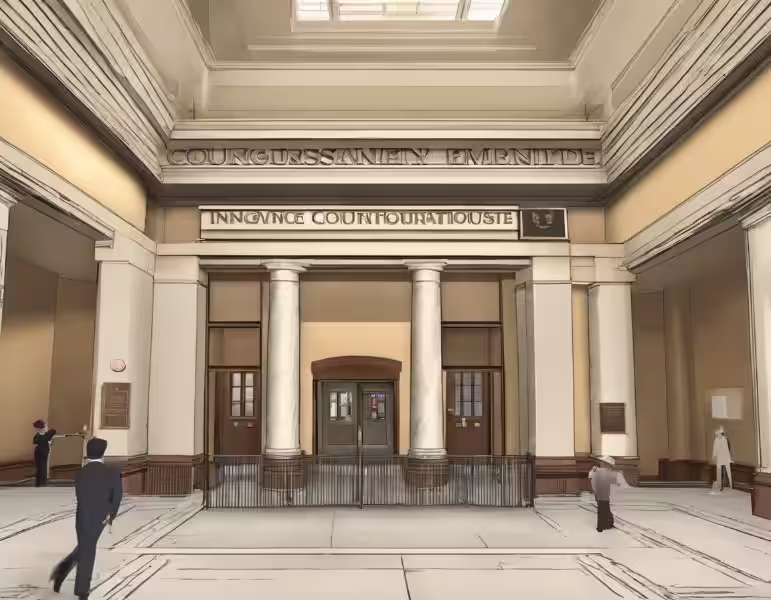
The Buffalo Immigration Court is situated at 130 Delaware Avenue, Suite 300, Buffalo, NY 14202. Its operating hours are 8:00 a.m. to 4:30 p.m., Monday through Friday, excluding federal holidays (check the Office of Personnel Management (OPM) website for a list) and any unexpected closures. Always check the EOIR’s Operational Status webpage, Facebook, or X for any last-minute announcements regarding closures.
Parking is available in nearby pay lots and on the street. Public transportation options, including NFTA buses and the Metro Rail, provide convenient access. Remember to factor in travel time and potential delays. Planning your arrival accordingly will ease any pre-hearing anxiety.
For general inquiries, you can contact the court via email at Buffalo.Immigration.Court@usdoj.gov or by phone at 716-551-3442. Specific requests, such as asylum EAD clock requests, require a separate email address: Asylum.Clock.Buffalo@usdoj.gov. Remember to include your name and alien registration number when making such requests. News media and congressional inquiries should be directed to the EOIR Office of Policy.
Court Security and Procedures
Before entering the Buffalo Immigration Court, be prepared for security protocols. All visitors must pass through metal detectors and undergo bag checks. Food and drinks are generally prohibited inside the courtroom. Cameras and recording devices are strictly forbidden, unless you are an attorney or government representative with prior authorization for court-related business. These regulations are in place to maintain order and security within the court. Understanding and complying with these regulations ensures a smooth and efficient process.
Observing Court Proceedings
Public observation of hearings is generally permitted, unless there are specific legal exceptions. While prior notification is not mandatory, contacting EOIR’s Office of Policy is recommended to coordinate your attendance. Remember that cameras and recording devices remain prohibited even for observers. Respect for the court’s procedures and attendees is paramount. Understanding this allows for a more respectful and productive observation.
The Buffalo Immigration Court’s staff includes an Assistant Chief Immigration Judge, a Court Administrator, and several Immigration Judges. You can find a list of their names in official court documents. The court operates under the Executive Office for Immigration Review (EOIR) within the Department of Justice. This is a key point to remember when dealing with any aspect of your case.
Comprehensive information on court procedures is available in the EOIR Policy Manual. Numerous resources are available to help you navigate the immigration court system, including self-help materials and the Immigration Court Online Resource (ICOR). These resources can be invaluable when preparing for your hearing. Utilizing these resources can significantly improve your understanding of the process.
Representation and Registration
If you choose to have legal representation, your attorney or representative must register with EOIR’s eRegistry. This is a critical step to ensure they can properly represent you in court. Remember that USCIS and ICE are separate entities within the Department of Homeland Security (DHS), a fact that is often misunderstood.
Understanding the Process at the Buffalo Immigration Court
Navigating the immigration court system can be challenging, even with readily available resources. The process varies depending on the specific case, but understanding the general steps can alleviate some anxiety.
Filing of Charges: The process begins with the filing of charges by Immigration and Customs Enforcement (ICE).
Notice to Appear (NTA): You will receive a Notice to Appear (NTA), which outlines the charges against you and the date of your initial hearing.
Initial Hearing: In the initial hearing, the immigration judge will explain the process and schedule any necessary future hearings.
Evidence Presentation: Both sides present evidence supporting their claims.
Decision: The immigration judge will render a decision based on the presented evidence and the applicable immigration laws.
Appeals: Decisions can be appealed to higher courts, depending on the specific circumstances.
Remember to meticulously keep track of all official documents and correspondence. Engage with your attorney (if represented) to ensure you are prepared for each stage.
Key Differences: USCIS vs. ICE
It is crucial to understand the distinction between the United States Citizenship and Immigration Services (USCIS) and Immigration and Customs Enforcement (ICE). USCIS handles applications for immigration benefits, while ICE enforces immigration laws and initiates deportation proceedings. The Buffalo Immigration Court deals primarily with cases brought by ICE. Understanding this distinction will significantly clarify the roles of different government agencies involved in immigration matters.
Utilizing Available Resources
The Executive Office for Immigration Review (EOIR) provides several valuable resources to help individuals understand and navigate the immigration court system. These resources include the EOIR Policy Manual, detailed explanations of court procedures, and self-help materials. The Immigration Court Online Resource (ICOR) offers an online portal with additional information and guidance. Utilizing these resources can be critical to a successful outcome. The information provided by EOIR is essential for both individuals and their legal representatives.
In conclusion, while navigating the Buffalo New York Immigration Court can seem complex, understanding the basic procedures, contact information, and available resources can significantly lessen the stress and improve your chances of a positive outcome. Remember to utilize the available resources and seek legal counsel if needed. Proper preparation and understanding of the process are key to successfully navigating this crucial stage.
Here’s an FAQ section about the Buffalo, NY Immigration Court based solely on the provided information. Remember, this information is limited and may not cover all possible questions. For complete and up-to-date information, always consult the official EOIR website.
Where is the Buffalo Immigration Court located?
The Buffalo Immigration Court is located at 130 Delaware Avenue, Suite 300, Buffalo, NY 14202.
The court is open from 8:00 a.m. to 4:30 p.m., Monday through Friday, excluding federal holidays (check the OPM website for a list) and any unexpected closures (announced on EOIR’s Operational Status webpage, Facebook, or X).
How can I get to the court?
Parking is available in nearby pay-to-park lots and on the street. Public transportation options include NFTA buses and the Metro Rail.
What security measures are in place?
All visitors must pass through metal detectors and undergo bag checks. Food and drinks are generally prohibited. Cameras and recording devices are not allowed, except for specific exceptions for attorneys and government representatives conducting court-related business.
How do I contact the court?
For general inquiries, email Buffalo.Immigration.Court@usdoj.gov or call 716-551-3442. News media and congressional inquiries should contact the EOIR Office of Policy. For Asylum EAD clock requests, email Asylum.Clock.Buffalo@usdoj.gov, including your name, alien registration number, and reason for the request.
Can I observe a hearing?
Public observation of hearings is permitted, barring legal exceptions, without prior notification. Coordinating with EOIR’s Office of Policy is encouraged. Cameras and recording devices are still prohibited.
Who are the key staff members?
The court includes an Assistant Chief Immigration Judge, a Court Administrator, and several Immigration Judges (specific names not provided here).
Where can I find information on court procedures?
The EOIR Policy Manual provides information on court procedures. Additional resources, including self-help materials and the Immigration Court Online Resource (ICOR), are available through EOIR.
How do attorneys and representatives register?
Attorneys and representatives must register with EOIR’s eRegistry.
Are USCIS and ICE the same?
No, USCIS and ICE are separate entities within the Department of Homeland Security (DHS).
This article explores the multifaceted experiences documented in Jose Antonio Vargas’s Dear America: Notes of an Undocumented Citizen, examining both its strengths and the critiques it has faced. While Vargas’s personal narrative powerfully reveals the emotional toll of living undocumented in the United States, it’s crucial to approach the book with a critical eye, considering…
Finding new homes for old household items, especially linens like sheets and towels, is a responsible and often rewarding act. Knowing where to donate sheets and other textiles can help minimize textile waste and support worthy causes. This comprehensive guide will walk you through the various options available, from large national organizations to local charities,…
Interest-sensitive whole life insurance presents a compelling alternative to traditional whole life policies, offering a blend of guaranteed lifelong coverage and the potential for higher cash value growth tied to market performance. But is it the right choice for you? This article will delve into the intricacies of interest-sensitive whole life insurance, outlining its benefits,…
Are you a legal professional looking to dedicate your skills to a worthy cause? Or perhaps you’re a compassionate individual with other skills who wants to contribute to a vital community effort? Becoming an immigration attorney volunteer or a volunteer with related skills might be the perfect opportunity for you. Many organizations actively seek volunteers…
Are you looking to adopt a Labrador Retriever and make a difference in a deserving dog’s life? Denver, Colorado boasts several amazing organizations dedicated to rescuing and rehoming these loving and loyal companions. Finding the right Labrador rescue for you depends on understanding their specific missions and the level of commitment you’re prepared to offer….
Finding the right resources when creating a parenting plan in Illinois can feel overwhelming. This article aims to demystify the process, providing information on where to find templates and guidance to help you navigate this crucial step in family law. While this article focuses on the legal forms and resources available, remember that seeking legal…