Navigating the asylum process can be daunting, and understanding the role of the Miami Asylum Office is a crucial first step. This article aims to clarify the office’s function, location, accessibility, and the process of applying for asylum. While the Miami Asylum Office plays a significant role in the process, it’s important to understand that it’s not where you initially file your application.
Location and Accessibility of the Miami Asylum Office
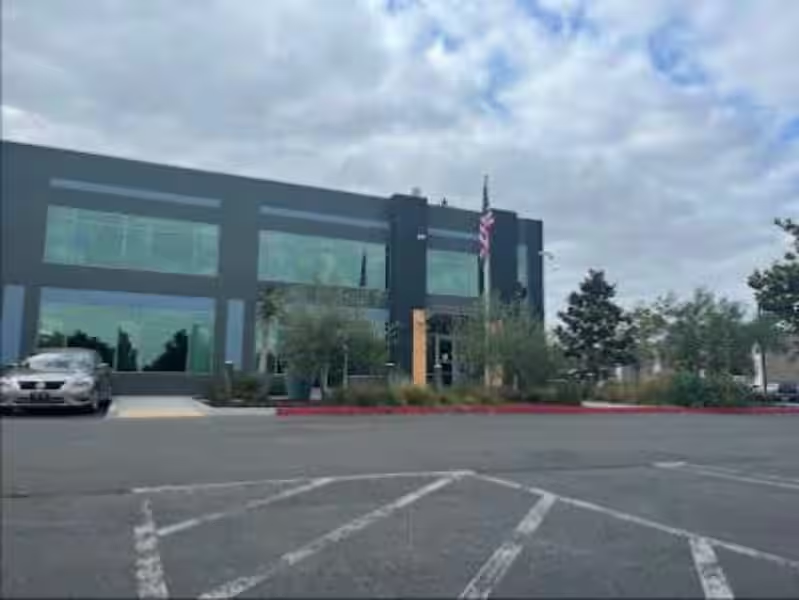
The Miami Asylum Office is located in Miami, Florida, on Biscayne Boulevard. Although the exact street address is not always publicized for security reasons, detailed directions are available from both northbound and southbound Interstate 95. These directions often involve multiple turns and exits, so it’s highly recommended to use a GPS navigation system for the most accurate and efficient route.
The building itself is conveniently accessible. While the exact address might not be readily available online, you can easily locate the office by following the detailed driving directions from I-95 that are widely available through USCIS channels or reputable immigration lawyer websites. Consider using a mapping application by searching “Miami Asylum Office” — most applications will provide the necessary directions.
Public Transportation and Parking
Public transportation is an option for reaching the Miami Asylum Office. To find the suitable bus routes, contact either Dade County at 305-770-3131 or Broward County at 954-357-8400. Alternatively, consult the Miami-Dade Transit website for detailed bus and Metromover schedules and routes. This can be a cost-effective and reliable method, particularly for those who don’t have access to a car.
Parking is available in a nearby private garage. Keep in mind that parking fees apply, and unfortunately, parking validation isn’t offered by the Miami Asylum Office. Upon entering the garage, utilize the blue elevators to access the office, typically located on Level 5.
The Miami Asylum Office is committed to providing accessibility for individuals with disabilities. The building and its facilities are designed to comply with accessibility standards, ensuring a comfortable and convenient experience for all visitors. If you require specific accommodations, it is advisable to contact the office in advance to discuss your needs and arrange any necessary assistance.
Understanding the Miami Asylum Office’s Jurisdiction and Services
The Miami Asylum Office has a broad jurisdiction, covering a significant geographical area. Its responsibilities extend across the entire state of Florida, as well as Puerto Rico and the U.S. Virgin Islands. This encompasses nineteen Florida counties: Brevard, Broward, Charlotte, Collier, DeSoto, Glades, Hendry, Highlands, Indian River, Lee, Martin, Miami-Dade, Monroe, Okeechobee, Orange, Osceola, Palm Beach, Seminole, and Saint Lucie.
Additionally, the Miami Asylum Office also has jurisdiction over specific ZIP codes within six other Florida counties: Hardee, Lake, Marion, Polk, Sarasota, and Volusia. A comprehensive list of these ZIP codes is usually available on the USCIS website or through immigration legal aid organizations. This broad reach highlights the significant role the Miami Asylum Office plays in processing asylum applications for a large portion of the US population.
The Asylum Application Process: Where to File Form I-589
It’s crucial to understand that the Miami Asylum Office is not where you file your initial asylum application (Form I-589) or your NACARA 203 application (Form I-881). These applications must be sent to a designated USCIS service center, determined using the USCIS “Where to File” guidelines. The correct location varies based on your specific circumstances and the information provided on the forms.
This online tool is readily available on the USCIS website and helps determine the applicable service center, usually either the Texas Service Center or the Nebraska Service Center. The website will provide the exact mailing address; you need to follow these instructions carefully to ensure your application is processed efficiently and avoid delays.
Preparing Your Asylum Application
Form I-589 requires extensive information and documentation. You must include detailed biographical information, a comprehensive explanation of your fear of persecution, and substantial supporting evidence. This might include identification documents, passport-style photos, and any documentation corroborating your claims of persecution. Remember, additional evidence can be submitted up to one week before your interview, or, if your case goes to immigration court, within 15 days of the hearing.
The quality and completeness of your initial application are critical. A well-prepared application significantly increases your chances of a favorable outcome. This is why seeking professional legal assistance is highly recommended.
The Miami Asylum Office’s Role in the Process
The Miami Asylum Office’s primary function is to conduct interviews and evaluate asylum applications after they have been initially received and processed by the appropriate USCIS service center. The office does not handle the initial submission of asylum applications. Following the initial review, individuals will be scheduled for an interview at the Miami Asylum Office.
Preparation for this interview is paramount. A clear, consistent, and well-supported narrative is essential. It is during this interview that the asylum officer will assess the credibility of your claim and determine whether you meet the criteria for asylum.
Seeking Legal Assistance
Given the complexities of the asylum process and the significant consequences of a wrongly filed or incomplete application, seeking assistance from an experienced immigration attorney is strongly advised. A lawyer can guide you through the process, help you prepare a compelling application, and represent you during your interview, significantly improving your chances of a successful outcome. They can also help you navigate the intricacies of the legal system and ensure that your rights are protected throughout the process. Remember, the information provided here is for informational purposes only and does not constitute legal advice.
Miami Asylum Office FAQ
Where is the Miami Asylum Office located?
While the exact street address isn’t publicly listed in readily available materials, the Miami Asylum Office is situated on Biscayne Boulevard in Miami, Florida. Detailed driving directions are available from both Northbound and Southbound I-95, involving several turns and exits. The office is accessible via private parking garages nearby, requiring use of blue elevators to reach the office on Level 5. Parking fees apply, and validation isn’t provided.
How do I get to the Miami Asylum Office using public transportation?
For bus route information, contact Dade County at 305-770-3131 or Broward County at 954-357-8400. Alternatively, check the Miami-Dade Transit website for bus and Metromover schedules and routes.
What is the service area of the Miami Asylum Office?
The Miami Asylum Office has jurisdiction over a large geographic area, including the entire state of Florida, Puerto Rico, and the U.S. Virgin Islands. In Florida, this encompasses nineteen counties: Brevard, Broward, Charlotte, Collier, DeSoto, Glades, Hendry, Highlands, Indian River, Lee, Martin, Miami-Dade, Monroe, Okeechobee, Orange, Osceola, Palm Beach, Seminole, and Saint Lucie. Additionally, it covers specific ZIP codes within six other Florida counties: Hardee, Lake, Marion, Polk, Sarasota, and Volusia. (Note: A complete list of these specific ZIP codes is not provided here but may be available from USCIS.)
Where do I file my asylum application (Form I-589)?
Asylum applications (Form I-589) and NACARA 203 applications (Form I-881) are not filed at the Miami Asylum Office. You must use the USCIS “Where to File” guidelines to determine the correct filing location. This is typically a USCIS Service Center.
Is the Miami Asylum Office accessible to people with disabilities?
Yes, the Miami Asylum Office is accessible to individuals with disabilities.
Does the Miami Asylum Office offer parking?
Parking is available in a nearby private garage. However, parking fees apply, and parking validation is not offered.
What services does the Miami Asylum Office provide?
The Miami Asylum Office handles interviews and the subsequent processing of asylum cases. It does not handle the initial application submission. Information regarding case services and accommodations beyond this is limited.
What should I do if I have additional questions?
For further questions regarding USCIS processes, please consult the official USCIS website or contact USCIS directly. For legal advice, consult an immigration attorney.
Landing your dream job in the competitive Learning and Development (L&D) field requires a resume that truly shines. This article will guide you through creating a compelling learning and development resume that showcases your skills and experience effectively. Are you ready to elevate your resume and stand out from the crowd? Essential Educational Foundation and…
Astrology relies heavily on accurate birth data. Without a precise birth time, the accuracy of your birth chart — and subsequent astrological interpretations — is significantly compromised. This is where birth time rectification comes in. This process aims to determine the most likely birth time, even if the exact time isn’t known. It’s a vital…
Understanding how to successfully develop group projects in the real estate sector requires a multifaceted approach. This article delves into the strategies and expertise needed to optimize profitability and create thriving developments. We will explore how market analysis, user-centric design, and cutting-edge construction techniques combine to create successful projects. Understanding the Develop Group Approach Develop…
Operational coordination is a vital component of effective national preparedness, ensuring that various stakeholders work together seamlessly to address threats and hazards. Understanding its role within the National Preparedness Goal framework is crucial for building resilience and fostering a whole-community approach to emergency management. This article will delve into the importance of operational coordination, exploring…
This article aims to provide a general understanding of rescue drugs, their importance, and the critical need to consult with a healthcare professional before using any medication. It is crucial to remember that this information is for educational purposes only and should not replace advice from a qualified doctor. Always seek professional medical attention for…
Securing the safety and well-being of a child is paramount. In Florida, when a child faces immediate danger, a swift legal response is crucial. This often involves filing a Motion for Emergency Custody. This article clarifies the process, highlighting key aspects of filing a motion for emergency custody form in Florida, and what you should…