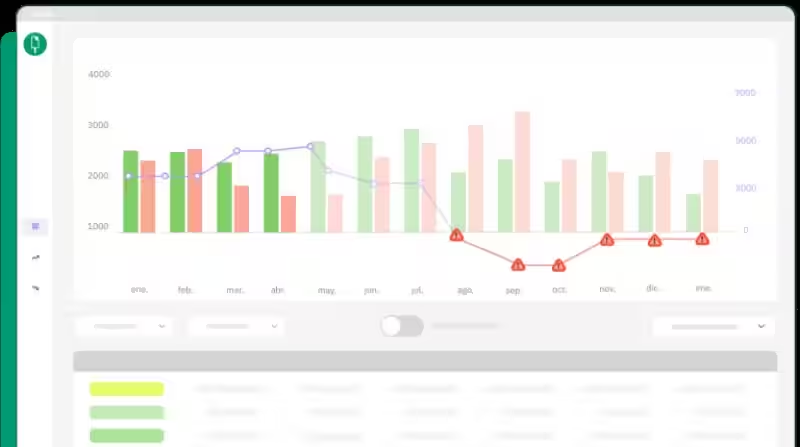
Should cost analysis software is revolutionizing how businesses approach procurement and pricing strategy. For years, companies relied on manual, often inaccurate, methods to estimate the true cost of manufactured goods. This article explores the advantages of using sophisticated should cost analysis software to achieve more accurate cost estimations, optimize procurement processes, and ultimately boost profitability.
The Limitations of Traditional Should Cost Estimating
Traditional should cost estimating methods were largely manual and depended heavily on the expertise and experience of individual engineers. This approach, while functional in simpler scenarios, suffered from several key limitations.
The reliance on historical data and subjective estimations led to inconsistencies and inaccuracies. Each engineer might approach the same problem differently, resulting in varying cost projections. Furthermore, these methods struggled to adapt to rapid changes in materials, manufacturing processes, and market conditions. This lack of flexibility and adaptability made it difficult for companies to respond effectively to market fluctuations and maintain a competitive edge. The process was also notoriously time-consuming, consuming valuable resources that could be better allocated elsewhere.
In short, the traditional approach lacked the precision, consistency, and scalability needed for efficient and effective procurement in today’s dynamic market. This often led to inaccurate pricing, missed opportunities for cost savings, and strained relationships with suppliers.
The Rise of Should Cost Analysis Software: A Game Changer
The need for a more robust and efficient solution led to the development of specialized should cost analysis software. These tools automate many of the manual tasks associated with traditional methods, resulting in a significant increase in speed, accuracy, and consistency.
These software solutions employ advanced algorithms and structured data input to generate detailed cost models. This approach eliminates much of the subjectivity inherent in traditional methods, providing a more objective and reliable estimation of the “should cost” of a product or component. The ability to easily incorporate real-time market data, such as fluctuating raw material prices, further enhances the accuracy and relevance of the estimations. This dynamic adaptation to market conditions is a significant advantage over static, historical-data-based approaches.
Streamlined Procurement: Faster and more accurate cost estimations accelerate the procurement cycle.
Data-Driven Decision Making: Provides the factual basis for informed decisions across the value chain.
Improved Supplier Relationships: Transparent and fair cost estimations foster trust and collaboration.
Features to Look for in Should Cost Analysis Software
When choosing should cost analysis software, consider the following critical features:
Comprehensive Cost Modeling Capabilities: The software should enable detailed modeling of all direct and indirect costs, including materials, labor, overhead, and tooling.
Integration with Other Systems: Seamless integration with enterprise resource planning (ERP) and other relevant systems is vital for efficient data exchange.
Real-Time Data Updates: The ability to incorporate real-time market data ensures that cost estimates remain current and relevant.
Advanced Reporting and Analytics: Robust reporting features are essential for visualizing cost data and identifying opportunities for optimization.
User-Friendly Interface: Intuitive software design promotes ease of use and adoption across the organization.
Scalability: The software should be able to handle large volumes of data and scale with the growth of the business.
Flexibility and Customization: The ability to adapt to various industries and product types is crucial.
Beyond Cost Estimation: The Broader Impact of Should Cost Analysis Software
The benefits of utilizing should cost analysis software extend beyond merely generating accurate cost estimates. By providing a clear understanding of cost drivers and production processes, this software empowers businesses to make better informed decisions across their entire operations.
This enhanced understanding allows for proactive cost reduction strategies, leading to improved efficiency and profitability. It also supports smarter design choices, incorporating cost awareness directly into the product development lifecycle. This holistic approach contributes to a more competitive product, improved profitability, and stronger relationships with suppliers.
Conclusion: Embracing the Future of Procurement with Should Cost Analysis Software
In conclusion, the transition from traditional, manual should cost estimating methods to sophisticated should cost analysis software represents a significant advancement in procurement practices. The increased accuracy, efficiency, and transparency offered by these tools are invaluable in today’s competitive landscape. By investing in such software, organizations can achieve more accurate pricing, optimize their supply chains, and ultimately drive greater profitability. The adoption of should cost analysis software is no longer a luxury but a necessity for businesses seeking to maintain a competitive edge in the global market. Ignoring this technology represents a significant opportunity cost for companies seeking to optimize their bottom line.
Frequently Asked Questions about Should Cost Analysis (SCA) Software
What is Should Cost Analysis (SCA) and why is it important?
Should Cost Analysis is a process used primarily by Original Equipment Manufacturers (OEMs) and engineering firms to analyze a supplier’s manufacturing costs for a specific part or assembly. The goal is to create an independent cost estimate that serves as a benchmark for negotiations and a comparison point against supplier quotes. This helps in procurement to potentially lower product costs and improve profitability. It’s crucial because it moves beyond simple cost accounting to provide a deep understanding of all factors influencing final product costs, leading to more informed business decisions.
What are the limitations of traditional, manual Should Cost Analysis?
Traditional SCA methods were highly manual, time-consuming, and subjective. They relied heavily on historical data, individual engineer’s experience, and lacked consistency. This resulted in potential inaccuracies, biases, difficulty in accounting for changes in materials or processes, and increased risks of cost overruns and inaccurate forecasting. The lack of a structured, repeatable process also created bottlenecks and inefficiencies, especially in large organizations.
How does Should Cost Analysis software improve upon traditional methods?
SCA software automates much of the manual process, resulting in faster, more accurate, and consistent cost estimations. By streamlining calculations and using structured data inputs, it offers increased transparency and repeatability, minimizing errors and inconsistencies. This leads to more effective negotiations, improved cost control, and stronger supplier relationships. The software also allows for dynamic adjustment to market fluctuations, ensuring cost estimations remain current and relevant.
What are the key benefits of using Should Cost Analysis software?
Key benefits include establishing accurate cost targets for negotiations, enhancing supplier negotiations with data-driven arguments, reducing costs by identifying optimization areas, accelerating time to market, improving design through cost awareness, employing a granular, bottom-up approach for precise cost analysis, and analyzing all costs involved in production (materials, processes, services). Ultimately, it leads to more accurate pricing and profitability.
How does Should Cost Analysis software help in negotiations with suppliers?
The software provides a data-driven, objective basis for negotiations. By having a detailed, independently generated cost estimate, OEMs can confidently negotiate with suppliers, justifying their desired price points and identifying potential areas for cost reduction collaboratively. This leads to fairer and more efficient negotiations.
Can Should Cost Analysis software adapt to market changes?
Yes, advanced SCA software can dynamically adjust to market fluctuations. By linking models to market indices, the software can swiftly react to changes in raw material prices and other external factors, ensuring the cost estimations remain accurate and relevant even in volatile markets.
What types of businesses would benefit most from Should Cost Analysis software?
Original Equipment Manufacturers (OEMs), engineering firms, and any business involved in complex manufacturing processes or procurement where accurate cost analysis is crucial for profitability and competitive advantage would greatly benefit. Businesses dealing with a high volume of parts and suppliers will see the greatest efficiency gains.
Are you a social worker looking for a career path that combines impactful work with exciting travel opportunities? The field of travel social work offers just that, and understanding the landscape of travel social work companies is key to finding the perfect fit. This article will delve into the realities of this unique career path,…
The question many job seekers grapple with is: how do I effectively demonstrate my skills and experience on my resume to land an interview? Simply listing job titles and dates isn’t enough. A compelling resume requires showcasing resume activity, demonstrating the impact you made in each role. This article will guide you through strategies for…
This article explores the significant impact of recent legislative changes in Texas designed to improve educational opportunities for students by removing the impediment of outdated, low grades from their academic records. We’ll delve into how this reform affects students, educational institutions, and the wider community, focusing on building a fairer and more equitable educational system….
Facing a legal battle that threatens your fundamental rights? Understanding your rights and having the right legal representation is crucial. This article explores the critical role of a due process lawyer and how experienced firms can help navigate complex legal challenges. Understanding Due Process: Your Constitutional Shield The Fifth and Fourteenth Amendments to the U.S….
Finding a family doctor is a crucial decision, impacting your overall health and well-being. Choosing the right physician involves considering many factors, including their experience, specializations, and the services offered. This article aims to provide a comprehensive overview of what you should look for when researching potential doctors, using a hypothetical example to illustrate key…
Choosing the right educational path can be daunting, especially when it involves navigating a foreign language and culture. Many aspiring students dream of studying or working in Japan, a country known for its rich culture and dynamic economy. This dream often hinges on mastering the Japanese language, and finding the right institution to guide you…