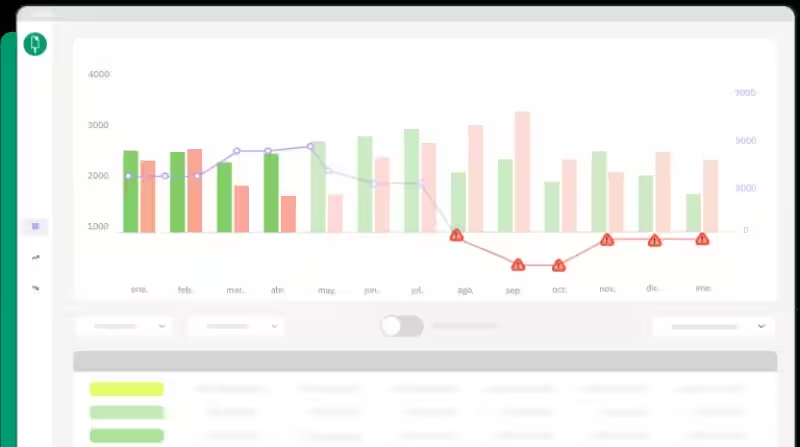
Navigating the complexities of international business requires a deep understanding of risk mitigation strategies. One crucial aspect is the utilization of a global watchlist. This article will delve into the importance of global watchlists, their various components, and how businesses can leverage them effectively to maintain compliance and protect their reputation.
A global watchlist is a comprehensive database containing information on individuals and entities considered high-risk due to their involvement in illicit activities. These lists are not monolithic; rather, they are a compilation of various databases maintained by different regulatory bodies and international organizations. The data within these lists are constantly updated, reflecting the ever-changing landscape of financial crime and global threats. Understanding the nuances of these various lists is critical for effective risk management.
The necessity of regularly consulting these lists cannot be overstated. Ignoring them exposes businesses to significant legal and reputational risks. Regular updates ensure that your screening remains relevant and aligned with the latest regulatory changes.
Types of Watchlists and Their Importance
Several key types of watchlists contribute to the overall global watchlist landscape.
Sanctions Lists
These lists identify individuals, entities, and even entire countries subject to economic or trade restrictions imposed by international bodies like the United Nations or individual governments. Engaging with sanctioned entities can result in severe penalties.
Understanding the nuances of sanctions, including the specific restrictions imposed on each listed entity, is crucial. Penalties for non-compliance can be substantial, including hefty fines and legal ramifications.
Politically Exposed Persons (PEPs) Lists
PEPs lists include individuals holding prominent public positions or those closely associated with them. These individuals are considered higher risk due to their potential for involvement in corruption or bribery. Screening against PEP lists is a crucial step in due diligence.
The definition of a PEP can be broad and may vary across jurisdictions. It’s vital to understand the specific criteria used by different watchlists to accurately assess risk.
Regulatory Watchlists
These lists encompass entities and activities subject to specific industry regulations, predominantly in areas like anti-money laundering (AML) and know-your-customer (KYC) compliance. This category often includes lists maintained by financial institutions and regulatory agencies.
Staying abreast of updates to regulatory watchlists is crucial for maintaining compliance with ever-evolving industry standards. Ignoring these updates can result in non-compliance, leading to penalties.
Specialized Watchlists
Finally, specialized watchlists address emerging risks like human trafficking, organized crime, and cyber threats. These lists often contain information from law enforcement agencies and intelligence organizations.
The dynamic nature of these specialized lists necessitates frequent updates to your screening processes. New threats constantly emerge requiring businesses to adapt accordingly.
Utilizing a Global Watchlist for Effective Screening
Effective utilization of a global watchlist requires more than simply accessing the data. Businesses must employ robust screening processes.
Automated Screening and Fuzzy Matching
Automated screening utilizes sophisticated software incorporating algorithms and Artificial Intelligence (AI) to efficiently cross-reference data against watchlists. Fuzzy matching techniques account for variations in names, addresses, and other identifying information, enhancing accuracy.
The efficiency gained through automation is vital for businesses handling large volumes of data. Manually reviewing each entry would be impractical and prone to error.
Real-Time Updates and Proactive Risk Mitigation
Access to real-time updates is crucial to ensure the accuracy of your screening. This feature allows businesses to immediately identify potential risks and take swift action, minimizing potential damage. This proactive approach is a significant advantage over reactive measures.
Real-time updates are essential for mitigating risks effectively. The dynamic nature of global threats requires constant vigilance and immediate response capabilities.
The Importance of Global Watchlist Screening Solutions
Specialized software solutions offer a streamlined approach to global watchlist screening, providing real-time updates, customizable features, and advanced analytics. These tools significantly reduce the complexities associated with manual screening.
These solutions not only reduce the risk of errors but also provide valuable insights into potential risks, allowing businesses to make informed decisions.
The use of a global watchlist is no longer optional; it’s essential for businesses operating in the international arena. By understanding the various types of watchlists, employing advanced screening technologies, and leveraging specialized software solutions, businesses can effectively mitigate risks, maintain compliance, and safeguard their reputations. Ignoring the importance of a robust global watchlist screening process is a significant oversight with potentially severe consequences.
What is a Global Watchlist?
A global watchlist is a consolidated database of individuals and entities identified as posing a high risk of involvement in illicit activities. These activities include, but are not limited to, money laundering, terrorism financing, fraud, sanctions violations, and human trafficking. Businesses use these lists to conduct due diligence and mitigate the risks associated with engaging with potentially harmful parties. These lists are constantly updated to reflect evolving threats and regulatory changes.
Why are Global Watchlists Important for Businesses?
Global watchlists are crucial for businesses, especially those operating internationally, for several key reasons: They enable proactive risk mitigation by identifying potentially problematic individuals or entities before a business relationship is established. This proactive approach helps businesses comply with Anti-Money Laundering (AML), Know Your Customer (KYC), and other relevant regulations. Furthermore, using watchlists safeguards a company’s reputation by preventing association with illicit activities and helps avoid costly legal repercussions, including fines and sanctions.
What Types of Lists are Included in Global Watchlists?
Global watchlists are not monolithic. They encompass several crucial categories:
Sanctions Lists: These lists identify individuals, entities, or countries subject to economic or trade restrictions imposed by governments or international organizations.
Politically Exposed Persons (PEP) Lists: These lists include individuals holding prominent public positions or those closely associated with such figures, who may be more vulnerable to corruption.
Regulatory Watchlists: These lists contain entities and activities subject to specific industry regulations, often related to AML/KYC compliance.
Specialized Lists: These lists address emerging risks, such as those related to human trafficking, organized crime, and cyber threats.
How Does Automated Screening Work with Global Watchlists?
Modern global watchlist screening utilizes sophisticated software incorporating algorithms and artificial intelligence (AI). This automation allows for efficient cross-referencing of business data (clients, partners, transactions) against the constantly updated watchlists. Techniques like “fuzzy matching” account for variations in names, addresses, and other identifying information, increasing the accuracy of the screening process. Real-time updates ensure access to the most current information from regulatory bodies worldwide.
What are the Benefits of Using a Global Watchlist Screening Solution?
Utilizing a dedicated global watchlist screening solution offers numerous benefits: Automated screening significantly streamlines the process, reducing manual effort and improving efficiency. Real-time updates ensure compliance with the latest regulations. Advanced analytics can help identify patterns and emerging risks. Furthermore, sophisticated solutions often incorporate features designed to minimize false positives, reducing disruption and improving the overall effectiveness of the screening process. Ultimately, it helps protect businesses from financial and reputational risks.
Are you concerned about personal safety or the safety of your employees in potentially dangerous situations? A crisis alert system can be a game-changer. This article explores the benefits of wearable panic buttons, focusing on how they expedite emergency response and offer crucial advantages over traditional methods. The Power of Immediate Response with Crisis Alert…
Paying an immigration bond to secure the release of a detained loved one can be a stressful and confusing process. This article aims to demystify the process of pagar fianza cárcel in the United States, focusing on the electronic system used by Immigration and Customs Enforcement (ICE). We will cover eligibility, registration, payment methods, and…
Choosing the right legal partner is crucial for any technology or media company, regardless of size. Navigating the complex legal terrain of intellectual property, contracts, and data privacy can be daunting. This is where a specialized firm like El Camino Legal (ECL) can make all the difference. Understanding El Camino Legal’s Services ECL isn’t your…
Are you a junior high student looking for a fun and faith-filled summer? Do you want to deepen your relationship with God while making new friends and enjoying classic summer camp activities? Then Camp Survive might be the perfect experience for you! This article will explore what makes Camp Survive a unique and enriching opportunity…
Landing your dream project management job often starts with your resume. But with Applicant Tracking Systems (ATS) screening applications, simply listing skills isn’t enough. Your resume needs to be strategically optimized with the right project management resume keywords. This article will guide you through identifying and effectively incorporating these keywords to maximize your chances of…
Many manufacturing processes involve repetitive tasks that can benefit greatly from automation. This article explores the working process of a sophisticated automated part processing cell, designed to improve efficiency and precision. Understanding this system’s working process can help you appreciate the advancements in modern manufacturing and the benefits of automation. The Three Core Components: A…