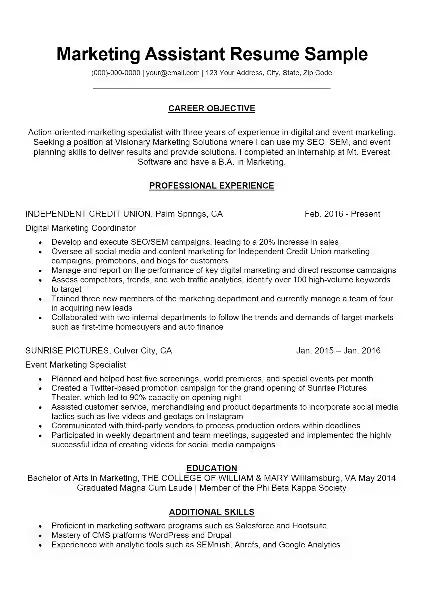
Landing your dream marketing job often hinges on more than just your experience and skills. Applicant Tracking Systems (ATS) are the gatekeepers, scanning resumes for specific keywords before a human even sees your application. Understanding how to effectively incorporate keywords for marketing resume is crucial to getting your foot in the door. This article will guide you through crafting a resume that not only impresses recruiters but also passes the ATS test.
Understanding the Role of Keywords in Your Marketing Resume
Applicant Tracking Systems (ATS) are software programs used by many companies to filter and rank resumes based on specific keywords. Think of them as automated first-round interviewers. They look for specific terms related to the job description, and if your resume doesn’t contain enough of them, your application might be overlooked, no matter how qualified you are.
Therefore, strategically incorporating the right keywords for marketing resume is essential. It’s not about stuffing your resume with jargon; it’s about naturally integrating relevant terms that showcase your skills and achievements in a way that’s both ATS-friendly and human-readable.
Identifying the Right Keywords for Your Marketing Niche
The keywords you choose should align perfectly with both your experience and the specific job description. There’s no one-size-fits-all approach. Consider the following categories and tailor your keywords accordingly:
Core Marketing Skills
These are the fundamental skills that apply across most marketing roles. Include keywords such as:
Campaign Management: Planning, execution, and analysis of marketing campaigns.
SEO (Search Engine Optimization): Keyword research, on-page optimization, link building.
SEM (Search Engine Marketing): Pay-per-click (PPC) advertising, Google Ads management.
Marketing Analytics: Google Analytics, data interpretation, performance reporting.
Social Media Marketing: Social media strategy, content creation, community management.
Content Marketing: Content strategy, blog writing, copywriting, email marketing.
In today’s digital world, showcasing digital marketing prowess is vital. Keywords to consider include:
Digital Marketing Strategy: Developing and implementing comprehensive digital strategies.
Email Marketing: Campaign creation, list building, segmentation, automation.
Social Media Advertising: Facebook Ads, Instagram Ads, Twitter Ads, LinkedIn Ads.
Influencer Marketing: Identifying and collaborating with influencers.
Conversion Rate Optimization (CRO): Improving website conversions through A/B testing and user experience optimization.
Google Analytics: Data analysis, reporting, and insights generation using Google Analytics.
Specialized Marketing Roles
Depending on the specific role you’re targeting (product marketing, brand marketing, etc.), you need to tailor your keywords for marketing resume accordingly.
Simply listing keywords isn’t enough; you need to weave them organically into your resume’s narrative. Here are some strategies:
Use job description language: Carefully review the job description and incorporate keywords directly from it.
Quantify your achievements: Instead of simply saying “managed social media,” say “increased social media engagement by 25% in six months.” Use numbers and metrics to demonstrate your impact.
Highlight relevant software and tools: List specific marketing software and tools you’ve used, such as Google Analytics, SEMrush, HubSpot, Adobe Creative Suite, etc.
Showcase your certifications: Mention any relevant certifications, such as Google Ads certifications or HubSpot certifications. This demonstrates your commitment to professional development.
Entry-Level Considerations
For entry-level marketing positions, focus on foundational skills and demonstrate your eagerness to learn. Highlight relevant coursework, internships, or volunteer experiences that demonstrate your abilities.
Avoid simply cramming keywords into your resume. This is easily detectable by both ATS and human recruiters and can hurt your chances. Focus on using keywords naturally and meaningfully within the context of your accomplishments and experience.
Optimizing Your Resume for Maximum Impact
By following these guidelines and strategically incorporating the right keywords for marketing resume, you can significantly increase your chances of getting your resume noticed by ATS and landing an interview with a potential employer. Remember, it’s about presenting yourself as a well-rounded marketing professional with the skills and experience to succeed. Good luck!
What keywords should I include on my marketing resume to get noticed by Applicant Tracking Systems (ATS)?
Your resume needs to be optimized for Applicant Tracking Systems (ATS) to ensure it gets seen by recruiters. Focus on keywords that highlight your core marketing skills, such as campaign management, SEO, digital marketing, analytics, content creation, and brand management. Tailor your keywords to the specific job description and the type of marketing role you are targeting. Include relevant software and tools you’ve used (e.g., Google Analytics, SEMrush, HubSpot).
How can I use keywords effectively without making my resume look “stuffed”?
Avoid simply listing keywords; integrate them naturally within your resume’s text. Use action verbs and quantify your achievements whenever possible. For example, instead of just saying “SEO,” you could write “Improved website SEO, resulting in a 20% increase in organic traffic.” This demonstrates both your skills and their impact.
What are some examples of keywords for different marketing roles?
Entry-Level: Social media management, content writing, basic SEO, email marketing, market research.
Digital Marketing: SEO, SEM, Google Ads, social media advertising, PPC, A/B testing, email marketing automation, analytics (Google Analytics, etc.).
Content Marketing: Content strategy, copywriting, blog writing, SEO writing, social media content creation, content calendar management, audience engagement.
Absolutely! Mirror keywords directly from the job description to maximize your chances of getting past the ATS. Pay close attention to the language used by the hiring manager and incorporate relevant terms naturally throughout your resume.
What’s the importance of quantifying my achievements with keywords?
Quantifying your achievements with metrics is crucial. It adds weight to your keywords by demonstrating the impact of your work. Instead of just stating your skills, show the results you achieved. Examples include: “Increased social media engagement by 30%,” or “Generated $X in revenue through a targeted marketing campaign.”
Are certifications important for keyword optimization?
Yes! Mentioning relevant certifications like Google Ads, HubSpot, or others significantly boosts your credibility and can act as powerful keywords. These certifications demonstrate a commitment to professional development and expertise in specific marketing areas.
What if I’m applying for a specialized marketing role?
For specialized roles like product or brand marketing, tailor your keywords to the specific requirements of the job description. Focus on keywords that directly relate to the responsibilities and skills required for that particular role. Research industry-specific terminology to further enhance your resume’s effectiveness.
Are you a US citizen with Irish ancestry dreaming of obtaining Irish citizenship? Navigating the complexities of Irish citizenship applications can be daunting, even more so when dealing with the nuances of US-Irish legal frameworks. This is where the expertise of an Irish citizenship lawyer becomes invaluable. Understanding the Irish Citizenship Application Process The process…
So, you’re considering a career as a case worker? It’s a rewarding but demanding profession, and understanding the requirements is crucial for success. This guide will break down the essential elements, providing a clear picture of what it takes to become a case worker, focusing on both the educational and professional pathways. Educational Requirements: Building…
Landing your dream project management role hinges on effectively showcasing your skills. This article will guide you through identifying, quantifying, and presenting your project manager resume skills to attract recruiters and hiring managers. We’ll cover both the hard and soft skills necessary for success, and how to best present them on your resume. Hard Skills:…
Many nonprofits are looking for innovative ways to boost revenue and connect with their supporters. One increasingly popular method is establishing an online merchandise store for nonprofits. This approach offers a powerful combination of fundraising and brand building, but choosing the right platform is crucial. This article will explore the advantages and disadvantages of using…
Finding reliable and experienced partners for international development projects can be challenging. This article explores the crucial role of organizations specializing in international resources and uses the International Resources Group (IRG) as a case study to illustrate the complexities and successes within this field. We’ll examine their history, expertise, and the wider implications of their…
Landing your dream Security Supervisor job in 2025 requires more than just experience; it necessitates a compelling and strategically crafted resume. This guide will walk you through creating a security supervisor resume that stands out from the competition and gets you noticed by recruiters. Understanding the Security Supervisor Resume Landscape The job market for security…